
 Tiếng Việt
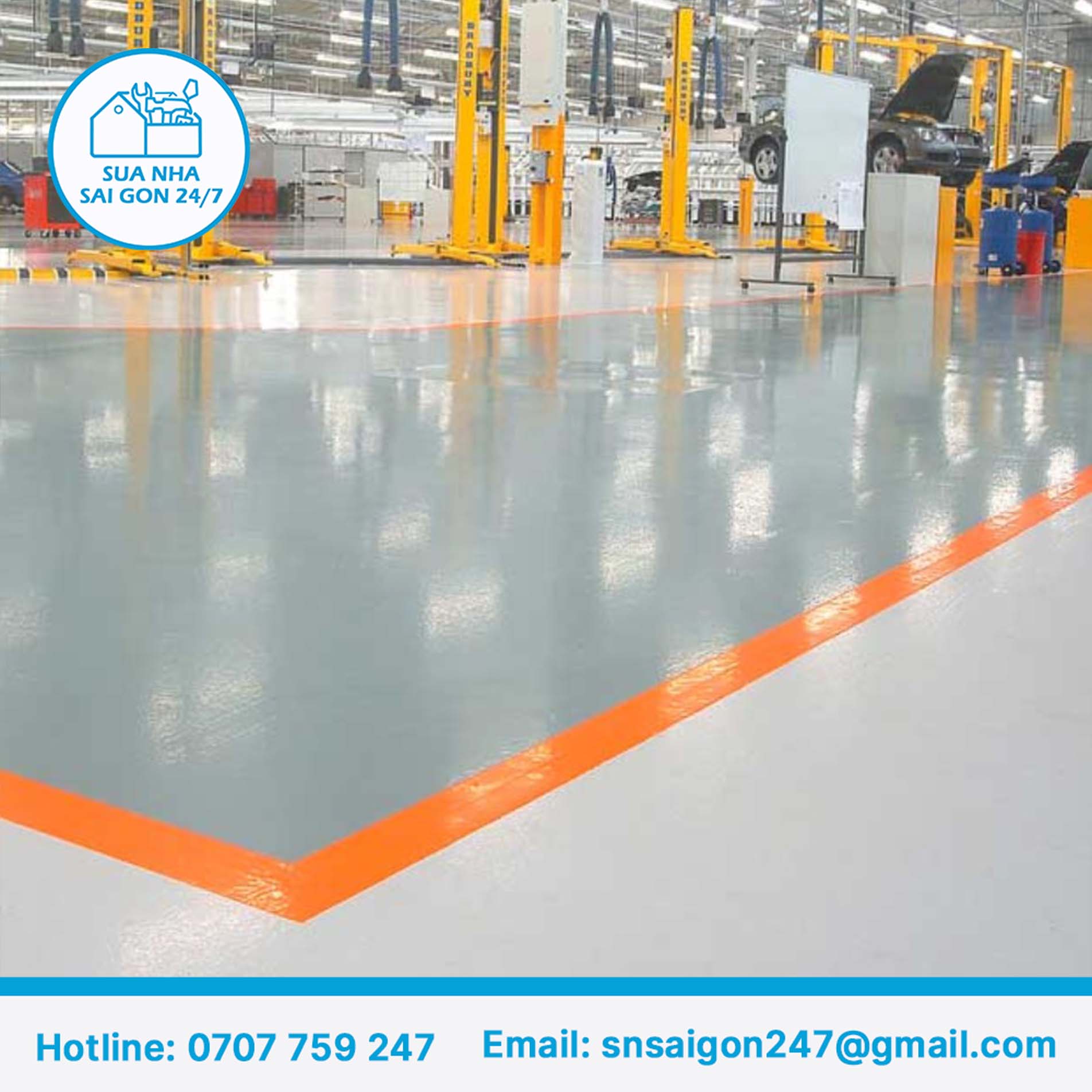


Looking for a reliable epoxy flooring contractor in Ho Chi Minh City with fair pricing and a skilled technical team? Sai Gon Home Repair 247 installs epoxy floor coatings across Ho Chi Minh City for factories, homes, basements, showrooms, and many other property types. This article covers everything from epoxy flooring pricing to the standard technical process and how to choose a trustworthy contractor — so you can make an informed decision and avoid costly mistakes.
I. What Is Epoxy Flooring? Why Is It Popular in Ho Chi Minh City?
Epoxy flooring is a two-component coating system made of Epoxy Resin and a Hardener. When mixed and applied onto a concrete surface, these two components undergo a chemical reaction that forms a hard, strongly adhesive coating with a glossy finish and load-bearing and abrasion resistance far superior to standard paint.
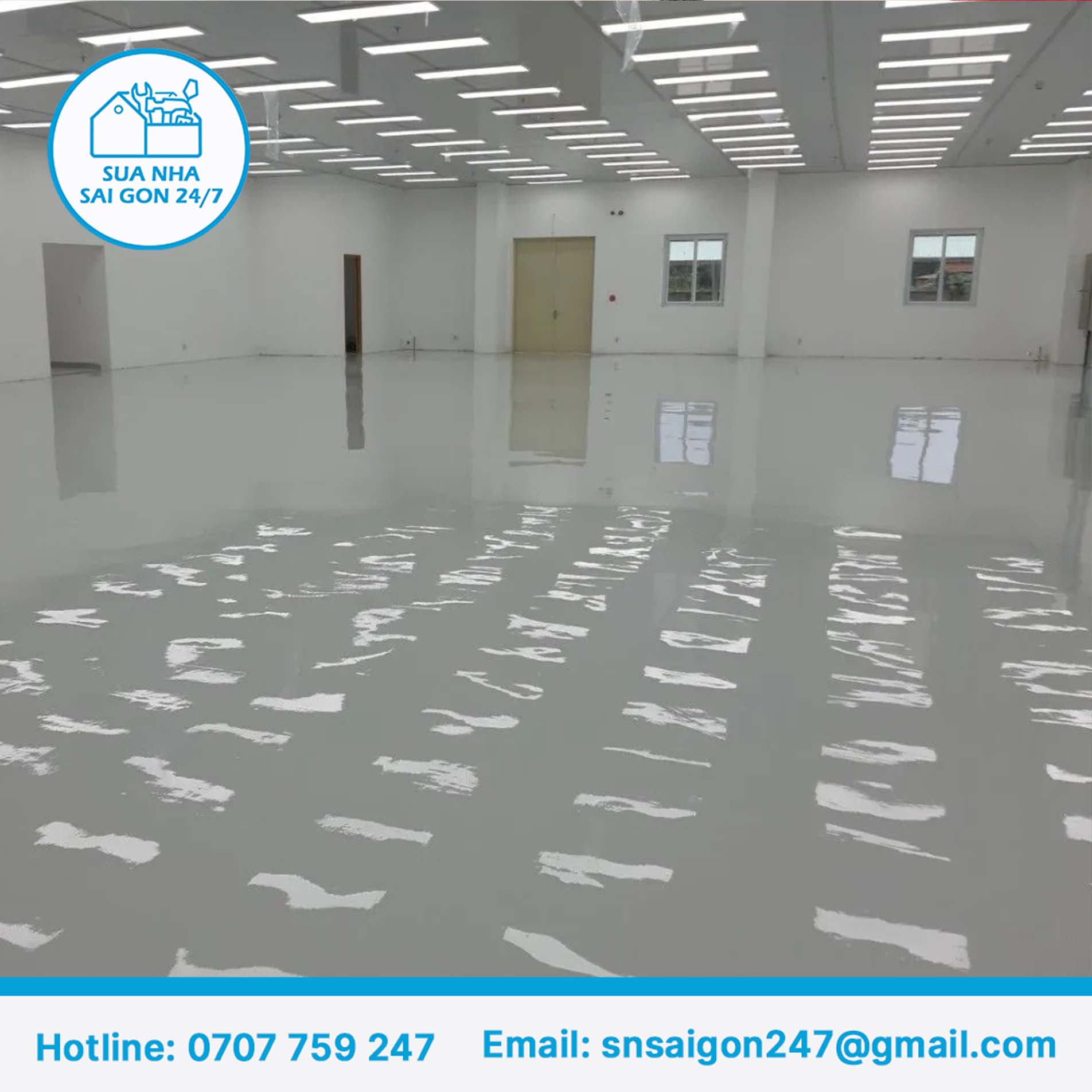
Why is it especially well-suited to Ho Chi Minh City?
- Hot, humid climate with heavy rainfall → epoxy flooring provides strong waterproofing and mold resistance.
- A smooth, seamless surface → easy to clean, meeting food-safety and medical hygiene standards.
- Resistant to industrial chemicals and oil → ideal for factories and car garages.
- Lifespan of 5–15 years depending on usage conditions → saves on long-term maintenance costs.
Quick comparison: epoxy flooring vs. other flooring types
| Criteria | Epoxy Coating | PU Coating | Vinyl Flooring | Standard Paint |
|---|---|---|---|---|
| Hardness | Very high | High | Medium | Low |
| Chemical resistance | Very good | Good | Medium | Poor |
| Cost | Medium–high | High | Medium | Low |
| Lifespan | 5–15 years | 5–10 years | 10–20 years | 2–3 years |
| Suitable for homes | Yes | Yes | Yes | Not durable |
II. The Most Common Types of Epoxy Flooring Today
Not all epoxy flooring systems are the same. Choosing the right one helps you save on cost and get the best performance.
1. Rolled Epoxy System (Basic 3-Coat)
- Thickness: 0.3 – 0.5mm
- Pros: Lowest cost, fast installation
- Cons: Thin, less able to handle heavy continuous loads
- Best for: Warehouses, light manufacturing workshops, small garages
2. Self-Leveling Epoxy System
- Thickness: 1 – 3mm
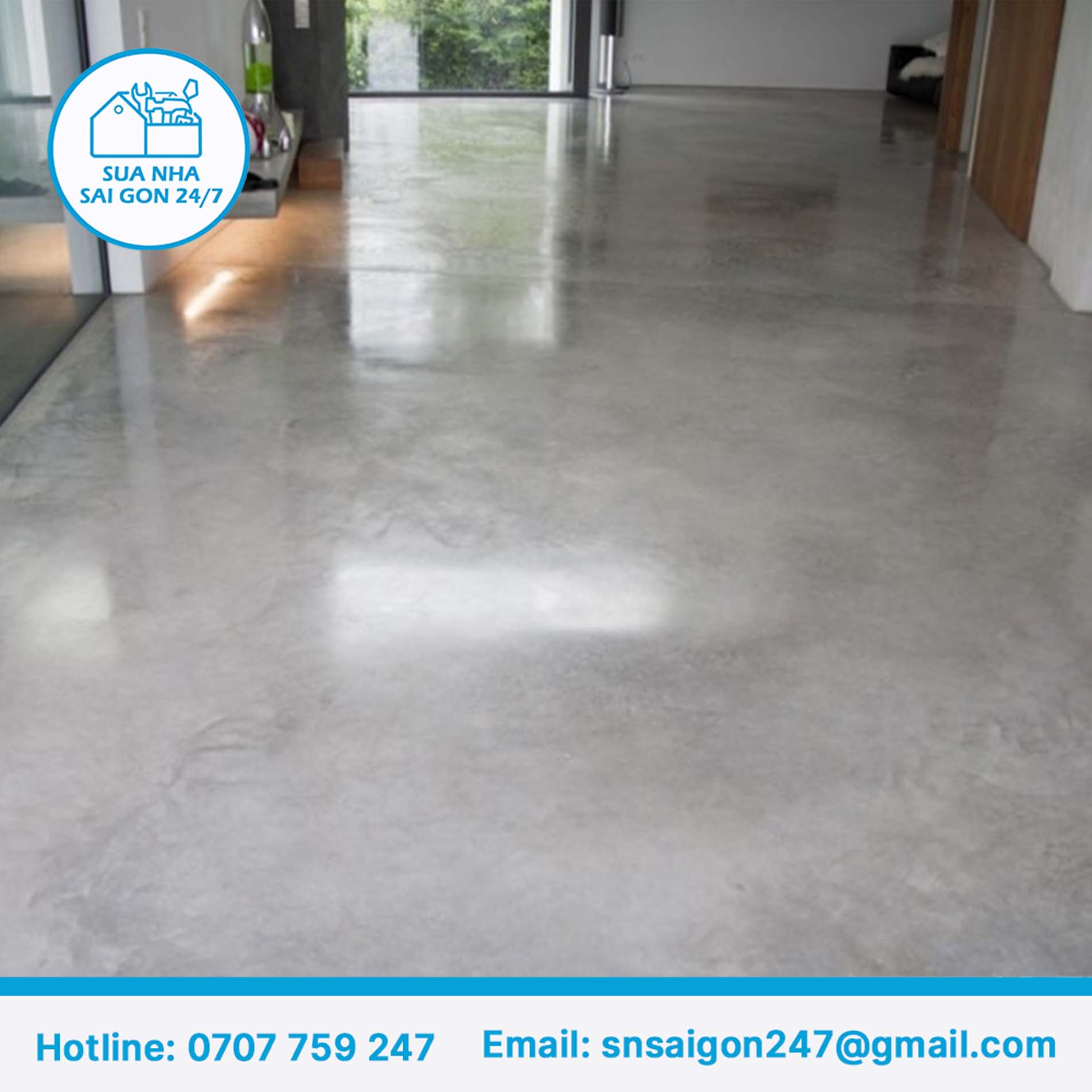
- Pros: Mirror-flat surface, high aesthetic appeal, good load resistance
- Cons: Higher cost, requires more skilled installation technique
- Best for: Clean rooms, showrooms, upscale homes, offices
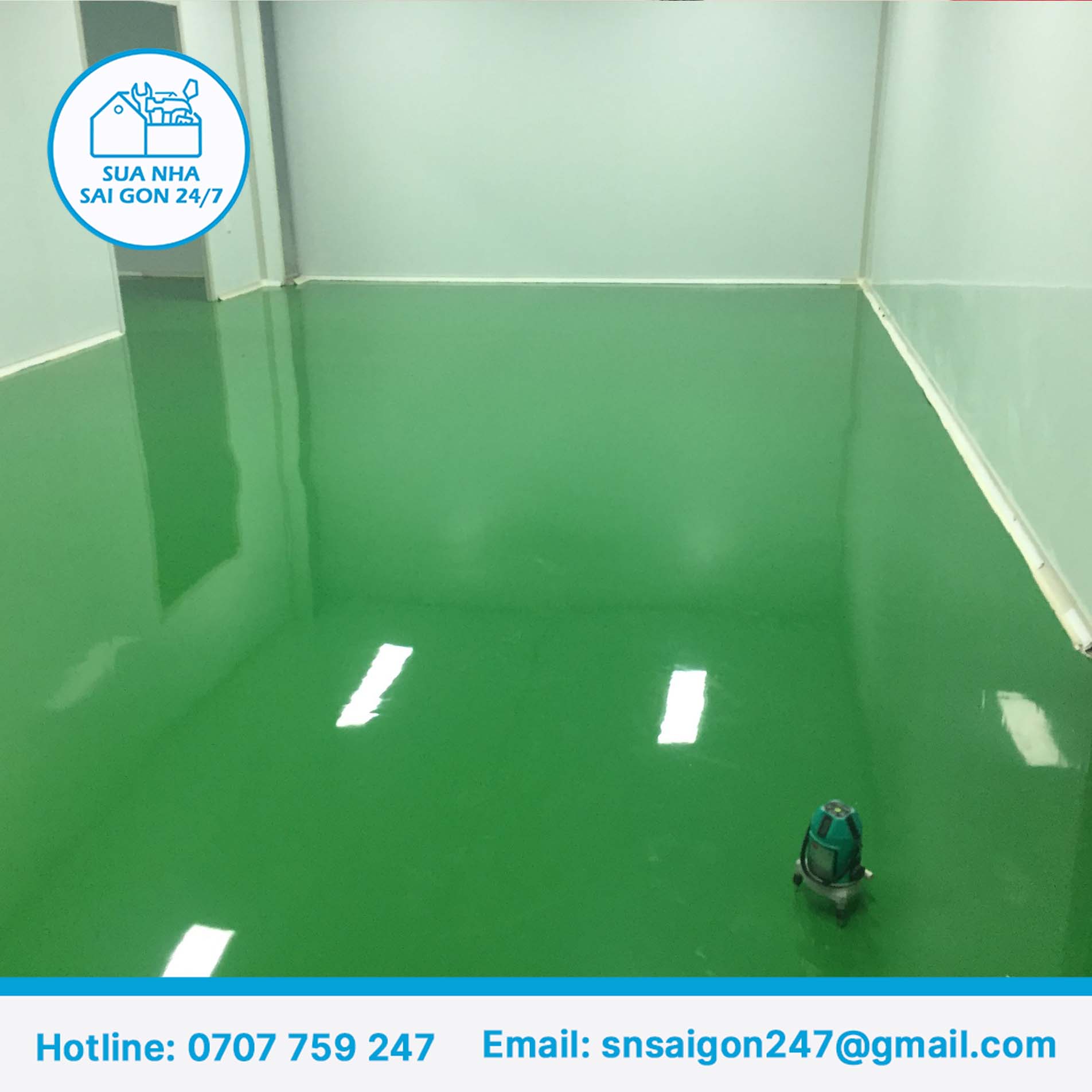
3. Anti-Static Epoxy System
- Includes an embedded copper grounding wire system to conduct static electricity to earth
- Best for: Electronics factories, data centers, laboratories
4. Chemical-Resistant Epoxy System
- A specialized molecular structure resistant to acids, alkalis, and solvents
- Best for: Chemical plants, labs, food processing facilities
5. 3D Artistic Epoxy Flooring
- A digitally printed 3D image sealed under a clear epoxy top coat
- Best for: Homes, upscale apartments, spas, restaurants, cafes
III. 2026 Epoxy Flooring Installation Price List in Ho Chi Minh City
This is the most important question for most customers. Epoxy flooring cost isn’t fixed — it depends on several technical factors.
Factors That Affect the Per-Unit Price
- Existing concrete condition: New, flat flooring requires less prep work than old, cracked, or oil-stained flooring.
- Installation area: The larger the area, the lower the price per m².
- Epoxy system type and required thickness.
- Paint brand: KCC, Sika, Chokwang, AICA (imported) or domestic brands.
- Project location: Inner-city or outlying Ho Chi Minh City.
2026 Reference Price List
| Epoxy System Type | Thickness | Reference Price (VND/m²) | Note |
|---|---|---|---|
| Basic 3-coat rolled system | 0.3–0.5mm | 65,000 – 120,000 | Factories, warehouses |
| Thick rolled system (5 coats) | 0.5–1mm | 120,000 – 170,000 | Medium load |
| Standard self-leveling | 1–2mm | 170,000 – 300,000 | Showrooms, offices |
| Premium self-leveling | 2–3mm | 300,000 – 480,000 | Clean rooms, upscale homes |
| Anti-static | 2–3mm | 450,000 – 850,000 | Electronics, data centers |
| Chemical-resistant | 2–4mm | 400,000 – 750,000 | Chemical, food facilities |
| 3D artistic epoxy | 3–5mm | 150,000 – 300,000 | Homes, cafes |
⚠️ Important note: The price list above is a market reference. Actual cost may vary depending on your building’s condition. Sai Gon Home Repair 247 provides a free quote after an on-site survey — no hidden costs.
IV. The Proper Technical Process for Epoxy Flooring Installation
The quality of an epoxy floor depends 70% on surface preparation and 30% on the quality of the coating materials. This is the standard process our technical team at Sai Gon Home Repair 247 follows on every project:
Phase 1: Survey & Planning
Step 1 – On-site survey:
A technician visits the site to inspect the concrete’s condition: flatness, cracks, oil stains, and any existing coating. This is a required step for an accurate quote — Sai Gon Home Repair 247 does not quote over the phone without an on-site survey.
Step 2 – Cost estimate and contract signing:
We determine the right epoxy system, material brand, installation timeline, and written warranty terms.
Phase 2: Surface Preparation (the most critical phase)
Step 3 – Grinding with an industrial diamond grinder:
Completely removes old coating, loose cement, and dust, creating a mechanically roughened surface (CSP 2–3 profile) for optimal adhesion.
Step 4 – Industrial vacuuming:
Uses a specialized industrial vacuum to ensure the floor is completely clean before coating. Leftover dust is the number-one cause of early peeling.
Step 5 – Patching cracks and holes:
Uses a two-component epoxy mortar (not standard cement) for patching. Once cured, it’s ground flat and even with the surrounding surface.
Step 6 – Checking surface moisture (a step many contractors skip):
Concrete moisture must be below 75% RH (Relative Humidity). Installing over an overly damp base causes bubbling and peeling within a few months, no matter how good the paint is. This is a mandatory technical check performed by the Sai Gon Home Repair 247 team.
Phase 3: Applying the Coating Layers
Step 7 – Rolling the epoxy primer coat:
The primer has low viscosity and penetrates deep into the concrete’s capillaries, creating a “bridge” between the concrete and the color coat. It’s left to cure according to the manufacturer’s recommended time (usually 8–12 hours).
Step 8 – Applying the first color coat:
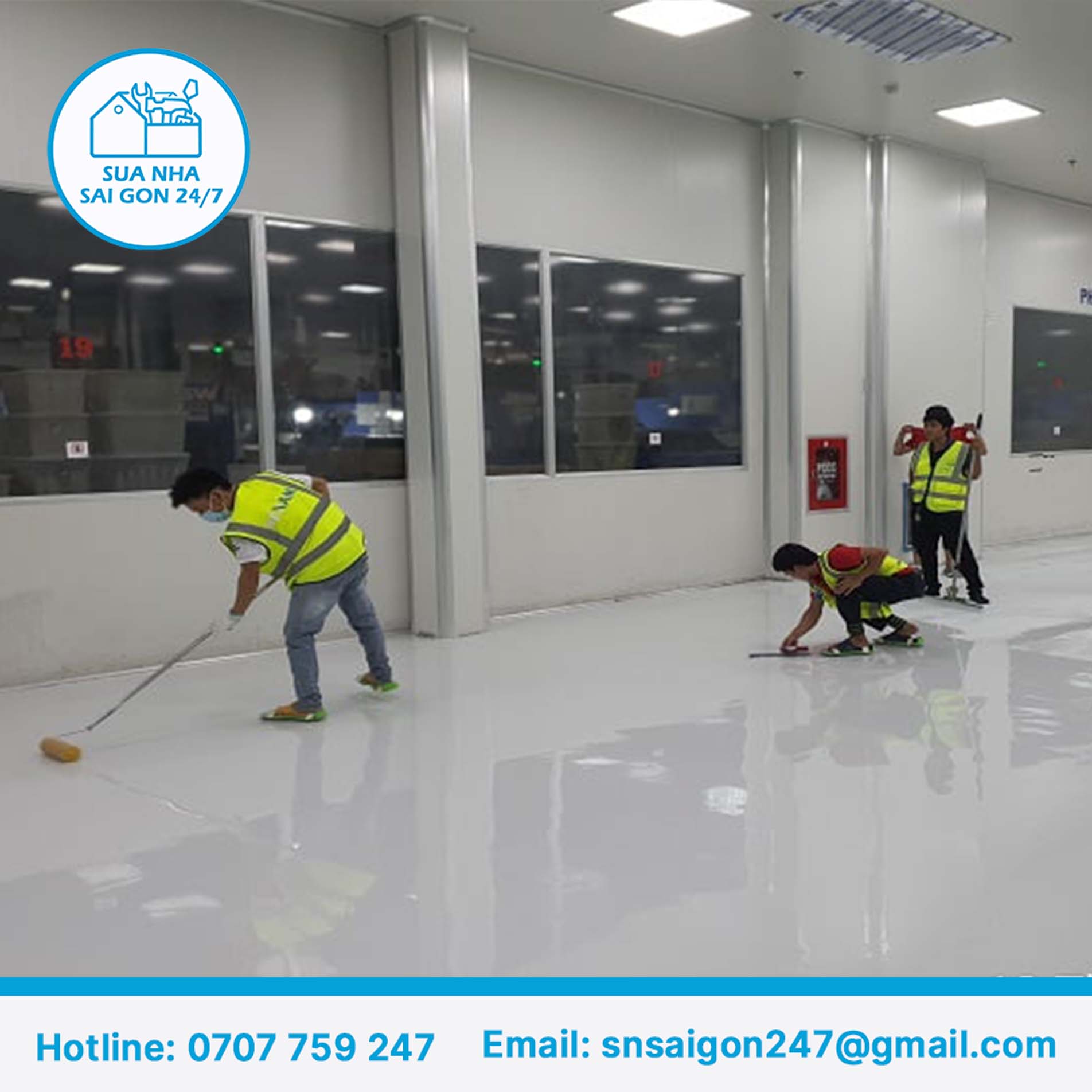
Mixing the paint at the correct Resin:Hardener ratio (usually 2:1 or 3:1 as recommended), rolled evenly in two perpendicular directions for even coverage.
Step 9 – Light sanding (if required):
Applied for multi-coat systems to improve adhesion between layers.
Step 10 – Applying the finishing top coat:
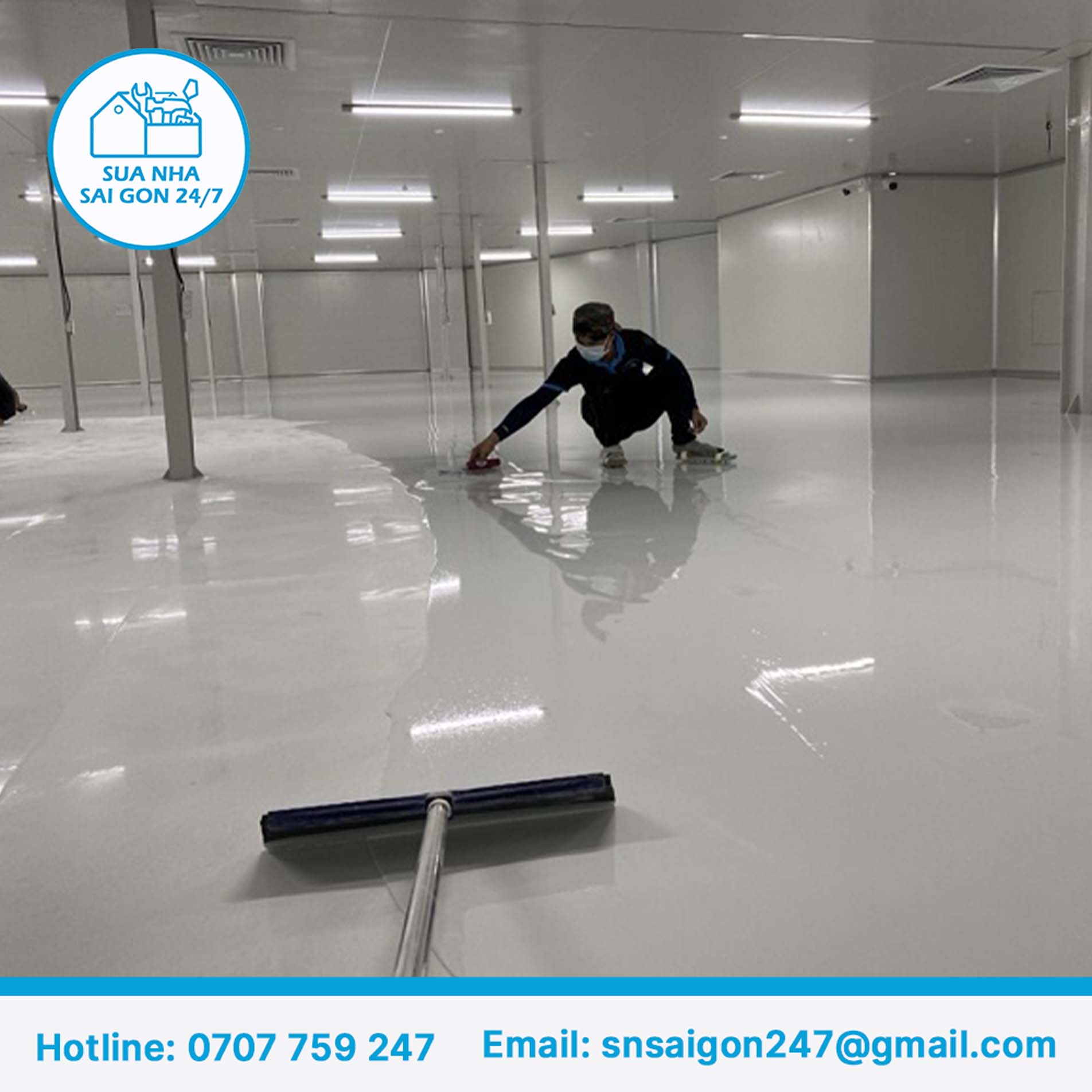
This layer determines the final color, gloss, and abrasion resistance. For self-leveling systems, the paint is poured and spread evenly with a specialized squeegee, then rolled with a spiked roller to release air bubbles.
Phase 4: Completion & Handover
Step 11 – Final inspection:
Checking the entire surface: even gloss, no air bubbles, no roller marks, correct color, and no localized peeling.
Step 12 – Handover and maintenance guidance:
We provide cleaning and maintenance instructions along with written warranty terms.
Time before use after installation:
- Light foot traffic: after 24 hours
- Normal loads: after 3 days
- Heavy loads (forklifts, machinery): after 7 days
V. Epoxy Flooring Applications by Building Type
Epoxy flooring isn’t just for industrial factories. Here are the most common real-world applications in Ho Chi Minh City:
- Factories, industrial parks: Withstands forklift loads, resists oil, easy to clean.
- Basements and parking lots: Waterproof, withstands car loads, color-coded lane markings.
- Hospitals, clean rooms, laboratories: Seamless surface, antibacterial, meets sterile standards.
- Food & pharmaceutical factories: Meets GMP-WHO and HACCP standards — non-absorbent, easy to disinfect.
- Showrooms, upscale offices: Attractive, professional, mirror-glossy finish.
- Homes, apartments, villas: A full replacement for tile flooring — modern and easy to clean.
- Restaurants, cafes, spas: Combined with 3D artistic epoxy for a distinctive brand touch.
VI. Important Things to Know When Choosing an Epoxy Flooring Contractor
This is information that many contractors will never tell you — but Sai Gon Home Repair 247 believes customers deserve full information before deciding.
Warning Signs of a Low-Quality Contractor
- A quote that’s unusually cheap compared to market rates (often means using unverified paint or a diluted mixing ratio).
- No on-site survey before quoting.
- No CO/CQ (Certificate of Origin / Certificate of Quality) documentation for the paint materials.
- No written warranty contract, or vague warranty terms.
- Skips the concrete moisture check before installation.
- No portfolio of real projects in Ho Chi Minh City.
Questions to Ask Before Signing a Contract
- What paint brand do you use? Can you provide CO/CQ documentation?
- How long is the warranty period? What are the specific warranty conditions?
- Is the installation crew your own staff, or hired freelance labor?
- What’s the estimated installation timeline?
- If the floor peels during the warranty period, what’s the process for fixing it?
VII. Why Choose Sai Gon Home Repair 247?
- Real, hands-on experience in Ho Chi Minh City: We’ve completed numerous epoxy flooring projects, from homes to factories, across Ho Chi Minh City.
- Free survey, transparent quote: No hidden costs, a clear written contract.
- Genuine materials with CO/CQ documentation: We use paint from reputable brands and provide full supporting documents.
- Written warranty: A clear warranty commitment, with a fast response if an issue arises.
- Properly trained technical team: No freelance labor, ensuring consistent quality.
- Service across Ho Chi Minh City: From District 1 to Binh Duong and Dong Nai.
VIII. How to Properly Maintain an Epoxy Floor
Whether an epoxy floor stays durable and attractive depends a lot on daily use and maintenance.
Proper cleaning:
- Wipe with clean water or a neutral floor cleaning solution (pH 6–8).
- Use a soft mop or a floor scrubber with a soft pad.
- Dry the floor right after mopping to avoid temporary slipperiness.
Strictly avoid:
- Dragging heavy, sharp-edged objects directly across the floor (use protective padding instead).
- Spilling concentrated acid or strong solvents (acetone, gasoline) and leaving them on the surface for a long time.
- Using a stiff brush or a grinder to clean the surface.
Signs your floor needs maintenance:
- Dull or discolored patches appearing in certain spots.
- Small cracks or minor peeling along the edges.
- The surface starts absorbing water when you test it with a few drops.
Reference lifespan:
- Heavy-load factories: 5–8 years
- Offices, showrooms: 8–12 years
- Homes with normal use: 10–15 years
IX. Frequently Asked Questions (FAQ)
1. How long does epoxy flooring installation take?
Usually 2–5 working days depending on the area and epoxy system type. Surface preparation typically takes 1–2 days, and the coating layers take another 1–3 days depending on the number of coats and curing time between layers.
2. Does Ho Chi Minh City’s weather affect installation?
Yes. Installation should be avoided when humidity exceeds 85% or right after rain. The ideal installation temperature is 15–35°C. Our technical team always checks weather conditions and concrete moisture before starting each stage.
3. Can installation happen while the factory is still operating?
Yes, but the work needs to be divided into sections and done progressively. Sai Gon Home Repair 247 has experience installing during night shifts or weekends to avoid disrupting production.
4. Does epoxy flooring get slippery when wet?
A standard rolled coating can feel slightly slippery when wet. If slip resistance is needed, quartz sand can be added to the top coat, or a specialized anti-slip epoxy system can be used — especially recommended for car wash areas and industrial kitchens.
5. Does Sai Gon Home Repair 247 install epoxy flooring for homes?
Yes. This is one of our strengths — installing epoxy for homes, apartments, and villas using self-leveling or 3D artistic epoxy systems, giving you a modern, upscale space that’s far easier to clean than traditional tile.
6. How much does it cost to repair peeling on an old epoxy floor?
It depends on the extent of the damage. If only a small area has peeled, a localized repair is much cheaper than a full reinstall. If the floor has peeled extensively due to poor initial surface preparation, the whole area needs to be ground down and redone — at a cost comparable to a new installation. Contact us for a free consultation.
7. Is epoxy flooring durable? How many years does it last?
With proper installation technique and quality materials, epoxy flooring can last 5–15 years depending on usage. Heavy industrial factories typically see 5–8 years, while homes can reach up to 15 years.
X. Contact Sai Gon Home Repair 247 — Get a Free Quote
Have an epoxy flooring project in Ho Chi Minh City? Let Sai Gon Home Repair 247 survey your site for free and recommend the best solution for your building.
Sai Gon Home Repair 247
- Website: suanhasaigon247.vn
- Hotline: 0707 759 247
- English support: +84 33 939 0325
- English & Korean support: +84 76 806 7114
- Serving all of Ho Chi Minh City and surrounding areas
- Free on-site survey · Same-day quote · Written warranty
Don’t let a poorly installed epoxy floor eat into your budget later. Choose the right contractor from the start.




