
 Tiếng Việt



What’s Included in Home Electrical Repair
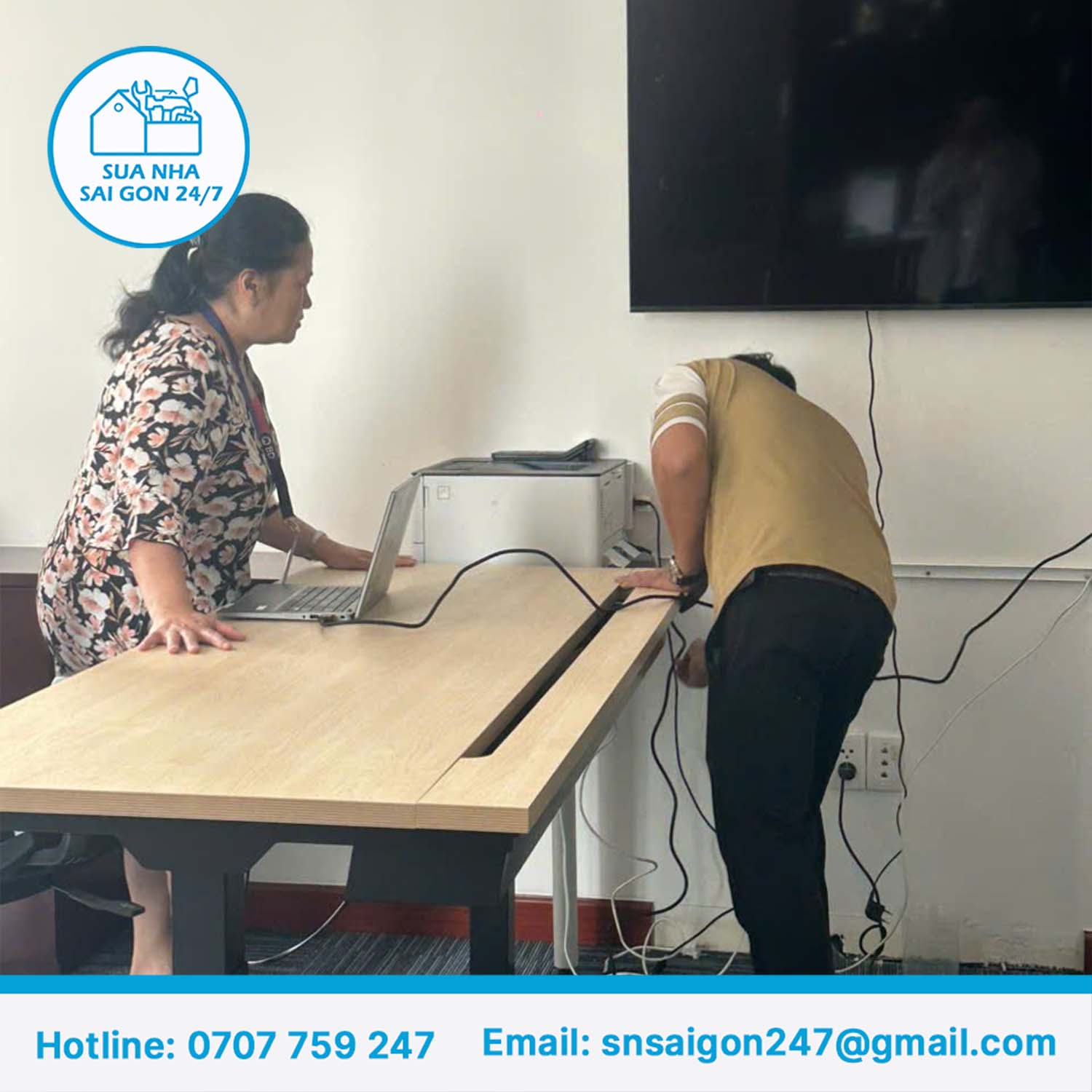
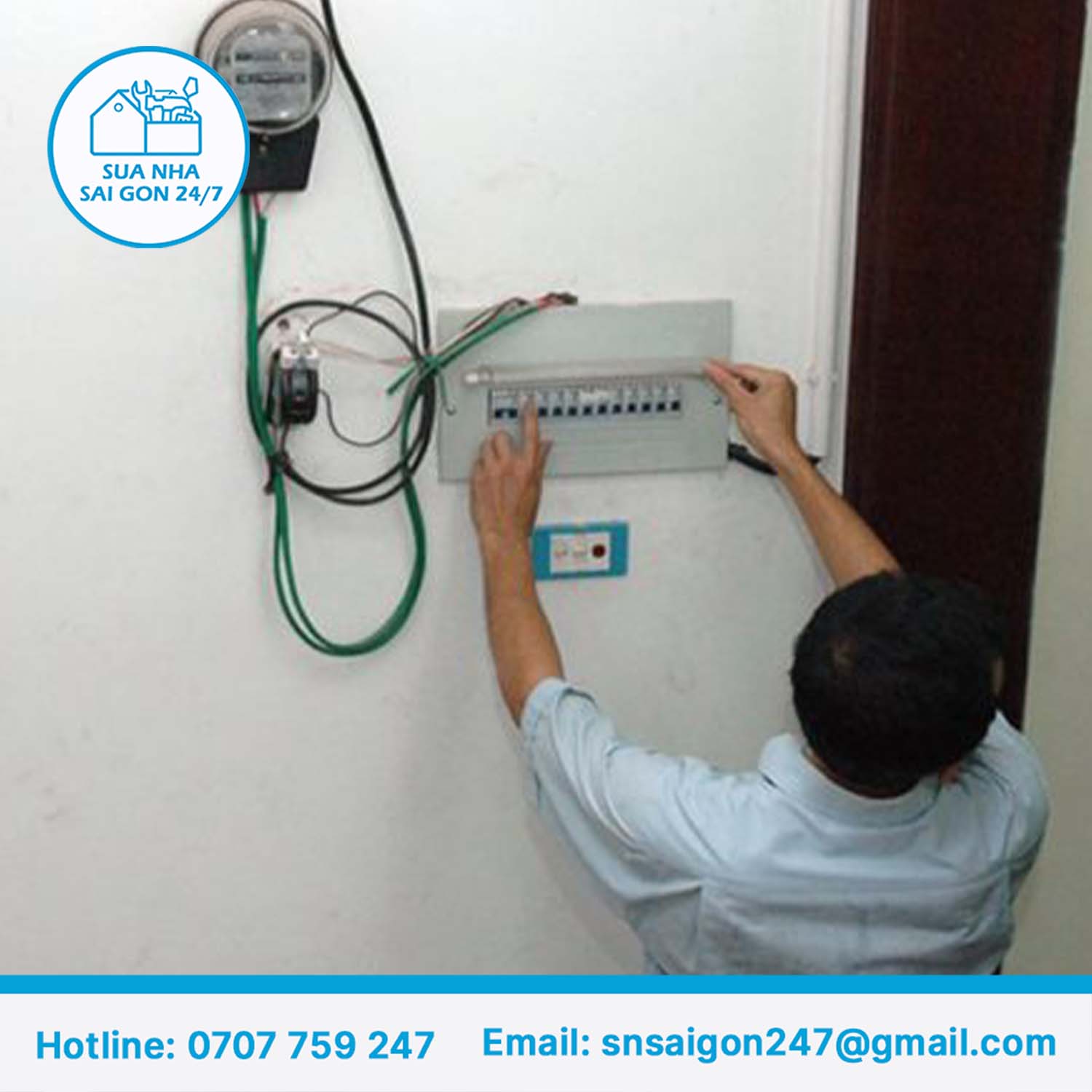
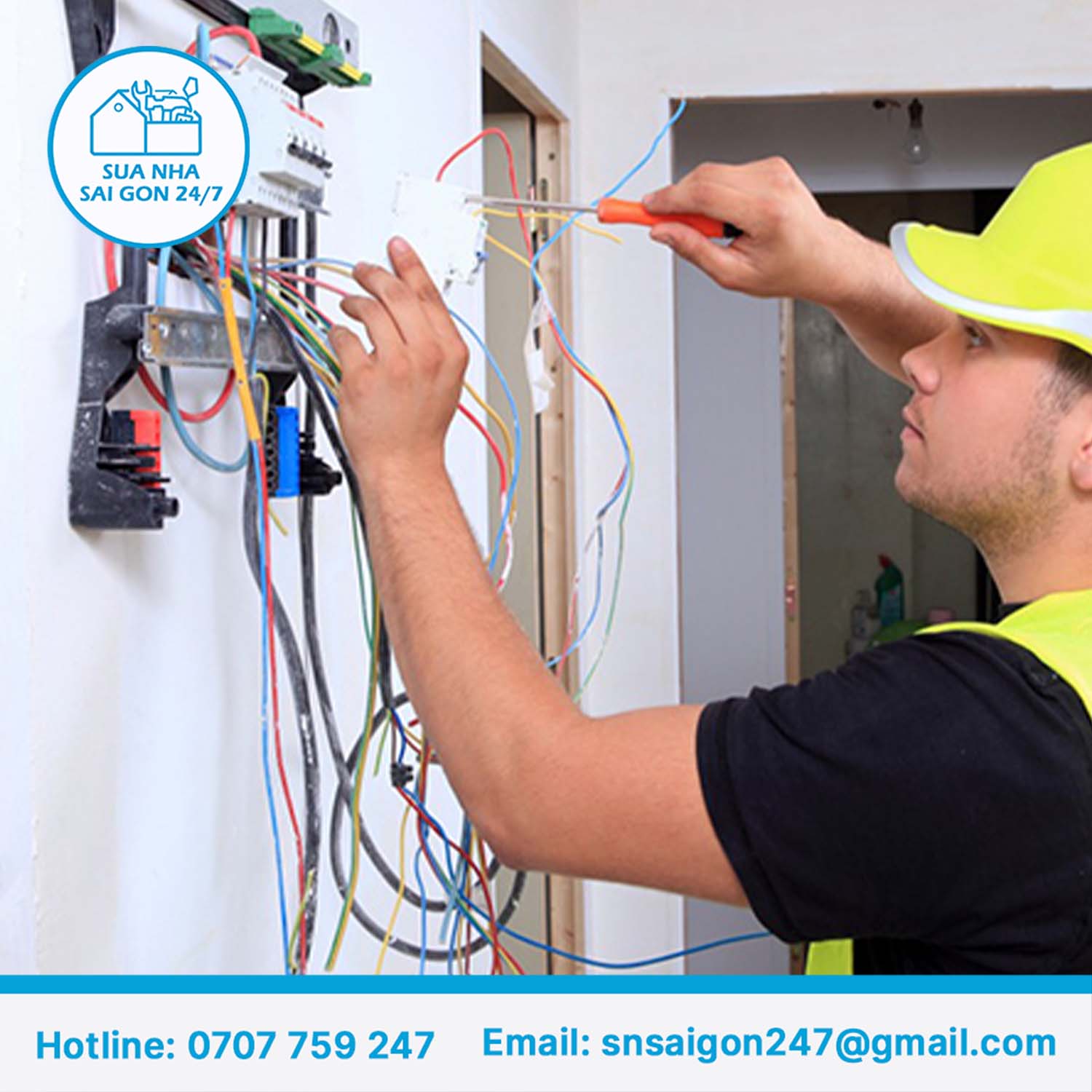
Sai Gon Home Repair 247 handles the following common residential electrical repair items:
- Fixing short circuits or minor scorching at outlets, switches, or the distribution board.
- Resolving partial or full power loss in the home.
- Repairing or replacing damaged outlets, switches, and circuit breakers (CBs).
- Checking and fixing a circuit breaker that trips repeatedly for no clear reason.
- Tracing and fixing broken or leaking concealed wiring.
- Checking and reinforcing the grounding system if it doesn’t meet safety standards.
Common Residential Electrical Problems
Most electrical faults at home trace back to a handful of recurring causes. Recognizing the right symptom helps you respond faster and more safely:
- A circuit breaker that trips repeatedly: usually caused by overloading from several high-power devices running at once, or a CB that’s degraded and no longer trips at its rated protection level.
- An unusually hot outlet or switch: a sign of poor contact, an overloaded wire, or a loose connection — left alone, it can lead to a short circuit.
- Partial power loss in the home: can be caused by a tripped branch breaker, a broken wire hidden in the wall, or a short in a device within that area.
- Flickering or unstable lights: usually related to a loose connection, an incompatible bulb, or unstable voltage.
- A burning smell at the distribution board or an outlet: a serious warning sign — cut power to that area and have it checked immediately.
When to Call an Electrician Urgently
Some signs mean you should call an electrician right away, without waiting:
- A burning smell or smoke coming from an outlet, switch, or the distribution board.
- The main or a branch breaker keeps tripping even after you’ve unplugged some devices.
- Sudden, unexplained partial power loss in the home.
- Exposed wiring or damaged insulation in an area you or your family can easily touch.
- A mild tingling sensation when touching the metal casing of an electrical appliance.
With any of the signs above, cut power to the suspected area first, then contact a qualified electrician rather than attempting a fix yourself if you’re not confident in the technical side of it.
What to Do Before the Technician Arrives
While waiting for the technician, a few simple steps help keep things safe and speed up diagnosis:
- Switch off the main breaker or the breaker for the affected area to prevent the issue from spreading.
- Don’t touch any outlet, switch, or wiring you suspect is damaged until power is confirmed off.
- Note down or photograph when the issue started and any accompanying signs (burning smell, sparks, a small popping sound) to share with the technician.
- Don’t attempt to reconnect wiring or replace a breaker yourself without the right expertise — doing so can mask the real cause of the fault.
Home Electrical Repair Process
Sai Gon Home Repair 247 follows this process for residential electrical repairs, to make sure the actual cause gets fixed rather than just patched over:
- Intake over the hotline: the technician asks about the symptoms upfront to bring the right tools before arriving.
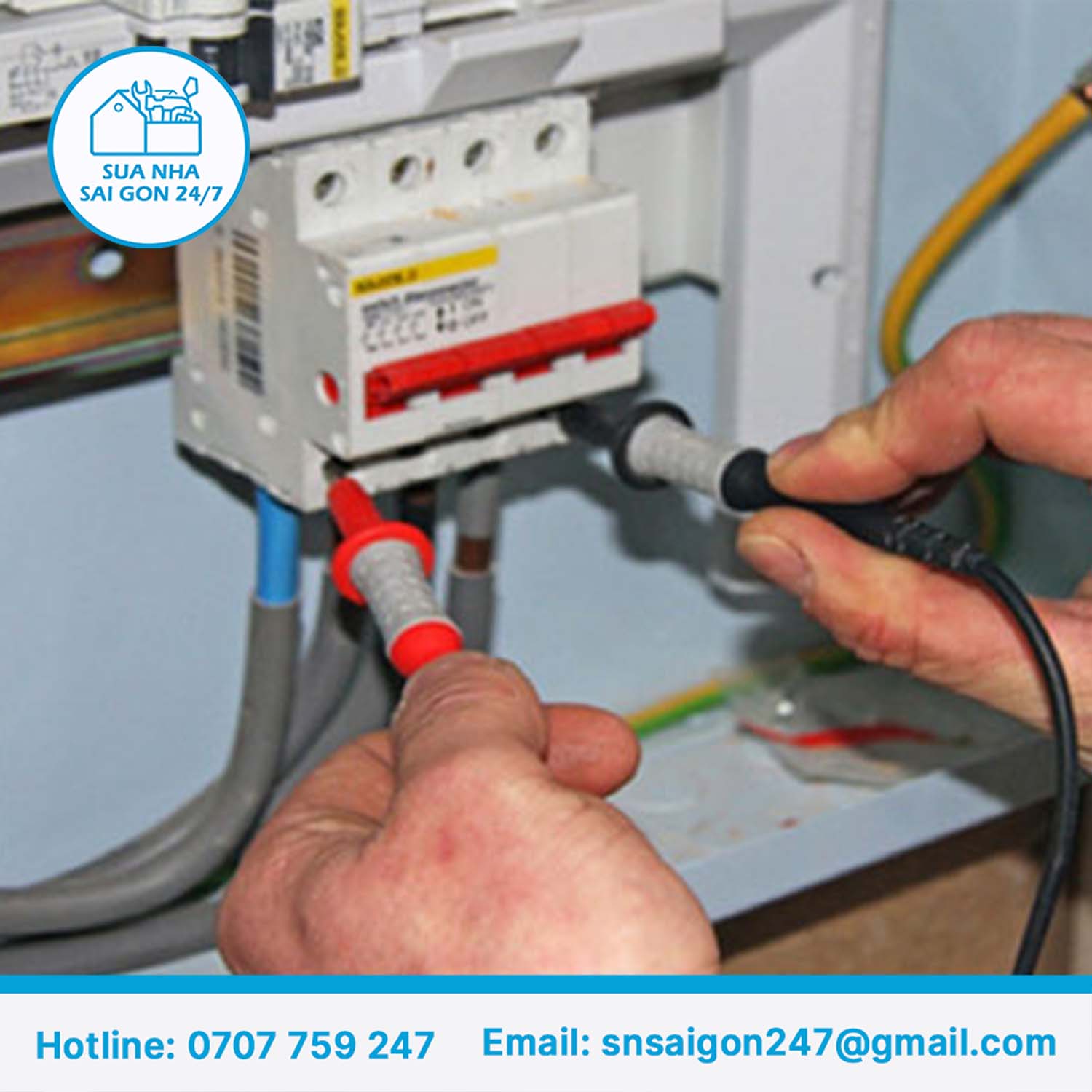
- On-site inspection and diagnosis: using a voltage tester and multimeter to pinpoint the location and cause of the fault.
- Advising on the repair plan: explaining the cause and proposing a fix along with reference costs before starting work.
- Carrying out the repair: replacing damaged components, fixing the short/leak point, and confirming everything is safe before restoring power.
- Testing and sign-off: re-measuring voltage and test-running the affected devices to confirm the fault is fully resolved.
Electrical Repair vs. New Wiring Installation
Many customers confuse these two services, even though the approach is quite different:
| Criteria | Electrical Repair | New Wiring Installation |
|---|---|---|
| What it applies to | An existing electrical system with a current fault | A property with no electrical system yet, or one needing a full rebuild |
| First step | Diagnosing the cause of the fault | Site survey and wiring diagram design |
| Urgency | Usually needs a fast response, can come up unexpectedly | Can be scheduled in advance, less urgent |
| Scope of work | Focused on the specific point or area with the fault | The property’s entire electrical system |
In some cases, a fault that keeps recurring at the same spot is a sign the old electrical system needs renovation or a full rebuild rather than another repair — the technician will advise on this specifically after a survey.
What Affects the Cost of Electrical Repair
The cost of home electrical repair depends on several factors — there’s no fixed price that applies to every fault. The main factors to weigh are:
- Type of fault: simple (replacing an outlet or breaker) or complex (a leak in concealed wiring).
- Time needed to diagnose the cause, especially when the location isn’t obvious.
- Whether the wall needs to be cut open to inspect concealed wiring.
- Number of items that need fixing at the same time.
- Timing of the request (during business hours or outside them).
The prices above are for reference only. Actual cost depends on the site’s condition and will be finalized after an on-site survey.
The Risks of DIY Electrical Repairs
Many homeowners try to fix small electrical issues themselves to save time, but a few seemingly simple actions carry real risk without the right expertise:
- Replacing a breaker with the wrong rating: installing a CB with a trip current that doesn’t match the actual load leaves the system without proper overload protection.
- Taping wiring together as a temporary fix: an unreliable connection that oxidizes easily and can cause a short circuit down the line.
- Continuing to use a scorched outlet or switch: temporarily hides the symptom without addressing the cause, and the fault often comes back worse.
- Not cutting power before inspecting: the highest-risk mistake for electric shock, especially for anyone unfamiliar with electrical work.
For faults that directly affect electrical safety, having a qualified technician inspect and fix the issue properly helps confirm the actual cause, rather than a quick fix that lets the fault resurface soon after.
Does Fixing It Require Cutting Into the Wall
With concealed wiring, not every fault requires cutting into the wall. It depends on where the fault is and how serious it is:
- No wall-cutting needed for faults at outlets, switches, breakers, or the distribution board — spots that can be reached directly without disturbing the concealed wiring.
- Some exploratory cutting may be needed if concealed wiring is suspected to be broken or leaking somewhere between two points, especially with no wiring diagram left over from the original installation.
- Technicians generally try non-invasive methods first, such as continuity testing and specialized fault-locating tools, to pinpoint the location precisely and avoid unnecessary demolition.
If cutting into the wall turns out to be unavoidable, the technician will clearly explain the scope and any added cost before proceeding, so nothing comes as a surprise.
Repairing an Older Home vs. a Newly Built One
The age and condition of the electrical system shape the approach quite a bit:
- Older homes with a long-standing electrical system: wiring and the distribution board may already be degraded, with wire gauge no longer suited to today’s load (more air conditioners and higher-power devices than before). Faults in older homes usually call for a more thorough survey to rule out whether a renovation is needed rather than just a spot repair.
- Newly built or recently finished homes: faults are more often related to installation errors (wrong connections, missing grounding) than natural wear, so the cause is usually quicker to identify if a wiring diagram exists from the original contractor.
- Buying a pre-owned home: without any history on the electrical system, it’s worth requesting a general inspection before moving in, rather than waiting for a fault to show up first.
What to Have Ready When You Call
Giving clear information when you call the hotline helps the technician bring the right tools and shortens the time needed on-site:
- Describe the specific symptoms: full or partial power loss, any burning smell or smoke, whether a breaker is tripping.
- When the issue started and whether it’s linked to using a particular device (air conditioner, water heater, etc.).
- Type of property: townhouse, apartment, or single-story home, since each has different electrical characteristics.
- Your specific address and when you’d like the technician to arrive.
Periodic Maintenance to Prevent Recurring Faults
Many electrical faults can be caught early and fixed before they become an emergency, if the system is inspected regularly:
- Regularly inspecting the distribution board and circuit breakers to catch signs of overload or wear before they cause a fault.
- Periodically testing the grounding system, especially after the rainy season or when the home shows signs of dampness.
- Checking connections at frequently used outlets and switches to prevent loose or oxidized contacts that cause intermittent faults.
- Keeping a record of faults that recur at the same spot, so the technician can assess whether a renovation is needed rather than repeated spot fixes.
For a home with an older electrical system, checking it every 6–12 months significantly reduces the risk of an unexpected fault, especially during the rainy season or when load rises from heavier use of cooling equipment.
Why Choose Sai Gon Home Repair 247
When an electrical fault comes up, many families worry a technician won’t fix the actual cause, and the same problem returns not long after. Sai Gon Home Repair 247 addresses this with a clear diagnostic process before any repair work, a fixed technical team with no middleman, and a warranty on every item repaired.
We also serve foreign customers, particularly the Korean community living in Ho Chi Minh City, with support available via Zalo, WeChat, and KakaoTalk.
Contact Sai Gon Home Repair 247 at hotline 0707 759 247 for an on-site survey and advice on the right repair plan.
Service Area
Sai Gon Home Repair 247 provides residential electrical repair across: Thu Duc City, Binh Thanh, District 7, District 1, District 3, Go Vap, Phu Nhuan, Tan Binh, and surrounding areas of Ho Chi Minh City.
Frequently Asked Questions
What does home electrical repair cover?
It covers fixing existing electrical faults such as short circuits, partial power loss, a broken outlet or switch, a breaker that trips repeatedly, or degraded wiring — as opposed to new wiring installation for a property without an existing system.
When should I call an electrician urgently?
Call right away if you notice a burning smell or smoke at an outlet or the distribution board, a breaker tripping repeatedly with no clear cause, sudden partial power loss, or exposed wiring and an unusually hot outlet.
What should I do before the technician arrives after a short circuit or power loss?
First switch off the main breaker or the breaker for the affected area for safety, avoid touching any outlet or wiring you suspect is damaged, and don’t try to reconnect anything yourself without electrical expertise.
How quickly can home electrical repairs be done?
Simple faults like replacing an outlet, switch, or breaker are usually fixed within 30–60 minutes of the technician’s arrival. More complex issues, like a leak in concealed wiring, can take longer depending on severity.
What determines the cost of home electrical repair?
Cost depends on the type of fault, how complex it is to diagnose, whether the wall needs to be cut open to check concealed wiring, and how many items need fixing. Actual cost is confirmed after an on-site survey.
How is electrical repair different from new wiring installation?
Electrical repair fixes faults in an existing system and usually requires diagnosing the cause first. New wiring installation means installing an entire system from scratch for a property with no electrical system yet, or one that needs a full rebuild.
Is a hot outlet or switch dangerous?
Yes. An unusually hot outlet or switch is usually a sign of poor contact, an overload, or degraded wiring, and can lead to a short circuit if left unaddressed. Cut power to that area and have it checked soon.
Is home electrical repair covered by warranty?
Yes. Sai Gon Home Repair 247 provides a warranty for each item repaired, with the specific term confirmed at the time of the survey and quote.
Sai Gon Home Repair 247 — over 7 years of repair & renovation experience in Ho Chi Minh City.
Hotline: 0707 759 247 · Email: snsaigon247@gmail.com · Zalo: 0707759247
English support: 033 939 0325 · English & Korean support: 076 806 7114
Address: No. 150 Tran Nao Street, An Khanh Ward, Ho Chi Minh City
Contact us for an on-site survey and advice on the right solution for your home.



