
 Tiếng Việt
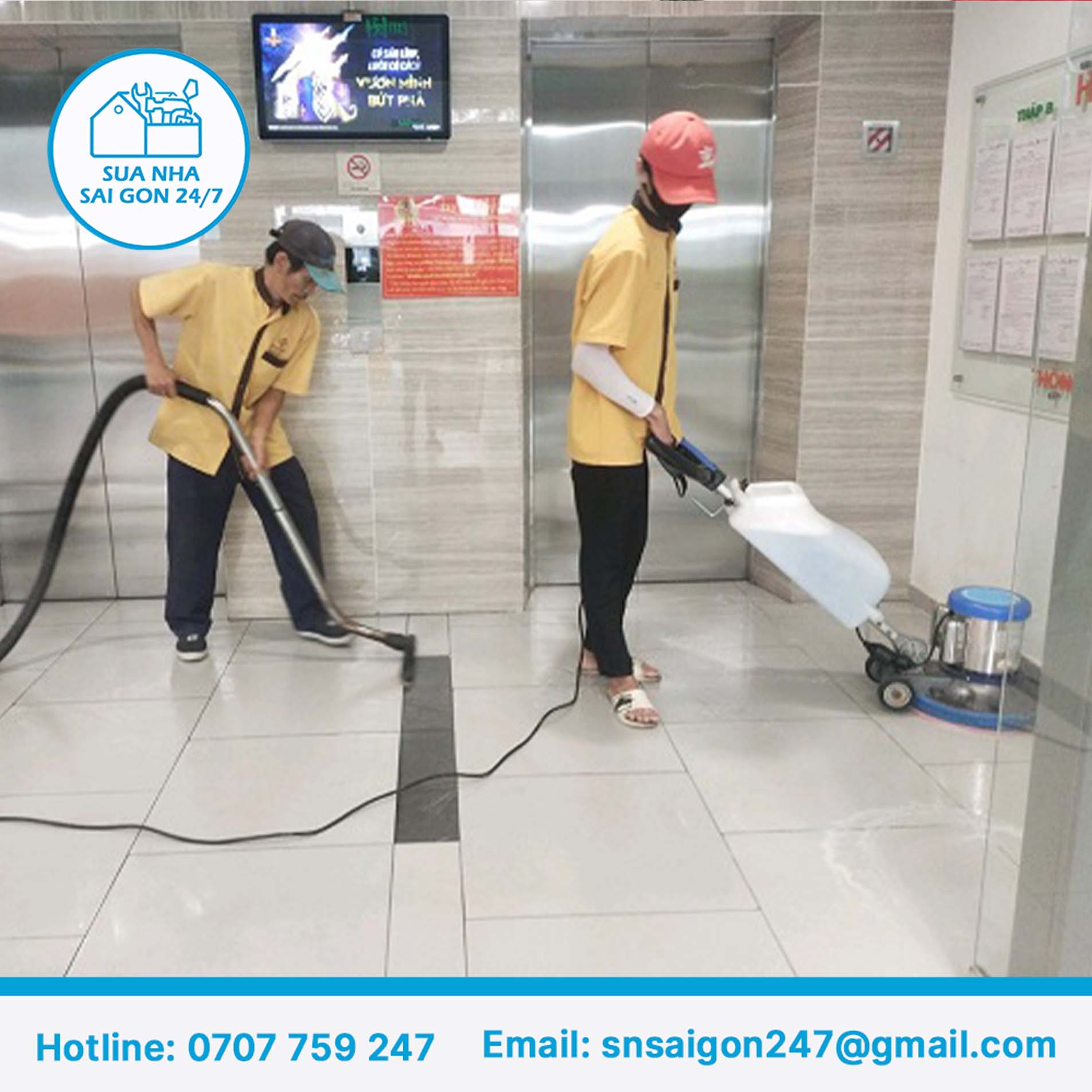


Sai Gon Home Repair 247 provides professional industrial floor cleaning in Ho Chi Minh City and neighboring provinces. With over 10 years of experience and 3,000+ projects completed — from manufacturing plants and warehouses to factories and office buildings.
- Hotline/Zalo: 0707 759 247 — Free consultation, quote within 15 minutes
- Address: 150 Tran Nao Street, An Khanh Ward, Thu Duc City, Ho Chi Minh City
1. What Is Industrial Floor Cleaning?
Industrial floor cleaning is a deep-cleaning process using high-powered machines and specialized chemicals to handle the specific types of grime found in manufacturing plants, warehouses, and factories — things a regular mop can never resolve.
| Criteria | Regular cleaning | Industrial cleaning |
|---|---|---|
| Equipment | Broom, mop | Floor scrubbing machine, industrial vacuum |
| Chemicals | Household floor cleaner | Specialized chemicals matched to floor type |
| Dirt handled | Dust, light stains | Oil/grease, cement, metal dust, chemical residue |
| Result | Surface clean | Deep clean, protects and extends floor lifespan |
| Best for | Homes, small offices | Factories, warehouses, plants, garages |
When do you need industrial cleaning?
- After construction or renovation of a factory
- After an oil spill or chemical spill incident
- Every 3–6 months for periodic floor maintenance
- Before a workplace safety inspection, a factory audit, or hosting an important client

2. Types of Industrial Floors & the Right Way to Treat Them
This is where many cleaning companies get it wrong: using the same process for every floor type. In reality, each floor type has its own structure and weak points — the wrong chemical can damage the surface or cause the coating to peel.
Epoxy Floors
The most common floor in manufacturing plants, garages, and cleanrooms. The surface is glossy and smooth but sensitive to strong alkaline chemicals and stiff brushes.
- Use: Neutral-pH solution (6.5–7.5), soft-pad machine at low speed
- Strictly avoid: Strong acid, NaOH, organic solvents, wire brushes
- Maintenance frequency: Daily damp mopping, weekly machine scrubbing, deep clean every 3 months
Polished Concrete / Terrazzo
The surface has tiny air pockets and readily absorbs oil and chemicals if not protected with a coating. Yellow stains and dark spots commonly appear after long-term use.
- Process: Dry grinding with a diamond machine → chemical cleaning → surface polishing → protective nano coating
- Special note: Deeply absorbed oil stains need to soak in a degreasing agent for 20–30 minutes before scrubbing
Industrial / Anti-Slip Tile Flooring
The anti-slip grooves on the tile surface trap the most dust, oil, and mold — and are the hardest to clean by hand.
- Use: High-pressure sprayer combined with a stiff bristle brush to clear the grooves
- Chemicals: Depending on the stain type (alkaline degreaser for oil/grease, fungicide for mold)

PVC / Technical Rubber Flooring
Commonly used in laboratories, control rooms, and cleanrooms. A soft material that can deform if the wrong chemical is used.
- Never use: Alcohol, acetone, ketone-based solvents
- Use: A mild neutral-pH solution, hand-wiped with a soft, damp cloth
3. Standard 7-Step Industrial Floor Cleaning Process
Sai Gon Home Repair 247 applies a standardized process to every project — no shortcuts, no skipped steps.
Step 1: Survey & assessment
A technician visits the site to determine the floor type, level of soiling, area, and specific stain locations (oil stains, cement, rust, etc.). A work plan and detailed quote are prepared — free of charge.
Step 2: Clear & protect the surrounding area
Move or cover machinery and equipment, place work-zone warning signs, and ensure workplace safety throughout the process.
Step 3: Industrial dry vacuuming
A high-powered vacuum (≥ 3,000W) removes all dust, debris, metal shavings, and grit before the floor is wetted — preventing it from turning to mud, which would make cleaning harder.
Step 4: Treat stubborn stains
Each stain type is identified and treated with the correct chemical:
- Oil, machine grease: Alkaline degreaser, soak for 15–30 minutes
- Cement, mortar: Mild acid solution (only for concrete/tile floors)
- Rust: Specialized rust remover
- Resin, adhesive: Organic solvent suited to the floor type

Step 5: Scrub with industrial machines
Use a single-disc scrubber (for small areas, corners) or a dual-disc / ride-on scrubber (for large areas over 1,000m²). The pad and speed are selected according to the floor type.
Step 6: Extract dirty water & rinse clean
An industrial wet vacuum extracts all the dirty water and sludge. The floor is rinsed with clean water 1–2 times to fully remove chemical residue.
Step 7: Inspection, finishing & handover
Every area is checked and any missed spots are corrected. Handover includes a completion checklist and before/after photos. We advise on a periodic maintenance schedule.
4. Equipment & Chemicals Used
Specialized machinery:
- Karcher BD 30/4 C single-disc floor scrubber
- Tennant T7 dual-disc floor scrubber (for large areas)
- Nilfisk GS80 industrial vacuum (HEPA filtration)
- Industrial wet vacuum
- Karcher HD 5/15 high-pressure washer (for outdoor areas, drainage channels)
Chemicals used:
- Alkaline degreaser (industrial oil/grease remover) — pH 9–12, safe for concrete and tile
- Neutral-pH solution — specialized for epoxy and PVC floors
- Mild acid cleaner — treats cement and mineral scale (for concrete floors only)
- Protective nano coating — applied after cleaning to extend durability and prevent absorption (add-on service)
5. Industrial Floor Cleaning Price List
All quotes are based on an on-site survey — no hidden costs once the contract is signed.
| Item | Reference price | Notes |
|---|---|---|
| Full epoxy floor cleaning | 15,000 – 25,000 VND/m² | Depends on soiling level |
| Concrete floor / warehouse cleaning | 10,000 – 18,000 VND/m² | — |
| Deep oil/grease stain treatment | 20,000 – 35,000 VND/m² | Chemical soak + machine scrubbing |
| Anti-slip tile floor cleaning | 12,000 – 22,000 VND/m² | Pressure washing + groove brushing |
| Concrete / terrazzo polishing | 60,000 – 120,000 VND/m² | Grinding + polishing + nano coating |
| Monthly recurring cleaning contract | Quoted by area | 15–20% discount |
Factors affecting the price:
- Actual area and level of soiling
- Floor type and specific stain type
- Job location (inner city / outer city / neighboring provinces)
- Work timing (business hours / after hours / weekends)
- Frequency of a recurring contract

6. Signs Your Factory Floor Needs Cleaning Right Away
Don’t wait until the floor has seriously deteriorated. Act as soon as you notice:
- A greasy, slippery floor when walking on it → high risk of workplace accidents
- Spreading oil stains that won’t clean up with normal methods
- A dull epoxy surface, losing its shine, with white spots appearing
- Clogged drainage channels with a foul smell
- Metal dust or iron shavings on the surface → risk of product contamination (especially serious in the food, pharmaceutical, and electronics industries)
- An upcoming workplace safety inspection or an important partner/client visit

7. Frequently Asked Questions
1. How long does industrial floor cleaning take? It depends on the area and level of soiling. Typically: 500m² of lightly soiled floor takes about 4–6 hours; 500m² of heavily soiled floor (a lot of oil/grease) takes 8–12 hours. We usually work night shifts or weekends so production isn’t disrupted.
2. Do we need to stop production during floor cleaning? For large areas, we recommend pausing the zone currently being worked on. We can split the cleaning by section and by shift so the factory keeps running continuously — just tell us your requirements when booking.
3. Do the cleaning chemicals affect workers’ health? All chemicals we use come with full MSDS (Material Safety Data Sheets) and meet safety standards. Our crew is fully equipped with protective gear. After the work, the floor is rinsed clean and ventilated before handover.
4. How often should a factory floor be cleaned?
- Heavy manufacturing floors (mechanical, automotive): every 1–2 months
- Warehouses, logistics: every 3–6 months
- Food and pharmaceutical factories: per GMP requirements, typically monthly
5. How soon after a new epoxy floor is installed can it be cleaned? Wait at least 7 days after new epoxy installation for the coating to fully cure before the first cleaning. Never use strong chemicals within the first 30 days.
6. Do you clean floors in neighboring provinces? Yes. Sai Gon Home Repair 247 takes on projects in Ho Chi Minh City, Binh Duong, Dong Nai, Long An, and Ba Ria – Vung Tau. Travel fees are based on distance and confirmed when you get in touch.
8. Why Choose Sai Gon Home Repair 247?
- 10+ years of experience in industrial floor cleaning across Ho Chi Minh City and neighboring provinces
- 3,000+ projects completed, from personal garages to 10,000m² factories
- Specialized machinery — no manual tools used on industrial jobs
- Chemicals matched to each floor type — no surface damage
- Transparent pricing — free survey, no hidden costs
- After-hours / weekend work — no disruption to production
- Results warranty — any missed spot found within 24 hours is fixed free of charge
10. Contact Us to Book Now
4 simple steps:
- Call or message Zalo: 0707 759 247
- Tell us the floor type, area, and location
- Our survey team visits on-site — free of charge
- Receive a detailed quote within 15 minutes
Hotline/Zalo: 0707 759 247
English support: 033 939 0325
English & Korean support: 076 806 7114
Email: snsaigon247@gmail.com
Address: 150 Tran Nao Street, Quarter 2, An Khanh Ward, Ho Chi Minh City
Working hours: Mon–Sat: 8:00–17:00 | Hotline available 24/7




