Tiếng Việt


- Hotline/Zalo: 0707 759 247 (24/7)
- Address: 150 Tran Nao Street, An Khanh Ward, Thu Duc City, Ho Chi Minh City
- Working hours: 8:00 AM – 5:00 PM (every day)
1. What Is a Hidden Water Leak? Three Common Types
A “hidden” water leak is water escaping from a damaged pipe buried inside the building’s structure — inside a wall, under the floor slab, or cast into concrete — invisible at first but capable of causing serious damage if not caught early. Here are the three most common types found in residential properties.
1.1. In-Wall Leaks
This happens when a pipe running inside a wall cracks, breaks, or fails at a joint. Water continuously seeps into the wall and works its way to the surface, creating yellow or dark stains, peeling paint, and spreading mold over time.
How to recognize it:
- A patch of dampness in one fixed spot on the wall
- Paint peeling, or plaster that feels soft to the touch
- Mold or mildew appearing somewhere that isn’t near a bathroom
- A faint trickling sound inside the wall at night
Severity: The hardest to catch — often goes unnoticed for months until the wall damage becomes obvious.
1.2. Under-Slab / Under-Floor Leaks
This occurs when a water supply pipe buried under floor tiles or cast in the concrete slab cracks — from ground settling, impact during construction, or material aging over time. Water leaks upward, gradually seeping through tile grout or creating unexplained damp patches on the floor.
How to recognize it:
- The floor stays damp continuously with no water spilled
- A faint trickling sound under the tiles
- Tiles bubbling or the tile adhesive coming loose
- The water meter keeps running even when nothing is in use
Severity: The most common type in townhouses and older apartments (10+ years old) — accounting for around 60% of service calls.
1.3. Leaks at Pipe Joints / Valves
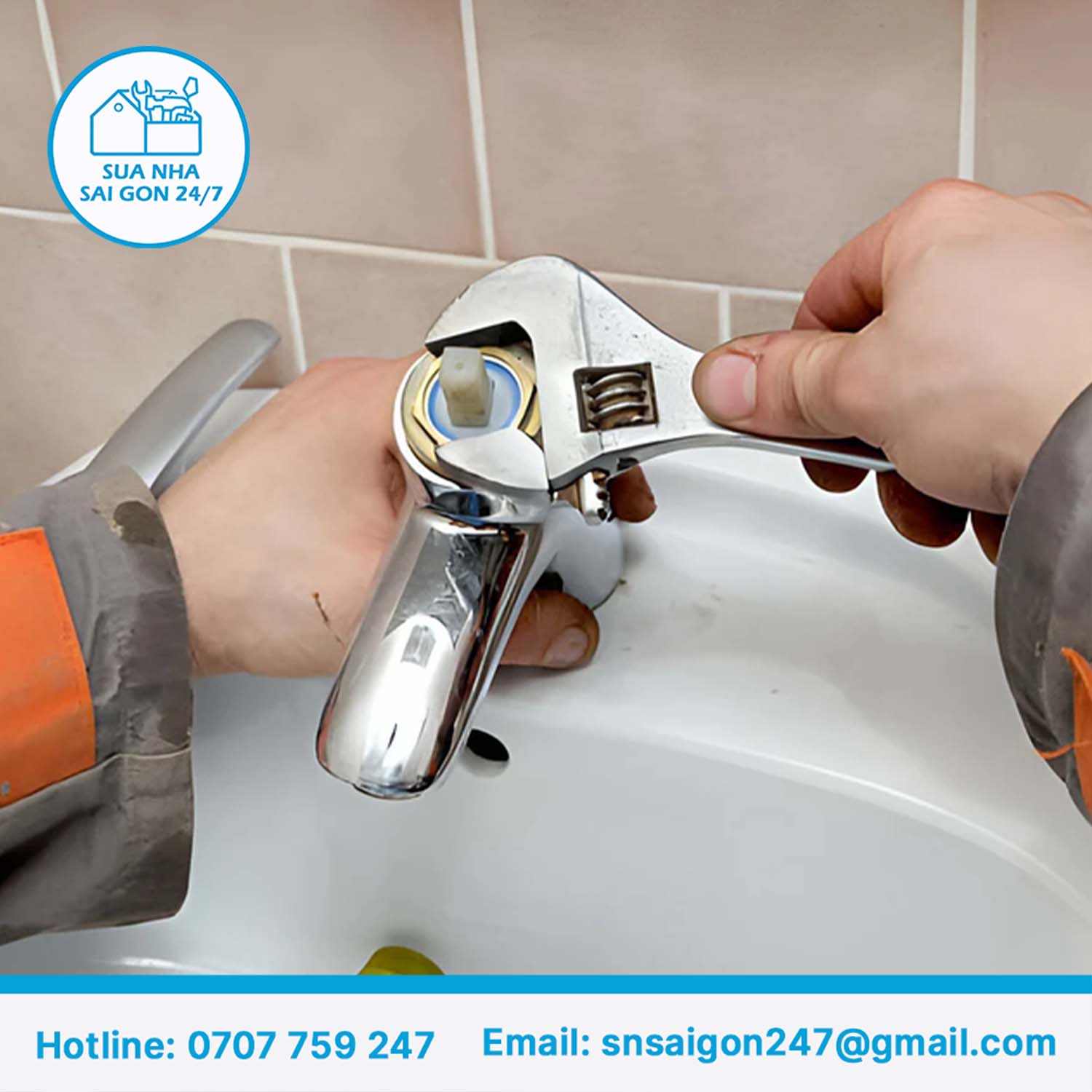
The simplest type of leak, occurring at a pipe joint, valve connection, or faucet fitting due to a worn rubber gasket, a loose fitting, or a weld that isn’t sealed properly. Usually visible to the naked eye and simple to fix.
How to recognize it:
- Continuous dripping at the connection point
- A damp stain right at the joint
- An audible leak when the valve is opened
Severity: The easiest to spot and quickest to fix — usually just a new gasket, tightening the fitting, or re-sealing the joint.

2. 8 Signs Your Home May Have a Water Leak — Check Today
Many households let a leak run for months simply because they don’t recognize the early warning signs. Here are 8 signs you can check yourself at home — if you notice two or more, contact a leak detection service right away to limit further damage.
2.1. A Sudden, Unexplained Jump in Your Water Bill
If your water bill rises by 20% or more compared to the previous month with no change in usage habits, this is the clearest sign of a leak. A single pinhole leak just 1mm wide can waste 5,000–10,000 liters of water a month, adding roughly 100,000–500,000 VND to your bill.
2.2. The Water Meter Keeps Running With Every Tap Closed
The simplest test you can do at home:
- Turn off every tap and water-using appliance (washing machine, water heater, water filter)
- Watch the water meter
- If the dial keeps turning or the reading keeps climbing → there’s a hidden leak somewhere in the system

2.3. The Water Pump Runs Constantly Without Stopping
A pump that keeps kicking on even when the tank is full is a sign that water pressure is dropping due to a leak. The pressure sensor forces the pump to keep compensating, driving up your electricity bill and shortening the pump’s lifespan.
2.4. The Water Tank Is Nearly Empty by Morning With No Overnight Use
If the tank was full the night before and you find it half-empty or nearly drained the next morning — with no one using water overnight — that points to a high-volume leak somewhere in the system.
2.5. Yellow or Dark Stains, Peeling Paint, or a Wall That Feels Soft
Continuous water seepage softens the plaster, causes paint to peel, and leaves yellow, brown, or black stains. If a wall feels soft or damp to the touch, that’s a sign an in-wall leak has been going on for weeks.
2.6. A Damp Patch on the Floor, or the Sound of Running Water Inside the Wall
If one area of the floor is always damp with no spill to explain it, or you hear water running inside a wall or under the floor on a quiet night — that’s a clear sign of an under-slab or in-wall leak.
2.7. Mold Growing in an Unusual, Fixed Location
Mold or moss growing at a fixed spot on a wall — somewhere that isn’t normally exposed to water, like a bathroom — points to abnormally high humidity from a hidden leak.
2.8. A Sudden Drop in Water Pressure at Certain Taps
If the tap on the second floor suddenly runs weaker than usual while the ground floor is normal, the supply line running up to the second floor may be leaking and losing pressure.
3. Self-Check With Your Water Meter at Home (5 Steps)
Before calling a service, you can do a rough check yourself using this simple method:
Step 1: Turn off every tap and water-using appliance in the house (washing machine, water heater, water filter).
Step 2: Record the current water meter reading (take a photo for easy comparison).
Step 3: Don’t use any water for 1–2 hours (ideally overnight, from 10 PM to 6 AM).
Step 4: Check the meter reading again.
Step 5: If the reading increased → there’s a hidden leak somewhere in the system → contact a leak detection service right away.
Note: If the meter reading increases by 10 liters or more during the test period, this indicates a serious leak that needs urgent attention.
4. 7 Common Causes of Pipe Leaks
Understanding the cause helps you prevent leaks and handle them correctly once found.
Material and Pipe Age
- PVC pipes degrade after 10–15 years from UV exposure, temperature, and chemicals in the water — becoming brittle and prone to cracking
- Copper pipes corrode over time if the water’s pH isn’t well balanced
- Substandard materials used at the time of the original installation — thin-walled pipes, below-standard fittings, weak welds
Water Pressure Issues
- Excessive pressure (above 7 bar) wears down joints faster and can crack plastic piping
- Water hammer — occurs when a valve is shut abruptly, sending a pressure shockwave through the pipe walls that gradually weakens joints

Installation and Workmanship
- Welds or joints that don’t meet technical standards
- Underground/in-wall pipes installed without a protective conduit or without allowance for thermal expansion
- Pipes installed too tightly, without enough room to expand as temperature changes
External Factors
- Ground settling can crack under-slab pipes — common in areas with soft or reclaimed soil
- Drilling into a wall or hammering in a nail that accidentally punctures an in-wall pipe
- Tree root intrusion into outdoor water lines (garden areas, supply lines from the street)
Water Chemistry
Hard water, high residual chlorine, or a pH that’s too low or too high corrodes metal pipes and makes plastic piping brittle over time.
Temperature
In areas with large temperature swings — such as a house with a tin roof exposed to sun all day — pipes repeatedly expand and contract, causing material fatigue and cracking at weak points.
Lack of Routine Maintenance
An older pipe system that’s never inspected, with valves that are never serviced, lets small issues accumulate unnoticed until they become a real problem.
5. The Real Cost of Ignoring a Water Leak
Many households put off fixing a leak, thinking “it’s just a little water, not worth the trouble.” In reality, the damage adds up — both financially and in terms of safety.
Quantifiable Financial Loss
- A single 1mm leak can waste 5,000–10,000 liters of water a month
- Your water bill can rise by an extra 500,000–2,000,000 VND a month depending on the severity
- Structural repair costs, if left too long (damaged walls, ground settling), can reach 20–100 million VND
- Hidden costs: electricity from a pump running non-stop, and having to replace a pump that fails early
Structural Damage
- Water reaching the rebar inside walls, ceilings, and columns causes corrosion, seriously shortening the building’s lifespan
- Weakening foundations, with a risk of localized settling — especially dangerous for multi-story townhouses
- Plasterboard ceilings absorbing moisture, sagging, and potentially collapsing suddenly, risking injury
- Brick walls deteriorating from the inside, losing load-bearing capacity, and becoming far more expensive to repair fully
Health Effects
- Mold growth triggers respiratory allergies, asthma, and rhinitis — particularly risky for children and the elderly
- Bacteria and microorganisms thrive in damp conditions, creating unpleasant odors
- Serious electrical shock or fire risk when water reaches in-wall electrical wiring
Stress and Daily Disruption
- Ongoing stress watching wall damage spread
- Anxiety over an unexplained rising water bill
- Damage to the property’s appearance, making it harder to sell or rent out
6. 4 Common Leak Detection Technologies — Pros and Cons
There are four main technologies used in leak detection today, each with its own trade-offs suited to different types of buildings and leak severity. Sai Gon Home Repair 247 uses acoustic (ultrasonic) detection and pipe inspection cameras — the two most accurate methods for residential properties.
Acoustic / Ultrasonic Detection
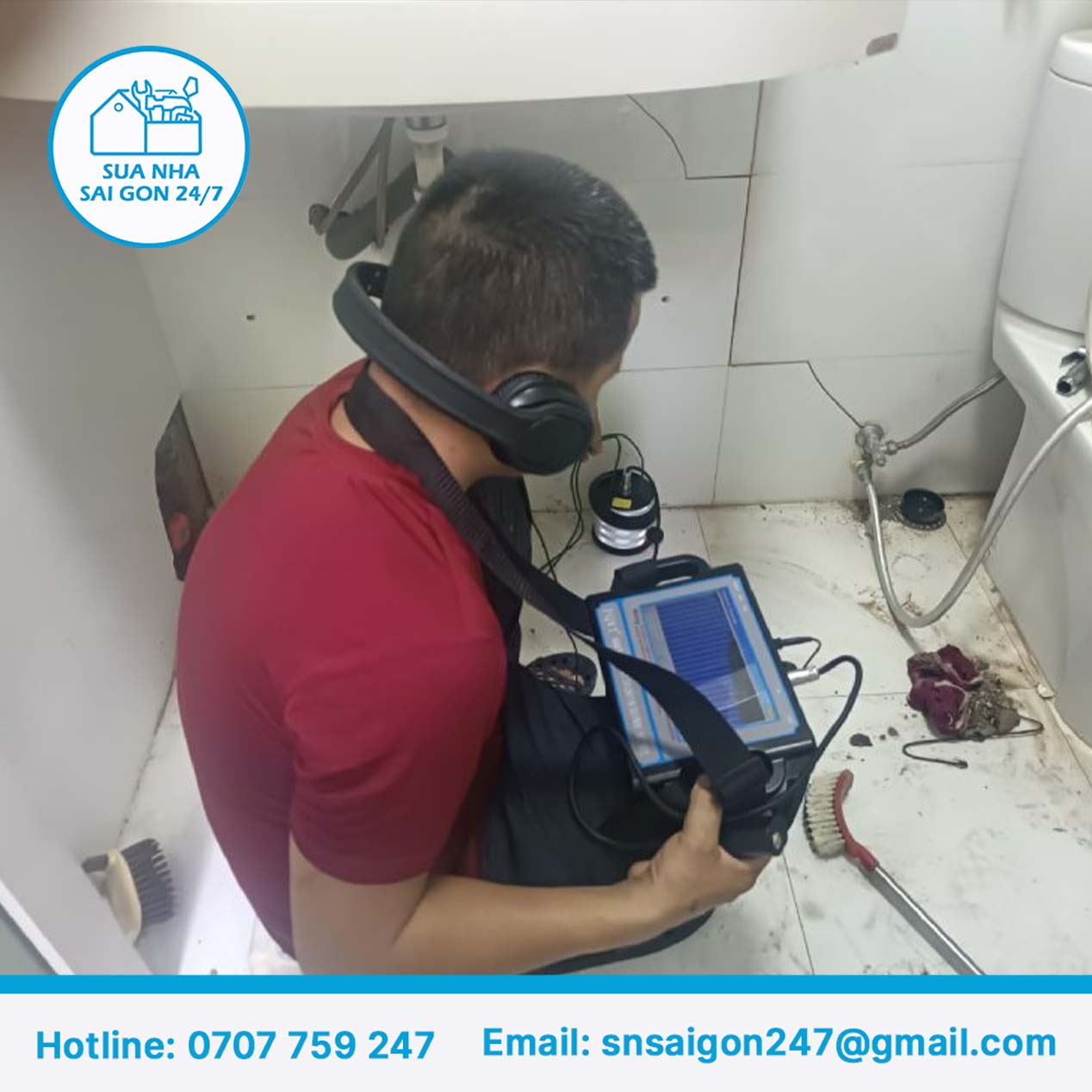
How it works: A specialized acoustic device picks up the high-frequency sound created by pressurized water escaping a pipe. The technician moves a sensor along the pipe route; the sound gets louder near the leak, pinpointing its location.
Advantages:
- Non-invasive, no demolition needed beforehand
- High accuracy (85–95%) under suitable conditions
- Works well with metal pipes (good sound conduction)
- Reasonable cost for most households
Drawbacks:
- Less effective in noisy environments (near a busy road, industrial area)
- PVC pipes conduct sound less well than copper or stainless steel
- Requires an experienced technician to tell a leak sound apart from other noise
Best suited for: In-wall and under-slab leaks in homes, offices, and apartments — the method Sai Gon Home Repair 247 uses first.
Pipe Inspection Camera (Borescope)
How it works: An LED-lit camera is fed inside the pipe to directly observe cracks, breaks, or failed joints. The camera records images and video so the customer can see the actual condition.
Advantages:
- Direct visual confirmation, no guesswork
- Records image/video evidence for the customer
- Inspects the full length of a pipe, catching multiple faults at once
- Also assesses buildup or blockage inside the pipe
Drawbacks:
- Only works on pipes with a large enough diameter (≥40mm)
- Not suitable for small supply lines (21mm, 27mm)
- Needs an access point into the pipe
Best suited for: Drain lines and larger main supply pipes — Sai Gon Home Repair 247 combines this with acoustic detection for greater accuracy.
Thermal Imaging Camera
How it works: The camera measures surface temperature on a wall or floor, detecting the temperature difference caused by a leak (the leak area reads warmer or cooler than its surroundings depending on conditions).
Advantages:
- Scans a large area quickly
- No direct contact with the surface needed
- Effective for wide-area leaks or a full-building check
Drawbacks:
- Very high equipment cost (100–300 million VND)
- Needs stable temperature conditions for an accurate reading
- Accuracy depends heavily on the technician’s skill reading thermal images
- Doesn’t determine how deep the leak is
Best suited for: Full-building checks, high-rise apartments, factories — less practical for homes given the cost.
Pressure Testing
How it works: High pressure (typically 8–10 bar) is pumped into an isolated section of pipe, then monitored for pressure drop over 30–60 minutes. A drop in pressure confirms a leak; the rate of drop indicates severity.
Advantages:
- Confirms the presence or absence of a leak with 100% certainty
- Low cost, simple equipment
- Works on any type of pipe
Drawbacks:
- Doesn’t identify the exact location of the leak
- Only tells you “yes or no,” not “where”
- Needs to be paired with another method to pinpoint the location
Best suited for: Testing newly installed pipe systems, or as a preliminary check before detailed detection work.
7. Technology Comparison Table
| Method | Cost | Accuracy | Best For |
|---|---|---|---|
| Acoustic / Ultrasonic | Moderate | High (85–95%) | Homes, offices |
| Pipe Inspection Camera | Moderate | Very high (95–100%) | Larger pipes, drain lines |
| Thermal Imaging | High | High (80–90%) | Buildings, large areas |
| Pressure Testing | Low | Moderate (confirms yes/no only) | Preliminary check |
Sai Gon Home Repair 247 combines acoustic detection with pipe inspection cameras to reach the highest accuracy at the most reasonable cost for customers.
8. Our 6-Step Leak Detection Process — Transparent From Start to Finish
Sai Gon Home Repair 247 follows a standard 6-step process, so customers stay fully informed and involved in every decision.
Step 1 – Initial Contact and Free Remote Consultation
- Contact us via Hotline/Zalo: 0707 759 247 or email snsaigon247@gmail.com
- A technician asks about the symptoms in detail: stained walls, damp floors, a running water meter, a rising bill…
- We give preliminary advice on the likelihood of a leak and how urgent it is
- We schedule an on-site visit (usually within 2–24 hours depending on your location)
Step 2 – On-Site Survey and Preliminary Check
A technician visits in person (initial survey is free):
- Directly observes the signs: stains, peeling paint, damp floors, mold
- Checks whether the water meter runs with every tap closed
- Checks water pressure at various points
- Narrows down the suspected leak area
Step 3 – System Pressure Check
- Uses a pressure gauge at the main supply and each branch line
- Identifies which branch is losing pressure
- Narrows the scope for detailed detection (for example: leak only on the 2nd-floor supply branch, not the 1st floor)
Step 4 – Precise Detection With Specialized Equipment
Using acoustic equipment and/or a pipe inspection camera depending on the situation:
- The acoustic device scans along in-wall and under-slab pipe runs
- The inspection camera checks inside the pipe where access allows
- We determine the exact location of the leak (how far from the wall edge, how deep)
- We document findings with photos and video for your report
Step 5 – Repair Quote and Agreeing on a Plan
- The technician walks you through the detection results (with photo/video evidence)
- Detailed quote covering: detection cost + repair cost per item
- Cost of opening the wall/floor at the leak point
- Cost of replacing the damaged pipe section
- Cost of re-plastering and repainting
- You approve the plan and price before any work begins
Step 6 – Repair and Warranty
- Opens exactly at the identified point, avoiding unnecessary wide-area demolition
- Replaces the damaged pipe section with quality materials
- Re-checks pressure after the repair to confirm the leak is fully resolved
- Re-plasters and repaints as needed (if requested)
- Hands the work back to you with a warranty as agreed
9. Water Leak Detection Price List in Ho Chi Minh City — 2025 Update
Below is a reference price list for Sai Gon Home Repair 247’s leak detection service, based on general market rates:
| Property Type | Detection Cost | Repair Cost |
|---|---|---|
| Room/small apartment (< 30m²) | 500,000 – 800,000 VND | Quoted after survey |
| Ground-floor house, townhouse (30–100m²) | 800,000 – 1,500,000 VND | Quoted after survey |
| Villa (> 100m²) | 1,500,000 – 3,000,000 VND | Quoted after survey |
| Office, commercial building | 2,000,000 – 5,000,000 VND | Quoted after survey |
| Industrial site, factory | Contact for survey | Quoted after survey |
Important notes:
- The prices above cover locating the leak only, not the repair itself
- Prices exclude VAT
- Repair costs (opening the wall/floor, replacing pipe, plastering/painting) are quoted precisely right after the inspection once the extent of the damage is known
- The initial survey and consultation are completely free — you only pay once you agree to the plan and price
10. What Affects the Cost
- Area to be inspected: a 50m² apartment costs less than a 300m² villa
- Pipe depth: a pipe 30cm under the floor takes more work than a pipe 5cm inside a wall
- Number of leaks: cost rises if multiple leak points are found
- Location: central Ho Chi Minh City is cheaper than outlying areas like Cu Chi or Can Gio
- Repair material: copper pipe costs more than PPR plastic pipe
11. Common Mistakes When Trying to Fix a Leak Without the Right Equipment
Many households try to fix a leak themselves to save money, but often run into serious mistakes.
1. Breaking Open the Wrong Spot — Costly Re-Plastering, Leak Still There
Without specialized equipment, you can only guess based on the stain on the wall — but the stain often spreads far from the actual leak. The result: 3–4 holes opened, the leak still not found, multiple patches of wall damaged, and money spent re-plastering with the problem unresolved.
2. Applying Waterproof Sealant Without Knowing Where the Pipe Actually Failed
Many people buy waterproof sealant and apply it to the outside of the wall. But if the pipe inside the wall is still cracked, water keeps leaking behind it — the sealant only masks the damp patch temporarily rather than fixing the cause. Within 1–2 months, the leak returns, often worse than before.
3. Ignoring the Signs — After 3–6 Months, the Damage Multiplies
Seeing a light stain and thinking “it’s not bad yet” delays the repair. After 3 months, the wall damage spreads, rebar starts corroding, and water seeps down to the floor below — turning a 2–3 million VND repair into a 20–30 million VND one.
4. Not Checking Pressure After the Repair — The Leak Returns Within Weeks
Finishing a repair without re-checking pressure to confirm the leak is gone means another leak elsewhere may surface weeks later, requiring the whole process to start over.
12. Frequently Asked Questions About Water Leak Detection
1. Does leak detection require breaking open walls first?
No demolition is needed before detection. Using acoustic detection and pipe inspection cameras, we pinpoint the exact leak location first — then open only the necessary spot, avoiding wide-area damage. This typically saves 70–80% on demolition and re-plastering costs compared to the traditional trial-and-error approach.
2. How long does detection take?
- Homes, small apartments: usually 30–90 minutes
- Townhouses, villas: 1–2 hours
- Large buildings, offices: half a day to a full day depending on size
3. Is there a warranty after the repair?
Yes. Sai Gon Home Repair 247 provides a warranty of 3–12 months depending on the repair item:
- New pipe replacement: 12-month warranty
- Joint welding: 6-month warranty
- Temporary repairs: 3-month warranty
4. Do you serve areas outside Ho Chi Minh City?
Yes. We serve:
- Ho Chi Minh City: all districts
- Nearby provinces: Binh Duong, Dong Nai, Long An, Vung Tau
For areas further out, please contact us so we can quote travel costs and arrange the details.
5. I live in an apartment and found a leak coming from the unit above — what should I do?
- Take photos of the damage (damp wall, dripping water)
- Contact the building management to confirm the source
- Call Sai Gon Home Repair 247 to precisely locate the leak in your unit or the one above
- We’ll coordinate with building management to resolve it with the right party responsible
6. Is the initial survey chargeable?
No. The on-site survey and initial consultation are completely free. You only pay once you:
- Agree to the detection and repair plan
- The work has been completed
- You’re satisfied with the result
7. Can I see the detection results before deciding to proceed with repairs?
Yes. Once detection is complete, the technician will:
- Show you photos/video of the leak point captured by the equipment
- Explain the location and extent of the damage clearly
- Provide a detailed quote per repair item
- Let you decide whether to proceed — no pressure to commit
13. Why Choose Sai Gon Home Repair 247 for Leak Detection?
- Modern equipment: acoustic detection + pipe inspection camera — no unnecessary demolition
- Transparent pricing: a published reference price list, with an exact quote after survey
- Free survey: initial consultation and inspection at no cost
- Experienced technicians: knowledgeable and responsive to your questions
- Post-repair warranty: 3–12 months depending on the item
- Fast response: on-site within 2–24 hours of contact
- Wide coverage: across Ho Chi Minh City plus Binh Duong, Dong Nai, and Long An
14. Contact Us Now — Fast Leak Detection, Free Quote
SAI GON HOME REPAIR 247
- Main hotline/ Zalo: 0707 759 247 (24/7)
- English & Korean support/ Zalo: 076 806 7114
- English support/ Zalo: 033 939 0325
- Email: snsaigon247@gmail.com
- Website: suanhasaigon247.vn
- Address: 150 Tran Nao Street, An Khanh Ward, Thu Duc City, Ho Chi Minh City
- Facebook: facebook.com/snsaigon247
- Working hours: 8:00 AM – 5:00 PM (every day)