
 Tiếng Việt

What “Top” Should Actually Mean for a Painting Service
A painting company can look impressive in photos and still deliver work that fails within a year if the surface underneath wasn’t properly prepared.
For homeowners in Ho Chi Minh City, “top” realistically means a provider whose work survives the local climate — the humidity, the monsoon rain, the intense UV exposure — not just one with a polished portfolio. That comes down to four checkable things: how they prepare the surface, what paint they use, whether they back the work with a warranty, and how transparently they price the job.
Why Painting Quality Depends More on Prep Work Than on the Paint Itself
Surface preparation determines how long a paint job lasts far more than the paint brand chosen, even though most homeowners focus their comparison entirely on the paint can.
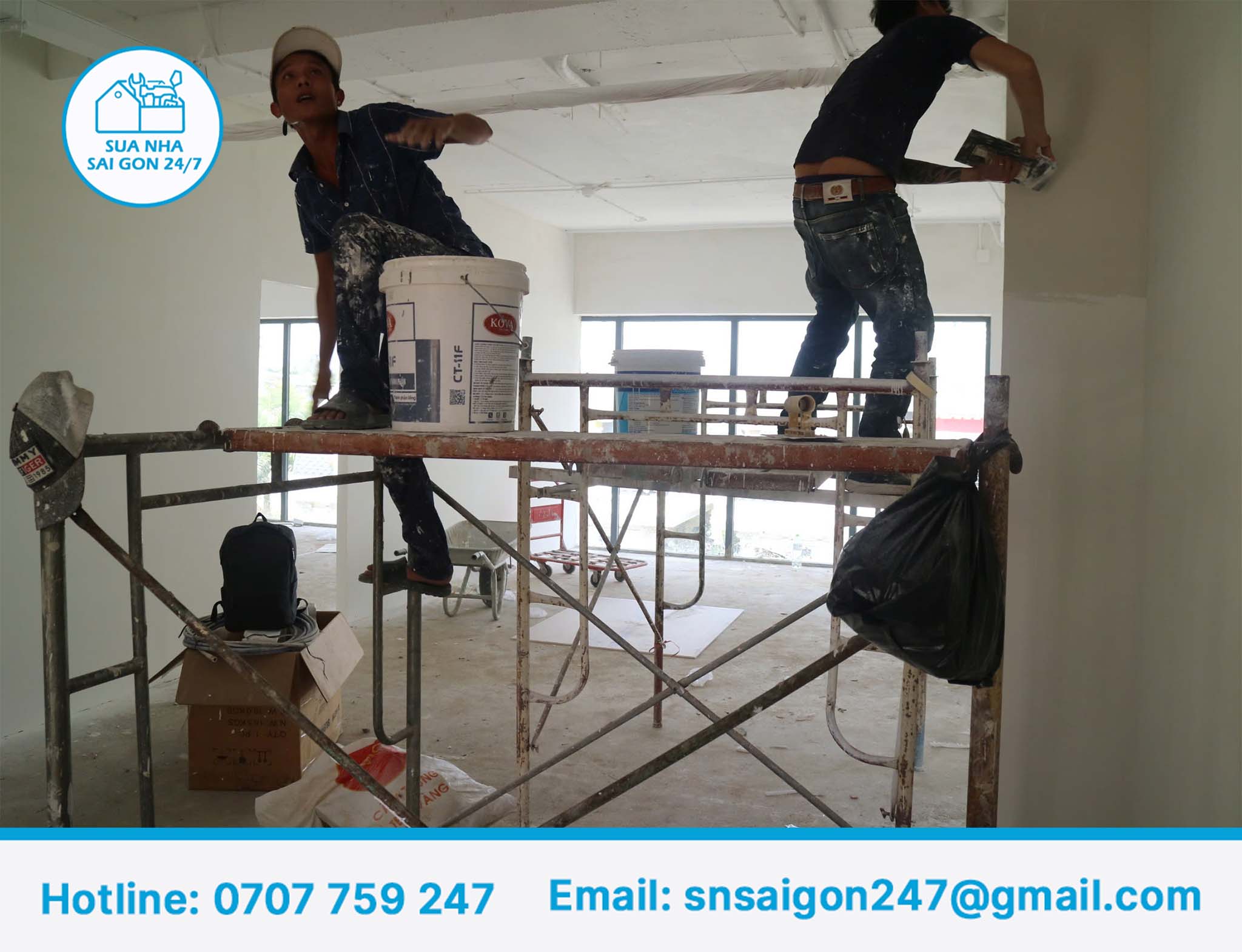
Proper preparation includes cleaning off mold and dirt, filling cracks and holes, sanding uneven patches, and applying a primer coat suited to the wall’s condition — especially on exterior walls that have been exposed to repeated rain cycles. Skipping any of these steps to save time is the single most common reason a paint job that looked fine on the day it finished starts peeling or bubbling within six to twelve months.
The Four Criteria That Separate a Strong Painting Service From a Mediocre One
Four factors consistently explain the difference between a paint job that holds up for years and one that needs redoing within a season.
- Surface preparation: cleaning, patching, and priming before any topcoat is applied.
- Material quality: using a paint line suited to the specific surface and exposure — interior, exterior, or high-moisture areas like bathrooms.
- Warranty on the finish: a stated period during which peeling, bubbling, or fading is covered as a callback rather than a new paid job.
- Transparent pricing: a per-square-meter quote confirmed after a site visit, stating clearly whether materials are included.
A provider that’s strong on price but vague about warranty, or one that uses good paint but skips proper prep, will often disappoint in ways that only become visible months after the job is finished — which is exactly why price alone is a poor way to judge quality upfront.
It’s also worth noting that these four criteria interact with each other rather than standing alone. A provider using premium paint on a poorly prepared surface will still see early peeling, since the paint has nothing solid to adhere to. Likewise, a fair price without a warranty offers no real protection if something goes wrong — you’ve simply paid less for the same uncertainty. Evaluating all four together, rather than picking the one that’s easiest to compare (usually price), gives a much more accurate picture of what you’re actually getting.

A Simple Scorecard for Comparing Painting Providers
Rather than comparing painting companies by portfolio photos alone, it helps to score each one against the same set of concrete questions.
| Criteria | Question to Ask | Green Flag | Red Flag |
|---|---|---|---|
| Surface prep | “What prep work is included before painting starts?” | Cleaning, patching, sanding, and primer specified | Prep not mentioned or described only as “cleaning” |
| Materials | “Which paint brand and product line will be used?” | Named brand with interior/exterior distinction | Vague answer like “good quality paint” |
| Warranty | “What’s the warranty period on peeling or fading?” | Specific duration stated in writing | No warranty mentioned or offered only verbally |
| Pricing | “Is this priced per square meter, and are materials included?” | Written quote after a site visit, unit stated clearly | Flat number quoted without seeing the property |
Common Types of Painting Providers in the Saigon Market
Painting help in Ho Chi Minh City generally comes from one of three sources, each with a different trade-off worth understanding before you choose.
- Individual freelance painters: often the cheapest option for a single room, but usually work alone, without a written warranty or backup if the job needs touch-ups later.
- Painting-only contractors: specialize specifically in paint work, often with more product knowledge, but may not handle related prep issues like wall cracks or moisture problems that need a different trade first.
- Multi-trade home repair companies: handle painting alongside plastering, waterproofing, and crack repair under one team, which matters when the wall’s real problem is moisture or damage rather than just old paint.
If your walls show signs of dampness, peeling caused by seepage, or visible cracks, a multi-trade provider that can diagnose and fix the underlying cause before painting is usually the better choice — repainting over an unresolved moisture problem is one of the most common reasons a “fresh” paint job fails again within months.
Paint Brands Commonly Used in Ho Chi Minh City
Material choice affects both the cost and the durability of a painting job, and a few internationally recognized brands dominate the local market.
- Dulux: widely used for both interior and exterior residential painting, with product lines rated for different durability and weather-resistance levels.
- Jotun: a Norwegian paint brand popular for exterior and marine-grade coatings suited to humid, high-UV conditions.
- Kova: a Vietnamese brand offering a wide range of interior, exterior, and specialty products, including waterproof paint lines.
A reputable painting provider should be able to explain which line within these brands fits your specific wall — interior versus exterior, standard versus waterproof, and standard versus mold-resistant — rather than offering a single generic paint for the entire property.
Why Ho Chi Minh City’s Climate Changes What “Good” Painting Looks Like
Ho Chi Minh City’s tropical climate is harder on paint than most temperate-climate markets, which changes what a quality job actually requires.
High humidity slows drying time between coats, direct monsoon rain tests exterior adhesion within the first few months, and intense UV exposure accelerates color fading on south- and west-facing walls. A provider unfamiliar with these conditions may apply techniques and timelines suited to a drier climate, leading to problems that only show up once the rainy season arrives. Scheduling exterior work during a run of consecutive dry days, and allowing full cure time between coats rather than rushing to finish, matters more here than it would in a less humid market.
Common Mistakes Homeowners Make When Hiring a Painter
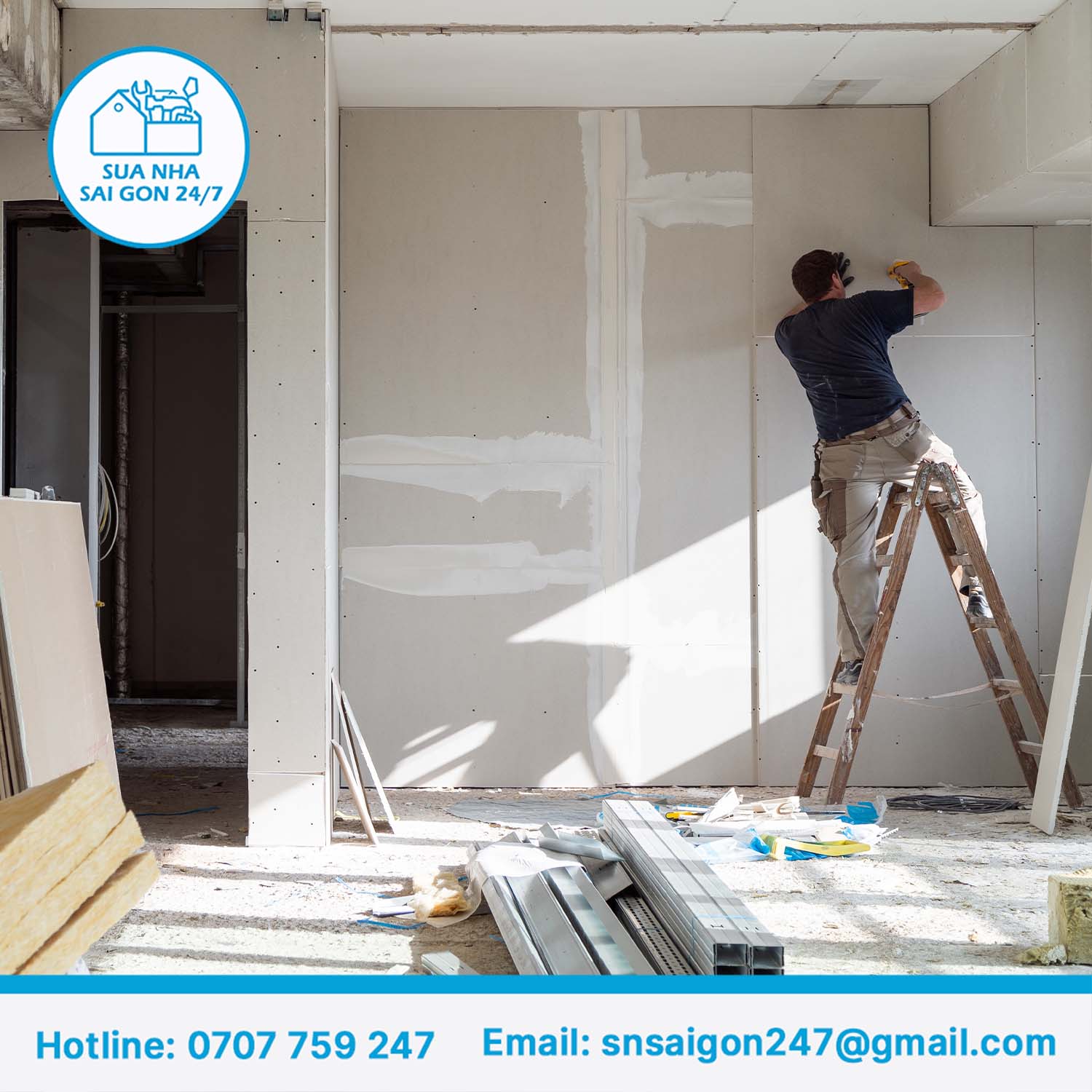
A handful of recurring mistakes account for most of the disappointing paint jobs reported by homeowners in Ho Chi Minh City.
- Choosing based on price alone. The cheapest quote often skips prep work or uses a lower-grade paint line, both of which shorten how long the job lasts.
- Painting over an unresolved moisture problem. If a wall has active seepage, repainting only masks the issue until it reappears through the fresh coat.
- Not asking which specific paint product will be used. “Good quality paint” isn’t a specification — ask for the brand and product line so you can verify it matches the surface and exposure.
- Rushing exterior work into the rainy season. Painting during unpredictable weather increases the risk of poor adhesion and early peeling.
- Skipping a written warranty. Without a stated warranty period, there’s no clear basis for requesting a free touch-up if the paint fails early.
Choosing Colors and Finishes for Vietnam’s Light and Humidity
Color choice in Ho Chi Minh City isn’t purely aesthetic — humidity and strong natural light affect how a color reads on the wall and how well certain finishes hold up over time.
Darker exterior colors absorb more heat and can show fading from UV exposure faster than lighter tones. In humid, low-airflow areas like bathrooms or kitchens, a satin or semi-gloss finish is generally easier to clean and more resistant to mold than a flat matte finish. For interior spaces with strong natural light, testing a color sample on the actual wall — rather than judging from a paint chip alone — helps avoid a color that looks very different once applied at scale under Ho Chi Minh City’s daylight conditions.
Maintenance After Painting to Extend the Life of the Job
A quality paint job still benefits from basic upkeep, especially on exterior surfaces exposed to Ho Chi Minh City’s climate year-round.
Rinsing exterior walls periodically removes dust and mold spores before they take hold, and touching up small chips or scuffs promptly prevents moisture from getting underneath the paint layer at that spot. Checking exterior walls again after the first rainy season following a repaint is a reasonable way to catch any early adhesion issues while they’re still small and easy to fix under warranty.
House Painting Costs in Ho Chi Minh City (2026 Reference Prices)
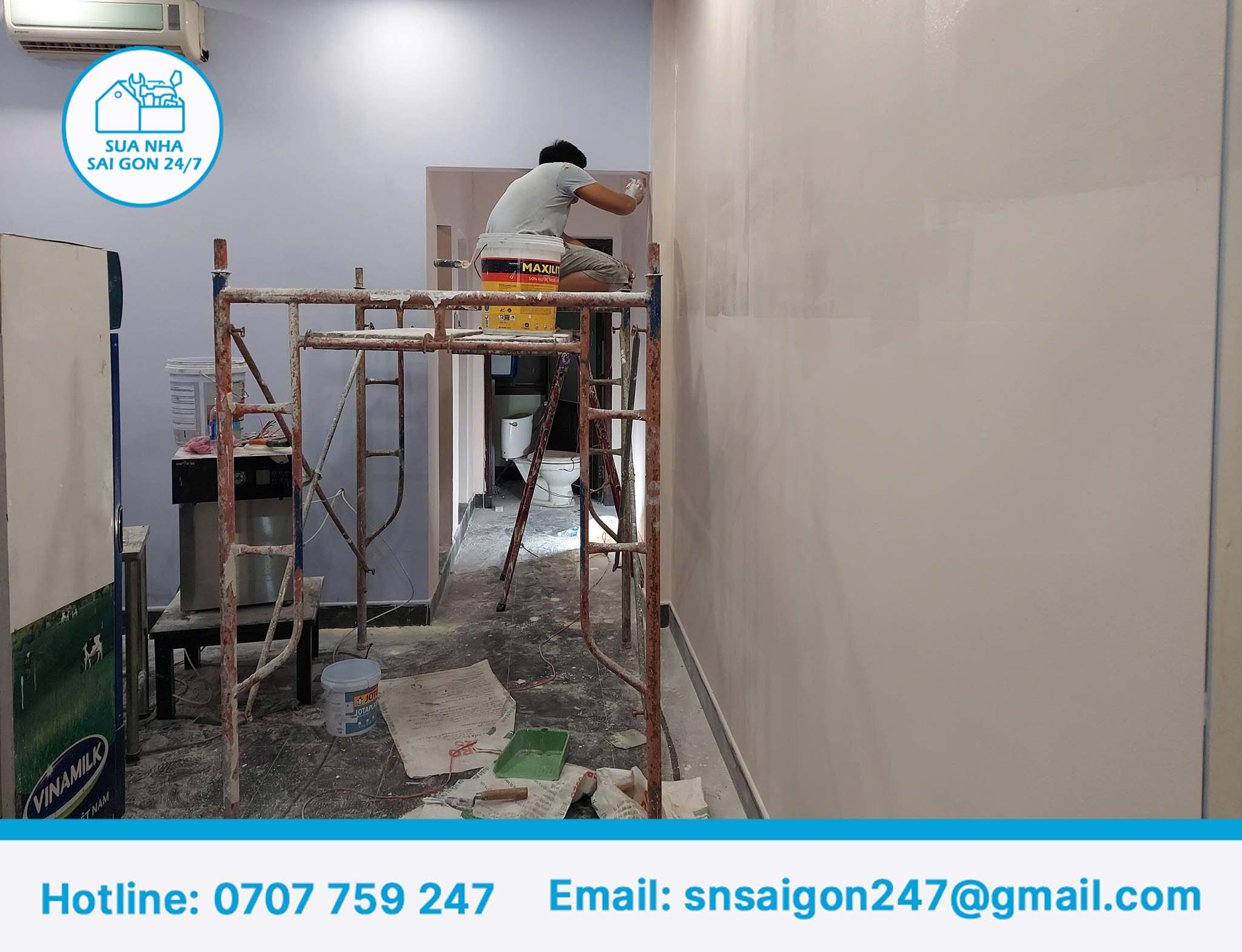
Based on Sai Gon Home Repair 247’s own 2026 labor price list, painting costs in Ho Chi Minh City are generally billed per square meter, separate from material cost unless a full-package quote is used.
| Service | Reference Price (VND) | Unit |
|---|---|---|
| Interior painting (1 primer coat, 2 top coats) | 59,000 – 81,000 | per m² |
| Exterior painting (1 primer coat, 2 top coats) | 70,000 – 103,000 | per m² |
| Interior wall plastering (if surface repair needed first) | 146,000 – 178,000 | per m² |
| Exterior wall plastering (if surface repair needed first) | 167,000 – 211,000 | per m² |
These are labor rates specifically; paint and materials are typically priced separately unless a full-package option is chosen. Actual total cost depends on wall condition, whether old paint needs stripping, and the paint line selected, and is confirmed after an on-site survey.
The Painting Process, Step by Step
A properly run house painting job follows a consistent sequence, regardless of whether it’s a single room or a full exterior repaint.
- On-site survey: the technician checks the current surface condition, including any cracks, mold, or peeling paint.
- Surface preparation: cleaning, patching, sanding, and treating any mold or moisture issues before priming.
- Priming: a primer coat suited to the surface, improving adhesion and coverage for the topcoat.
- Painting: typically two topcoats, with adequate drying time between coats.
- Inspection and warranty: the finished surface is reviewed together with you, and a warranty period begins.
Skipping the survey and prep stages to move faster to the visible “painting” step is the most common shortcut that leads to a job needing redoing within the first year.
Red Flags When Evaluating a Painting Provider
A few warning signs tend to predict a disappointing paint job before work even starts.
- A quote given without seeing the property — surface condition varies too much to price accurately over the phone.
- No mention of surface prep in the scope of work, beyond a vague reference to “cleaning.”
- Refusal to name the specific paint product being used, beyond a generic brand mention.
- No warranty offered on peeling, bubbling, or fading.
- Pressure to schedule exterior work during continuous rain rather than waiting for a dry stretch.
How Sai Gon Home Repair 247 Approaches House Painting
Repainting without first fixing the underlying cause — old damaged plaster, mold, or seepage — is the most common reason paint jobs in Ho Chi Minh City fail to hold up.
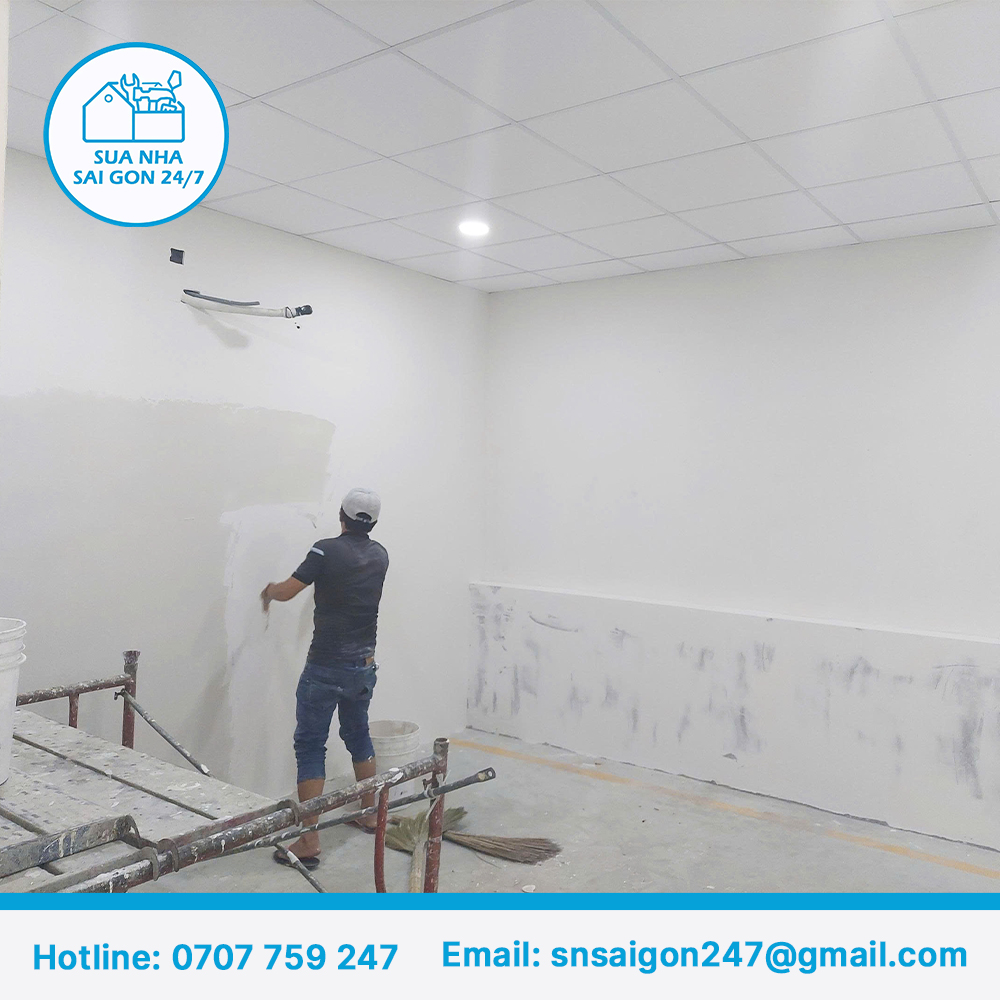
Sai Gon Home Repair 247 has more than 7 years of experience in home repair and renovation across Ho Chi Minh City, and approaches painting as part of a full surface-health check: surveying for moisture or structural issues first, then preparing and painting with brands suited to the specific surface and exposure. Interior and exterior work is quoted transparently per square meter, with a warranty by category and English and Korean-speaking support available throughout.
If your walls also show signs of seepage or cracking, see our waterproofing service or our full home renovation service for a combined assessment.
Contact us for an on-site survey and consultation before any painting work begins — no obligation, and a written quote based on the actual condition of your walls.
Interior vs. Exterior Painting: Different Standards Apply
Interior and exterior painting aren’t interchangeable in terms of material choice or process, even though both fall under “house painting” as a category.
| Factor | Interior Painting | Exterior Painting |
|---|---|---|
| Main challenge | Even coverage, color accuracy, minimal odor | Weather resistance, UV stability, adhesion in humidity |
| Typical paint type | Standard or mold-resistant interior lines | Weatherproof or elastomeric exterior lines |
| Best timing | Any time, with adequate ventilation | A stretch of consecutive dry days |
| Common failure point | Uneven color from poor primer coverage | Peeling from rain exposure before full cure |
Frequently Asked Questions
What makes a house painting service one of the top options in Ho Chi Minh City?
Quality surface preparation, use of recognized paint brands suited to Vietnam’s humidity, a written warranty on the finish, and transparent per-square-meter pricing are the main factors that separate a strong painting provider from an average one.
How much does house painting cost in Ho Chi Minh City?
Interior painting with one primer coat and two top coats runs roughly 59,000–81,000 VND/m², while exterior painting typically costs 70,000–103,000 VND/m², based on 2026 reference labor pricing. Material costs are usually added separately unless a full-package quote is used.
What paint brands are commonly used in Vietnam?
Dulux, Jotun, and Kova are widely used brands in the Ho Chi Minh City market, each offering interior, exterior, and specialty product lines suited to different budgets and durability needs.
Why does exterior paint fail faster in Ho Chi Minh City than in drier climates?
High humidity, direct monsoon rain, and intense UV exposure accelerate peeling, fading, and mold growth on exterior surfaces, which is why climate-appropriate paint and proper surface preparation matter more here than in temperate regions.
Should I paint my house during the rainy season in Vietnam?
Exterior painting should be scheduled during a stretch of consecutive dry days so the paint can cure properly; painting during continuous rain often leads to poor adhesion and early peeling.
What’s the difference between hiring an individual painter and a painting contractor?
An individual painter may cost less for a small job but typically offers no warranty and works alone, while a contractor coordinates a team, provides a written quote, and stands behind the finished work with a warranty period.
How long does a full house painting job take?
A single room typically takes one to two days including drying time between coats, while a full house or apartment repaint can take one to two weeks depending on surface condition and whether old paint needs to be stripped first.
Does Sai Gon Home Repair 247 offer house painting services?
Yes. The company provides interior and exterior painting with transparent per-square-meter pricing, a warranty on the finished work, and English and Korean-speaking support for foreign customers.
For an on-site survey and consultation on your interior or exterior painting project, contact the technical team at Sai Gon Home Repair 247.
- Main hotline/ Zalo: 0707 759 247
- English & Korean support/ Zalo: 076 806 7114
- English support/ Zalo: 033 939 0325
- Email: snsaigon247@gmail.com
- Address: 150 Tran Nao Street, An Khanh Ward, Ho Chi Minh City



