
 Tiếng Việt
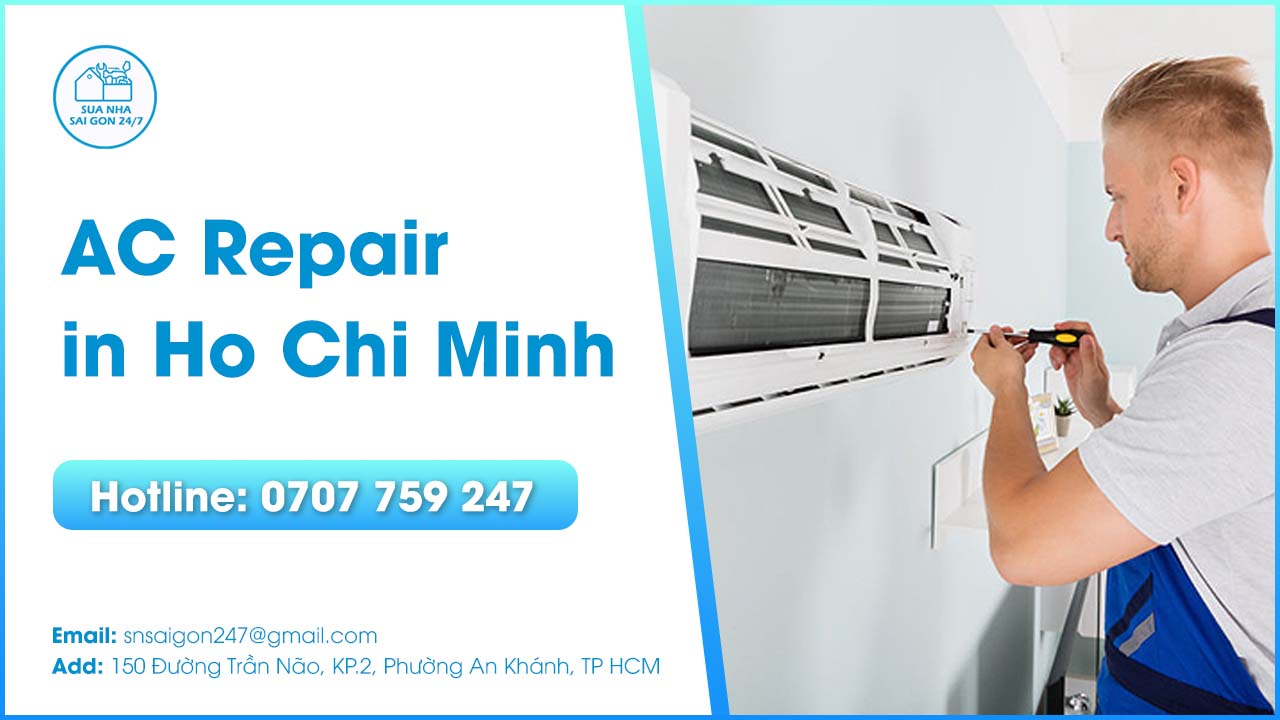
When an air conditioner in Ho Chi Minh City stops cooling, the cause is rarely random — it is almost always one of a handful of mechanical issues, and each one carries a different price and repair time. This guide walks through what is actually happening inside your unit, what a fair repair looks like, and how to get it fixed correctly the first time.
AC repair in Ho Chi Minh City covers diagnosing and fixing why a split or central air conditioning unit has stopped cooling, is leaking, or is making unusual noise — typically a refrigerant leak, a dirty coil, a failing capacitor, or a blocked drain line. Sai Gon Home Repair 247 inspects the unit on-site and identifies the cause before quoting any repair.
Five Signs Your AC Is About to Fail Completely
An air conditioner rarely fails without warning — it usually gives off one of five signals in the days or weeks before it stops cooling altogether.
- Warm air despite the unit running — often a refrigerant leak or a compressor under strain.
- Water dripping from the indoor unit — almost always a blocked or disconnected drain pipe, not a “leak” from the refrigerant system.
- Clicking, buzzing, or grinding noise — usually points to a failing capacitor or a worn fan motor bearing.
- The unit cycles on and off rapidly — known as short cycling, commonly caused by a refrigerant or electrical fault, not just “an old unit.”
- A musty smell when the AC starts — mold or mildew buildup in the coil or drain pan, which also lowers air quality indoors.
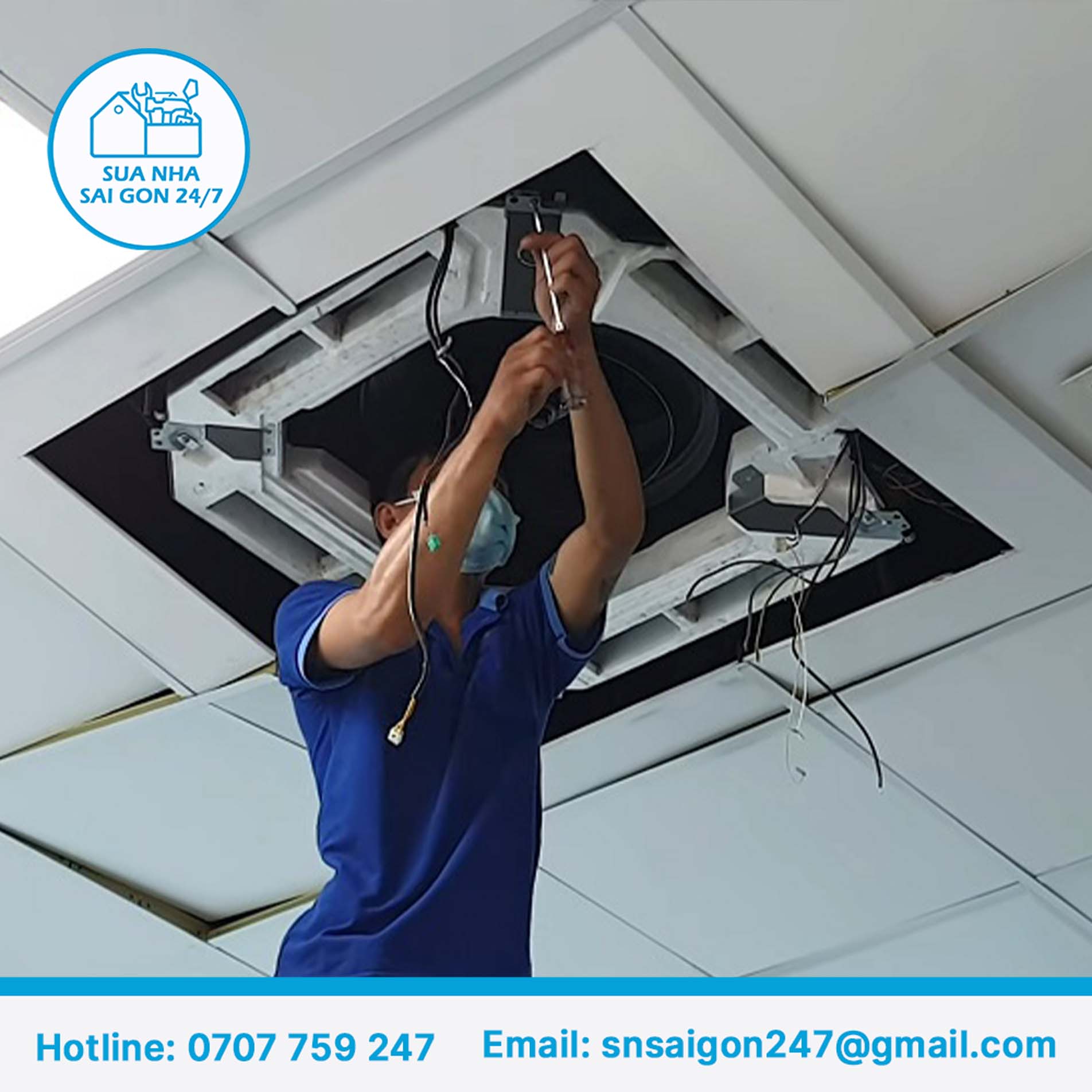
Why Ho Chi Minh City’s Climate Pushes AC Systems Harder Than Most Cities
Ho Chi Minh City’s combination of high humidity and near-constant cooling demand shortens the practical lifespan of AC components compared to drier, four-season climates.
Three local factors matter most:
- No off-season. In many climates, an AC gets months of rest each year. In Ho Chi Minh City, units run close to year-round, which means components wear down faster and dust buildup on coils is never really “paused.”
- Persistent humidity. Ho Chi Minh City’s air stays humid for most of the year, which accelerates mold growth in the drain pan and coil, and adds strain to the compressor as it works to remove moisture from the air, not just cool it.
- Dust and traffic pollution. Outdoor condenser units mounted near busy roads or construction sites accumulate grime faster, which reduces heat exchange efficiency and is one of the most common causes of “runs but doesn’t cool” complaints.
How an AC Repair Actually Works, Step by Step
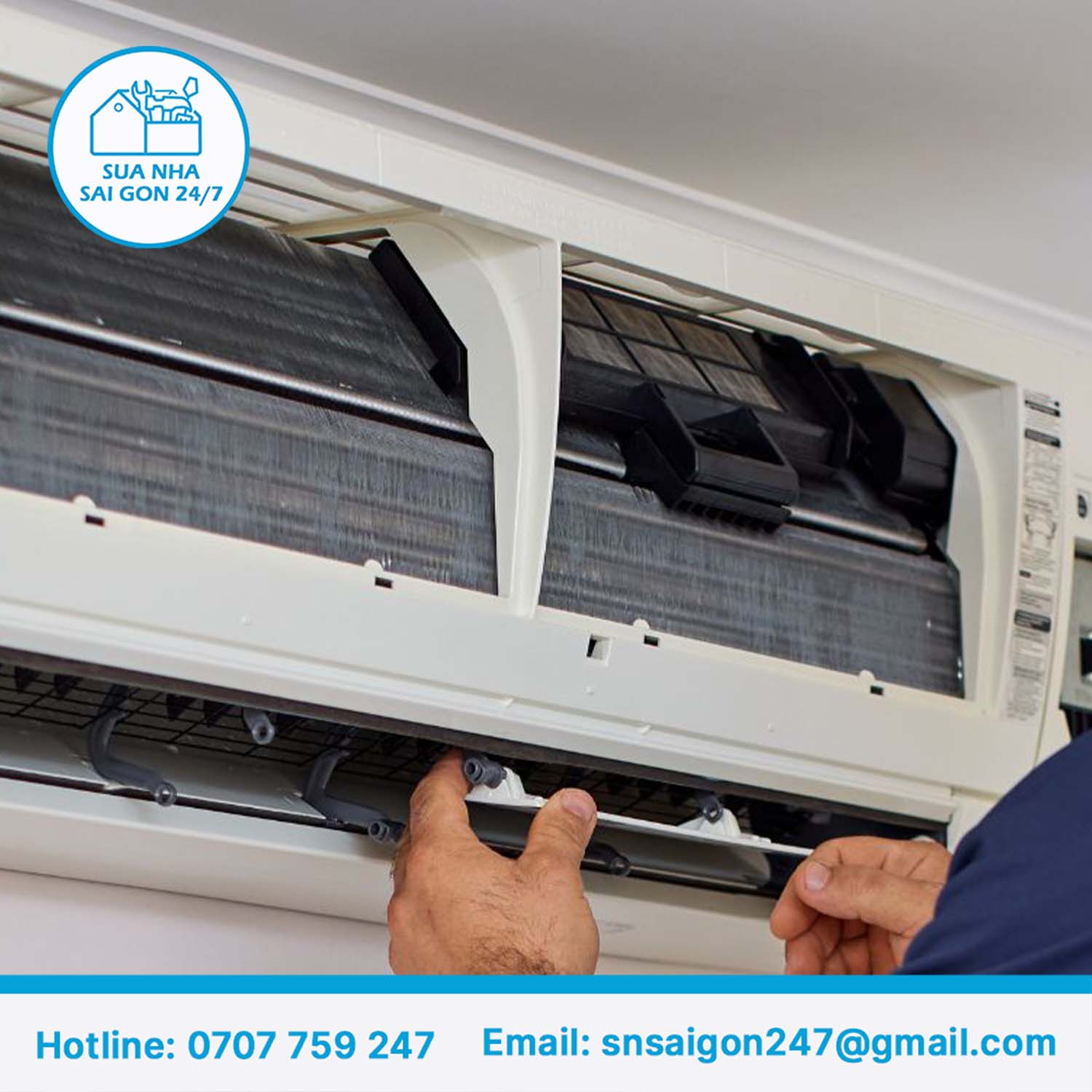
- On-site diagnostic. A technician checks refrigerant pressure, electrical readings, drainage, and airflow before touching any component — this is what separates an actual repair from a guess.
- Transparent quote. The cost and the specific part or fix needed are explained before any work starts. No work proceeds without confirmation.
- Repair or part replacement. Depending on the diagnosis, this might mean a capacitor swap, a gas refill after leak repair, a PCB board replacement, or clearing a drain line — using parts compatible with common brands such as Daikin, Panasonic, LG, and Mitsubishi Electric.
- Testing under load. The unit is run for a period after the repair to confirm stable cooling, not just checked with a quick power-on.
- Handover with warranty terms explained. Coverage details for the specific repair are confirmed in writing before the technician leaves.
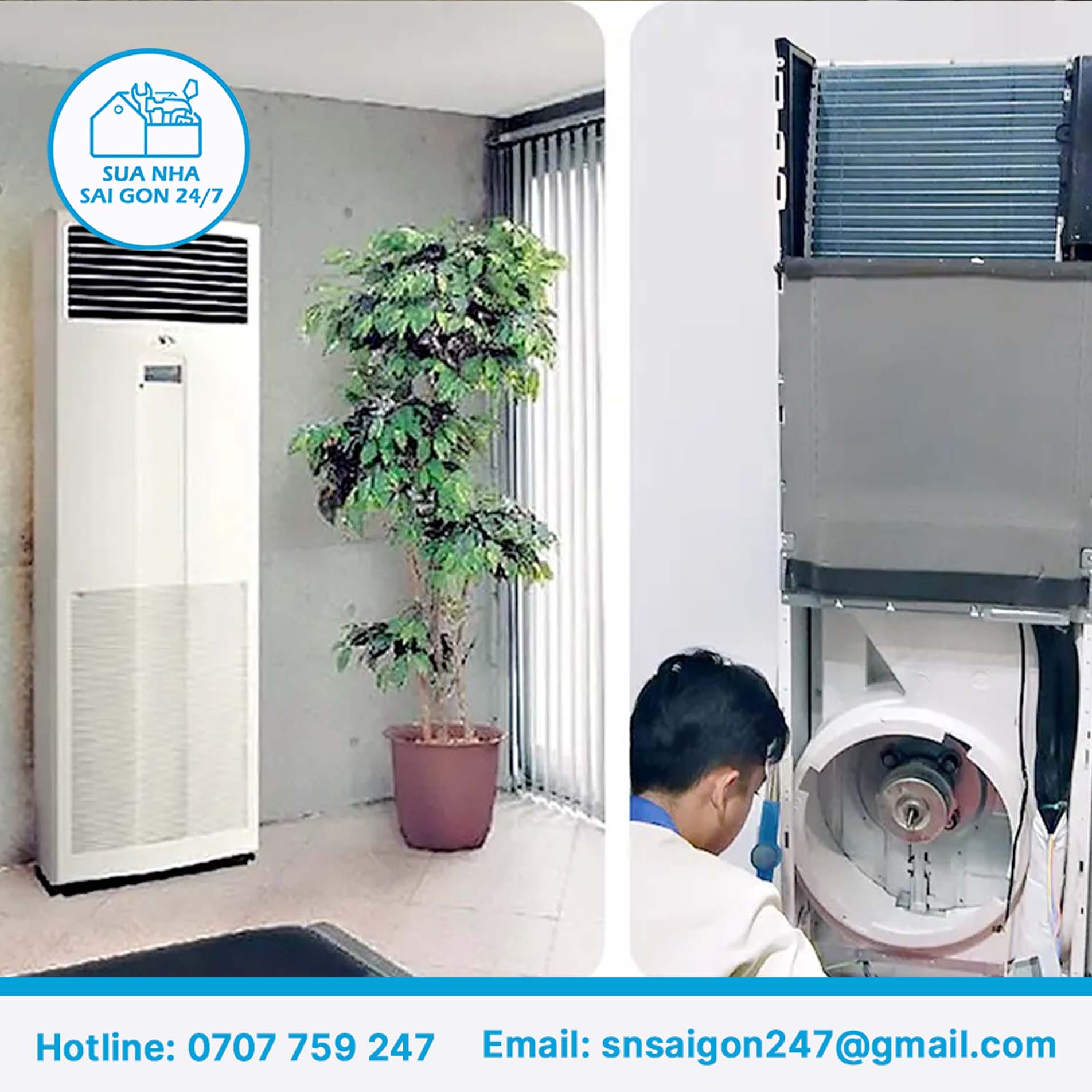
What AC Repair Costs in Ho Chi Minh City (And What Actually Changes the Price)
Public market surveys of Ho Chi Minh City AC service providers show a wide range depending on the type of issue — cleaning sits at the low end, and board or compressor-related repairs sit at the high end.
| Issue | Typical Market Range | What Moves the Price |
|---|---|---|
| Basic cleaning / maintenance | Lower bracket | Unit type (wall-mounted vs. cassette/ducted), accessibility, indoor + outdoor unit combined vs. indoor only |
| Gas refill with leak repair | Mid bracket | Refrigerant type (R32 vs. R410A), number and location of leak points |
| Capacitor / electrical part replacement | Mid bracket | Part brand-compatibility, whether the fault has damaged adjacent components |
| PCB board repair or replacement | Higher bracket | Whether the board can be repaired or must be replaced, brand and model availability |
| Compressor-related diagnosis | Highest bracket | Often the deciding factor in a repair-vs-replace decision (see below) |
These figures are market reference ranges only. Actual cost depends on the condition of your system and is confirmed after a free on-site inspection.
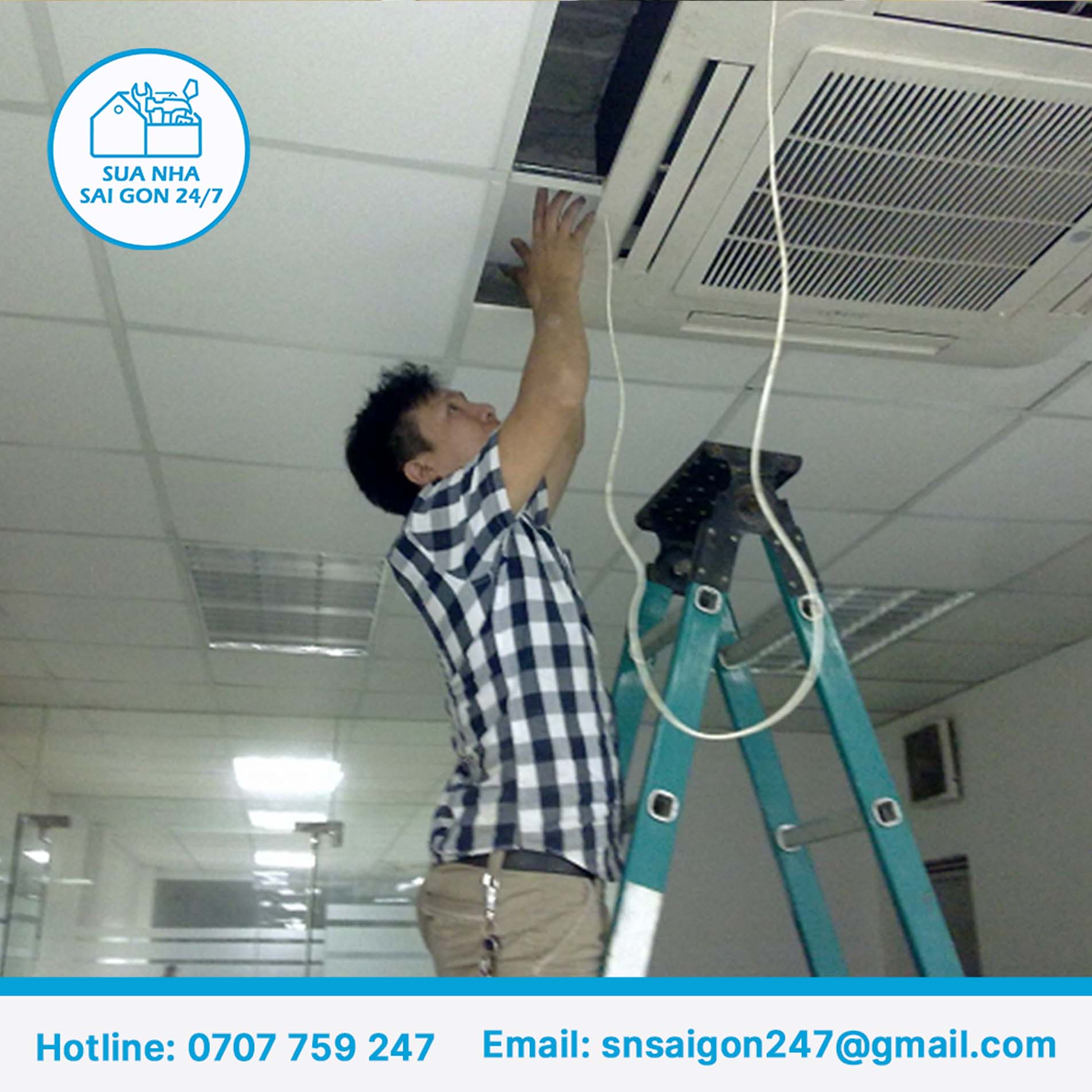
Repair, Replace, or Just Clean? A Practical Comparison
| Situation | Best Option | Why |
|---|---|---|
| Unit under 7-8 years old, single component failure | Repair | Lower cost than replacement, and the rest of the unit is typically still sound |
| Compressor failure on a unit already past 10 years old | Replace | Compressor repairs are the most expensive single fix, and an old unit is close to end-of-life anyway |
| Cooling fine, but weak airflow or a faint smell | Routine cleaning | No fault to repair — the issue is buildup, not a broken part |
| Multiple repairs needed within the same year | Replace | Repeated failures usually signal the unit is degrading faster than individual fixes can keep up with |
For a full breakdown of what routine cleaning involves and why it matters even between repairs, see our 7-step AC cleaning process and 2026 pricing guide.
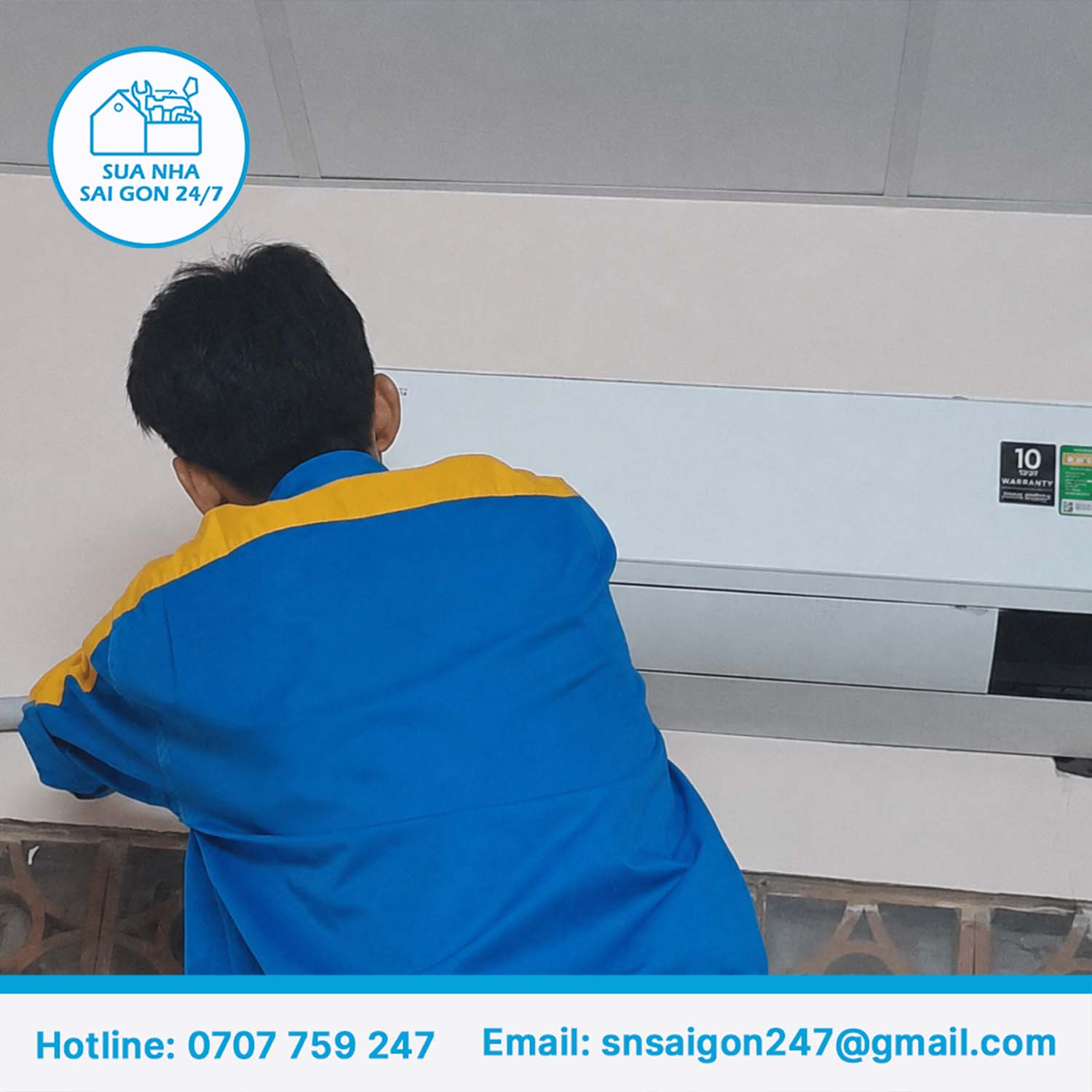
A Typical Repair Scenario: No Cooling, No Guesswork
“No cooling” is the single most common complaint technicians hear, but it is rarely just one problem. In practice, it usually resolves into one of three distinct causes: a refrigerant leak, a failed capacitor, or a blocked drain line triggering the unit’s safety shutoff — and each one requires a different fix.
Replacing a part before confirming which of the three is actually happening is one of the most common reasons homeowners end up paying for a repair that does not fix the issue.
According to the technical team at Sai Gon Home Repair 247: “We test refrigerant pressure and electrical readings before we open anything up. It takes a few extra minutes, but it means the part we replace is the part that’s actually broken.”
Getting AC Repair Without a Language Barrier
For foreign residents in Ho Chi Minh City, explaining a technical AC problem in Vietnamese — or trusting an unlicensed street technician with a language gap in both directions — is often the bigger obstacle, not the repair itself.
Sai Gon Home Repair 247 has served households, offices, restaurants, and hotels across Ho Chi Minh City for more than 7 years, including a significant share of the city’s expat and Korean community. Support is available through a dedicated English line and a combined English and Korean line, with booking available directly through Zalo, WeChat, or KakaoTalk — no need to explain a technical issue over a language barrier before help arrives.
Contact us for a free on-site survey and a transparent quote before any work begins.
Frequently Asked Questions
How much does AC repair cost in Ho Chi Minh City?
Costs vary by issue: basic cleaning typically falls in the lowest bracket, gas refills and capacitor replacements sit in the middle, and PCB board or compressor-related repairs cost the most. These are general market reference ranges — the exact price is confirmed after a free on-site inspection.
Why is my AC running but not cooling?
The most common causes are a low or leaking refrigerant charge, a dirty outdoor condenser coil, a failing capacitor, or a blocked drain line causing the unit to shut down protective cycles.
How long does a typical AC repair take?
A capacitor swap or drain unblock usually takes under an hour once diagnosed. A gas refill with leak repair or a PCB board replacement can take two to four hours, partly because leak points must be tested before refilling.
Is it better to repair an old AC unit or replace it?
If the unit is under 7-8 years old and the failure is a single component, repair is usually the more cost-effective choice. If the compressor has failed on a unit already past 10 years old, replacement is typically more economical over time.
Do I still need cleaning if I only repair the AC when it breaks?
Yes. Most repair calls in Ho Chi Minh City trace back to a coil or drain line that was never cleaned — dust and humidity build up quickly in this climate, and routine cleaning reduces how often a repair is needed at all.
Can I get English or Korean-speaking AC technicians in Ho Chi Minh City?
Yes. Sai Gon Home Repair 247 offers a dedicated English support line and a combined English and Korean support line, with booking available through Zalo, WeChat, or KakaoTalk.
What warranty comes with an AC repair?
Warranty terms depend on the specific repair category — electrical parts, gas refill, or board replacement — and are explained and agreed before work begins, then confirmed again at handover.
What’s the difference between a gas refill and a full repair?
A gas refill only replaces refrigerant that has leaked out — it doesn’t fix the leak itself. A full repair finds and seals the leak point first, then refills the gas, so the same problem doesn’t return within weeks.
Sai Gon Home Repair 247 — home repair & renovation in Ho Chi Minh City, 7+ years of experience.
English support: +84 33 939 0325 · English & Korean support: +84 76 806 7114
Zalo/WeChat/KakaoTalk available · Email: snsaigon247@gmail.com
Contact us for a free on-site survey and a transparent quote.



