
 Tiếng Việt
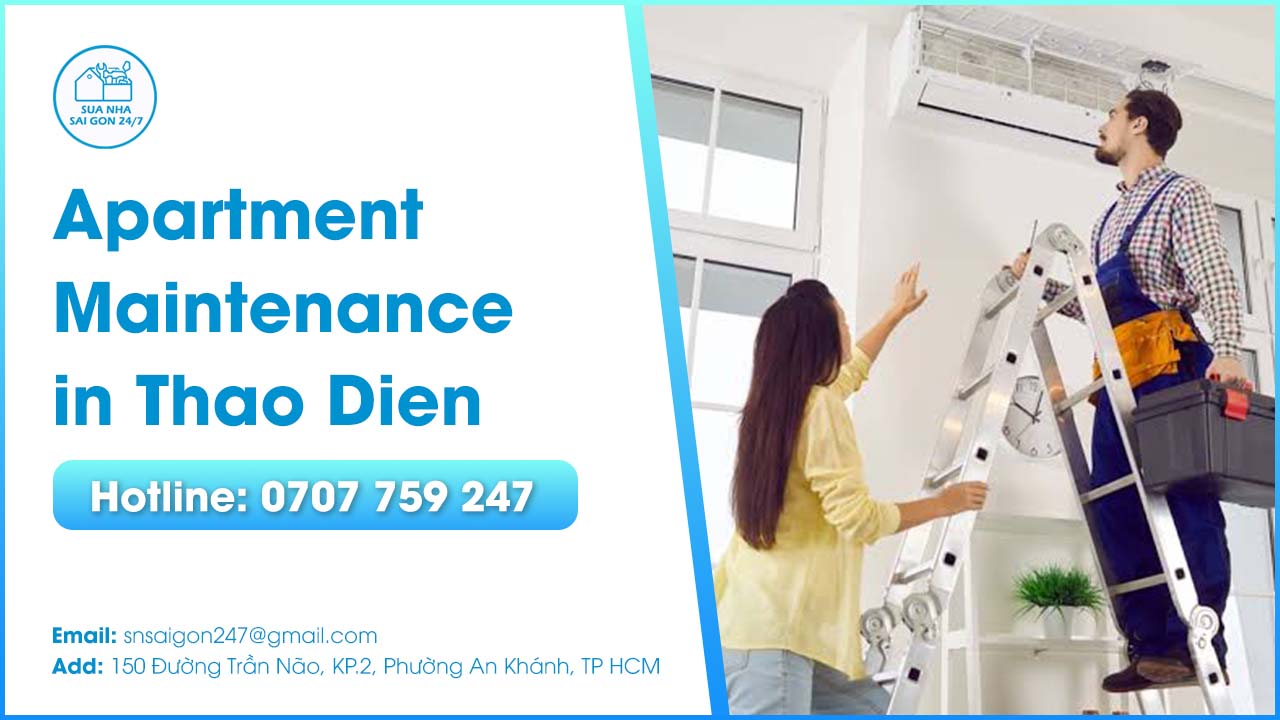
Why Apartment Maintenance Needs a Different Approach Than a Repair Call
A repair call and a maintenance visit solve two different problems, even though they can involve the same technician and the same toolbox.
A repair call happens after something has already failed — the AC stopped cooling, the toilet won’t flush, water is leaking from under the sink. Maintenance happens on a schedule, before failure, and looks for early warning signs: a slightly slower AC drain, a door hinge that’s starting to loosen, a small gap in bathroom sealant. For a rented apartment specifically, this distinction matters for another reason — landlords in Thao Dien often hold a security deposit against damage, and small maintenance issues left unaddressed (a leaking AC unit staining a ceiling, a blocked drain causing an overflow) are exactly the kind of thing that turns into a deposit dispute at move-out.
What a Regular Apartment Maintenance Checklist Should Cover
A useful maintenance checklist doesn’t need to be exhaustive — it needs to cover the systems most likely to cause a problem if ignored.
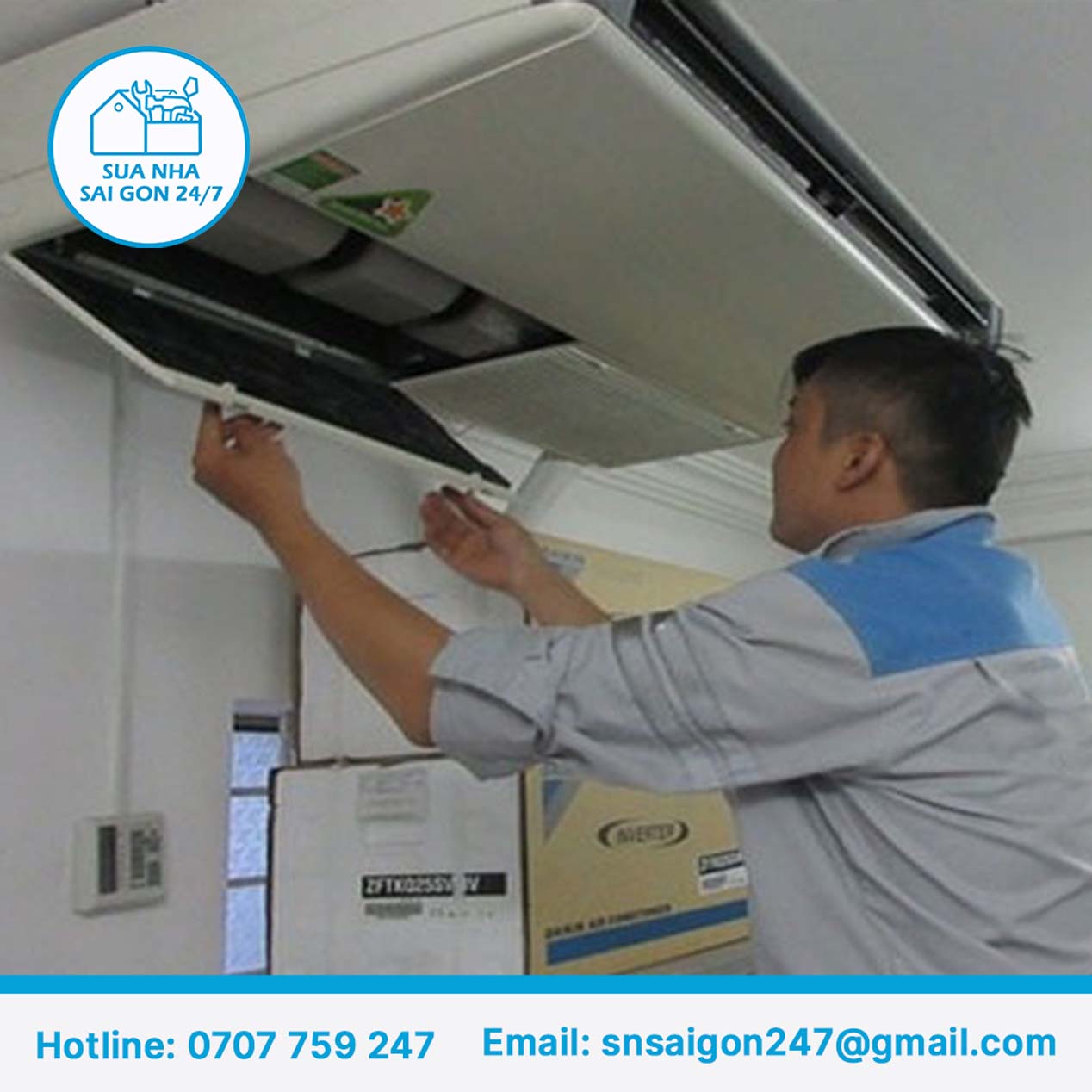
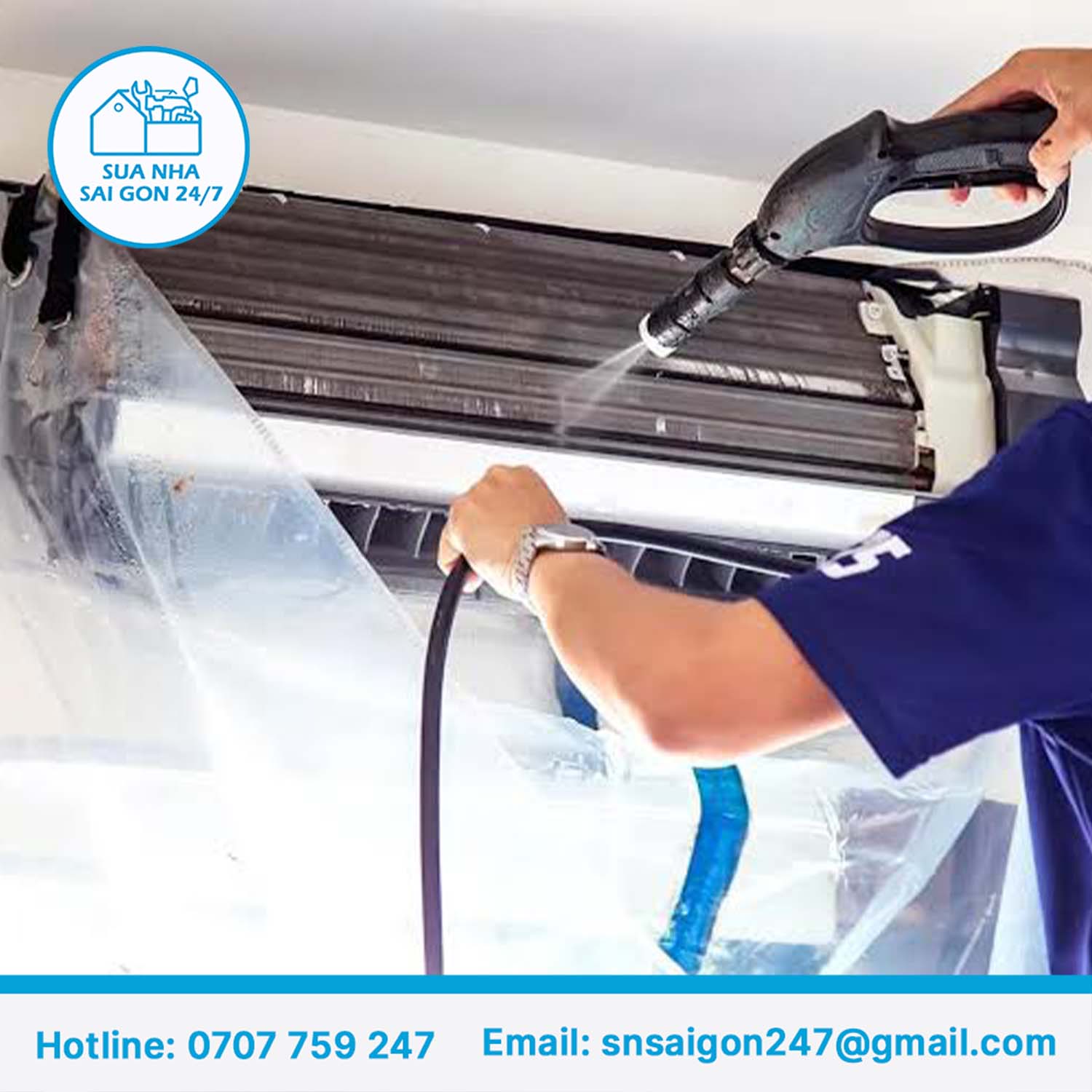
- Air conditioning: filter and coil cleaning, and checking that the condensate drain isn’t starting to clog (a common cause of water dripping from the unit).
- Water heater: checking the heating element and tank condition, particularly for older tank-style units rather than newer instant/tankless models.
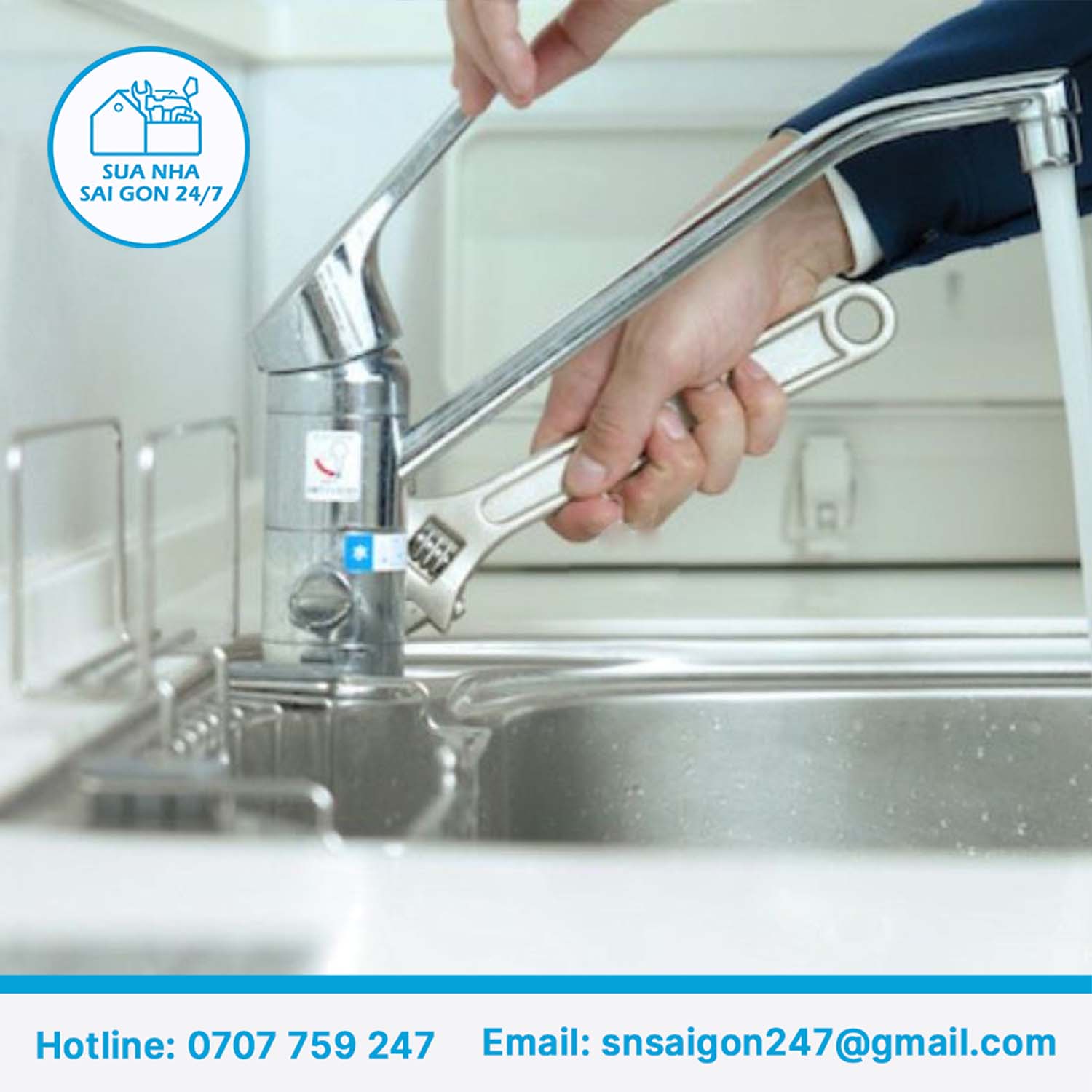
- Plumbing fixtures: checking under-sink connections, toilet base seals, and shower drains for slow leaks that aren’t obvious until they’ve caused damage.
- Exhaust fans: bathroom and kitchen exhaust fans that run less efficiently over time as dust builds up, which can contribute to humidity and mold issues.
- Door hardware: hinges, locks, and door closers, especially on balcony doors that see more temperature and humidity swings than interior doors.
- Waterproofed areas: bathroom floor seals and balcony drainage, both of which are common failure points in Ho Chi Minh City’s climate.
None of these items are urgent on their own — that’s exactly why they tend to get missed until one of them causes a visible problem.
Seasonal Maintenance Tasks for Ho Chi Minh City’s Climate
Thao Dien’s apartments deal with the same rainy-season and dry-season swings as the rest of Ho Chi Minh City, and each season puts stress on different systems.
Going into the rainy season (roughly May through October), it’s worth checking balcony drainage and bathroom waterproofing before the heavy rain starts, since a small gap in sealant that’s harmless in dry weather can let water in once rain becomes frequent and heavy. Humidity during this period also makes mold more likely in poorly ventilated bathrooms, so confirming the exhaust fan is working properly matters more in this stretch of the year. During the dry season, AC units run harder and longer, which is when a coil cleaning has the most impact on both cooling performance and electricity use — a unit that hasn’t been serviced in over six months often runs noticeably less efficiently once daily use increases.
Apartment-Specific Systems That Need Periodic Attention
Unlike a standalone villa, apartments in towers like those common in Thao Dien share some infrastructure with the rest of the building, which changes what “maintenance” can mean for a single unit.
- Water pressure and shared risers: water pressure issues are sometimes a building-wide matter rather than something isolated to one apartment, so it’s worth checking with building management before assuming a fixture itself is at fault.
- Elevator-dependent access: any maintenance job involving larger equipment or materials typically needs elevator booking arranged with building management in advance, particularly during business hours in higher-traffic buildings.
- In-unit vs. building-wide systems: AC condenser units, in-unit plumbing, and door hardware are the tenant’s or owner’s responsibility to maintain, while structural waterproofing and shared water supply usually fall under the building’s own maintenance program — worth clarifying early so maintenance requests go to the right party.
One-Off Repair vs. a Maintenance Retainer: Which Makes Sense
Whether a scheduled maintenance arrangement is worth setting up depends more on how long you’re staying and how the apartment’s systems have held up than on a fixed rule.
| Factor | One-off repair visits | Scheduled maintenance |
|---|---|---|
| Best for | Newer apartment, short-term stay, few issues so far | Multi-year lease, older building, or a unit with recurring small issues |
| Cost pattern | Pay only when something needs fixing | Predictable visits, catches issues earlier |
| Risk if skipped | Small issues can go unnoticed until they cause damage | Lower risk of a small issue becoming a bigger repair |
| Coordination needed | Arranged only when something breaks | Needs a schedule agreed with the provider and, where relevant, building management |
For a short-term rental in a newer tower with no history of issues, one-off visits as needed are usually sufficient. For a longer lease, an older building, or an apartment with a track record of small recurring problems, a scheduled arrangement tends to be more cost-effective over time than repeatedly calling for the same type of issue.
Coordinating Maintenance Visits With Building Management in Thao Dien
Thao Dien’s apartment towers generally have an active management board, which changes how a maintenance visit gets scheduled compared to a standalone house.
Most buildings require advance notice for any work involving the service elevator, and some restrict louder or more disruptive work (like AC unit servicing on an exterior condenser) to certain hours. It’s worth asking building management directly what their process is for booking a maintenance visit — some buildings want the technician’s ID registered at the front desk in advance, particularly for gated villa compounds and higher-end towers where security procedures are more involved than in a typical walk-up building.
How Often Should Each System Be Checked
A simple reference table makes it easier to actually stick to a maintenance schedule instead of relying on memory.
| System | Suggested check frequency |
|---|---|
| Air conditioning (filter and coil) | Every 3-6 months, depending on usage |
| Water heater | Roughly once a year, sooner for older tank units |
| Bathroom exhaust fan | Every 6 months |
| Under-sink plumbing connections | Every 6-12 months, or after noticing any dampness |
| Door hinges and locks | Once a year, or when they start feeling stiff or loose |
| Bathroom/balcony waterproofing seals | Before the rainy season, and after any visible cracking |
These are general reference intervals rather than fixed rules — actual frequency depends on how much the apartment is used and the age of each system. Contact us for an on-site survey and we can suggest a schedule suited to your specific apartment.
What to Check Before Leaving Your Apartment Vacant
Many Thao Dien residents travel for extended periods — a trip home, a business stint elsewhere — and an apartment left unattended for weeks has a few maintenance considerations of its own.
- Check the AC condensate drain isn’t blocked before leaving, since a blocked drain combined with the AC left running (or humidity building up if it’s off) can lead to water damage that goes unnoticed for weeks.
- Shut off the main water supply if you’ll be away for an extended period, reducing the risk of a slow leak turning into a flooded apartment by the time you return.
- Unplug non-essential appliances to reduce both electrical risk and standby power use while the apartment sits empty.
- Let building management or a trusted neighbor know if you’ll be away more than a couple of weeks, so someone can be alerted if an issue does come up (a leak, a smell, a security concern).
Questions to Ask a Maintenance Provider Before Signing Up
A few direct questions help clarify what you’re actually getting before agreeing to any kind of ongoing maintenance arrangement.
- “Is pricing itemized by system, or is it a flat visit fee regardless of what’s checked?”
- “What happens if something needs a bigger repair during a routine maintenance visit — is that quoted separately?”
- “Can visits be scheduled around building access rules, like elevator booking hours?”
- “Is there a warranty on the maintenance work itself, separate from any parts replaced?”
- “Who do I contact if something comes up between scheduled visits?”
Coordinating Maintenance When a Property Manager Handles the Lease
Many Thao Dien apartments are rented through a property management company acting on behalf of the owner, rather than dealing with the owner directly — which changes who actually approves and pays for maintenance work.
In this setup, it’s worth clarifying upfront which maintenance items are the tenant’s responsibility (light bulbs, minor consumables) versus the owner’s (AC servicing, water heater issues, structural repairs), since this is usually spelled out in the lease but easy to overlook when signing. It’s also worth asking whether the property manager has a preferred maintenance provider already, since some management companies require using their own vendor for anything that could affect the security deposit assessment, while others are fine with the tenant arranging an independent visit as long as receipts are kept. Getting this clarified before an issue comes up avoids a delay in getting something fixed while everyone figures out who’s supposed to arrange it.
Signs a Routine Check Has Turned Into Something Bigger
Most maintenance visits confirm everything is fine or catch something minor — but a few findings during a routine check are worth treating as a signal to act sooner rather than scheduling it for “next time.”
- Discoloration or a soft spot on the ceiling below an AC unit or bathroom: often means a leak has been going on for longer than it appears from the surface, and the source needs tracing rather than just wiping away the stain.
- A water heater making unusual noises or heating unevenly: can indicate sediment buildup or a failing heating element, both of which get more expensive to fix the longer they’re left.
- A musty smell that doesn’t go away after cleaning: frequently points to trapped moisture behind a wall or under flooring rather than surface mold that a simple wipe-down would resolve.
- Door frames that have started warping or sticking, especially near balcony doors — sometimes an early sign of moisture intrusion around the frame seal rather than just normal wear.
- A noticeable, unexplained rise in the water or electricity bill: worth investigating promptly, since a hidden leak or an AC unit working harder than it should are both common (and fixable) causes.
None of these require panic, but they’re the kind of finding where waiting for the next scheduled visit is usually the wrong call — a quick follow-up inspection tends to be far cheaper than letting the underlying cause continue.
Keeping a Simple Maintenance Log for Your Apartment
A basic record of what’s been checked and when makes it much easier to spot patterns — like an AC that needs cleaning more often than expected, or a drain that keeps slowing down faster than it should.
A simple log doesn’t need special software — a shared note on your phone or a spreadsheet works fine. Useful fields to track include: the date of each visit, which systems were checked, anything that was flagged but not yet fixed, and the technician’s contact details for that visit. This becomes particularly useful for expats who relocate or hand the apartment over to a new tenant, since a documented maintenance history helps clarify what’s genuinely due to wear versus something that was already flagged and left unresolved — a detail that matters if a deposit dispute comes up at move-out.

How Sai Gon Home Repair 247 Supports Apartment Maintenance in Thao Dien
An apartment that only gets attention after something breaks tends to accumulate small, avoidable problems — the kind that are cheap to catch early and more expensive once they’ve caused damage elsewhere.
Sai Gon Home Repair 247 has more than 7 years of experience with home repair and maintenance in Ho Chi Minh City, covering both one-off repairs and scheduled maintenance visits for apartments in Thao Dien and across the city, whether you’re dealing directly with a landlord or through a property management company. Every visit starts with an on-site inspection and a clear, itemized quote before any work begins, with support available in English, Korean, and Vietnamese for residents coordinating maintenance across language barriers, and receipts provided for anyone who needs to document work for a landlord or property manager.
Contact us for an on-site survey and consultation to work out a maintenance schedule suited to your apartment.
Frequently Asked Questions
What does apartment maintenance actually include in Thao Dien?
It typically covers AC servicing, checking the water heater and plumbing fixtures, testing exhaust fans, inspecting door hinges and locks, and checking waterproofed areas like the bathroom and balcony on a regular schedule — rather than waiting for something to break.
How is maintenance different from calling a handyman for a repair?
A repair call responds to something that has already failed. Maintenance is scheduled and preventive — it catches small issues (a slow AC drain, a worn door seal) before they turn into a bigger repair or a dispute with the landlord over damage.
How often should an apartment’s AC and water heater be checked?
AC units are typically cleaned every 3-6 months depending on usage, and a water heater benefits from a check roughly once a year, or sooner if it’s an older tank-style unit.
Is a maintenance retainer worth it for a single apartment?
It depends on how long you plan to stay and how many systems the apartment has. For a short stay with a newer unit, occasional one-off visits are usually enough; for a multi-year lease or an older building, a scheduled arrangement can be more convenient and catch issues earlier.
What should I check before leaving my Thao Dien apartment vacant for a trip?
Check the AC drain line isn’t blocked, shut off the water supply if leaving for an extended period, unplug non-essential appliances, and let building management or a neighbor know if you’ll be away for more than a couple of weeks.
Does Sai Gon Home Repair 247 offer apartment maintenance visits in Thao Dien?
Yes. Sai Gon Home Repair 247 handles both one-off repairs and scheduled maintenance visits for apartments in Thao Dien, with an on-site survey and a transparent quote before any work begins.
Sai Gon Home Repair 247 — 7+ years of repair and renovation experience in Ho Chi Minh City.
- Vietnamese hotline/ Zalo: 0707 759 247
- English & Korean support/ Zalo: 076 806 7114
- English support/ Zalo: 033 939 0325
- Email: snsaigon247@gmail.com
- Address: 150 Tran Nao Street, An Khanh Ward, Ho Chi Minh City
Contact us for an on-site survey and consultation.



