Tiếng Việt


Why clean a wall-mounted air conditioner regularly?
Regular cleaning keeps an air conditioner efficient, energy-saving and durable over time. Thick dust on the coil and filter is the main reason a unit cools poorly and wastes power. The specific benefits:
- Deeper cooling: a clean coil lets air flow well, so the unit reaches temperature quickly and evenly.
- Energy saving: the unit doesn’t overwork to compensate for blocked airflow.
- Cleaner air: removes dust and mould in the coil, reducing odours and allergy triggers.
- More durable, fewer faults: less strain on the compressor and lower risk of a blocked drain.
- Early problem detection: the technician spots low gas, leaks or weak parts during cleaning.
In short, one low-cost cleaning helps you avoid expensive breakdowns and high electricity bills later.
What happens if you skip air conditioner cleaning?
Leaving an air conditioner uncleaned for a long time doesn’t just reduce cooling — it leads to several costly consequences. Common problems:
- Higher power use: a dusty coil makes the unit overwork, and the bill climbs over time.
- Shorter compressor life: the unit runs harder to cool, putting pressure on the compressor.
- Water leaks, blocked drain: accumulated dust easily clogs the tray and drain pipe.
- Health impact: mould in the coil spreads into the air, which is not good for breathing.
- Damage spreading to other parts: a small dust-related fault can lead to a bigger breakdown.
So the cost of one periodic cleaning is always far smaller than the repair cost once the unit fails from long-term dust build-up.
Signs your air conditioner needs cleaning now
You should clean the unit when signs show the coil has become heavily soiled. Common signs:
- The unit takes long to cool or doesn’t cool as deeply as before.
- A musty smell each time it turns on.
- Weak airflow, uneven cool air.
- The indoor unit leaks or drips water abnormally.
- Louder noise, and the bill rises despite the same usage.
- It has been over 3–6 months without any cleaning.
If your unit shows these signs, cleaning early restores cooling and prevents dust from damaging other parts.
The wall-mounted AC cleaning process
A proper process always protects the unit safely and cleans both the indoor and outdoor coils, not just the filter. The basic steps:
- Survey and power off: check the unit’s condition and cut the power for safety.
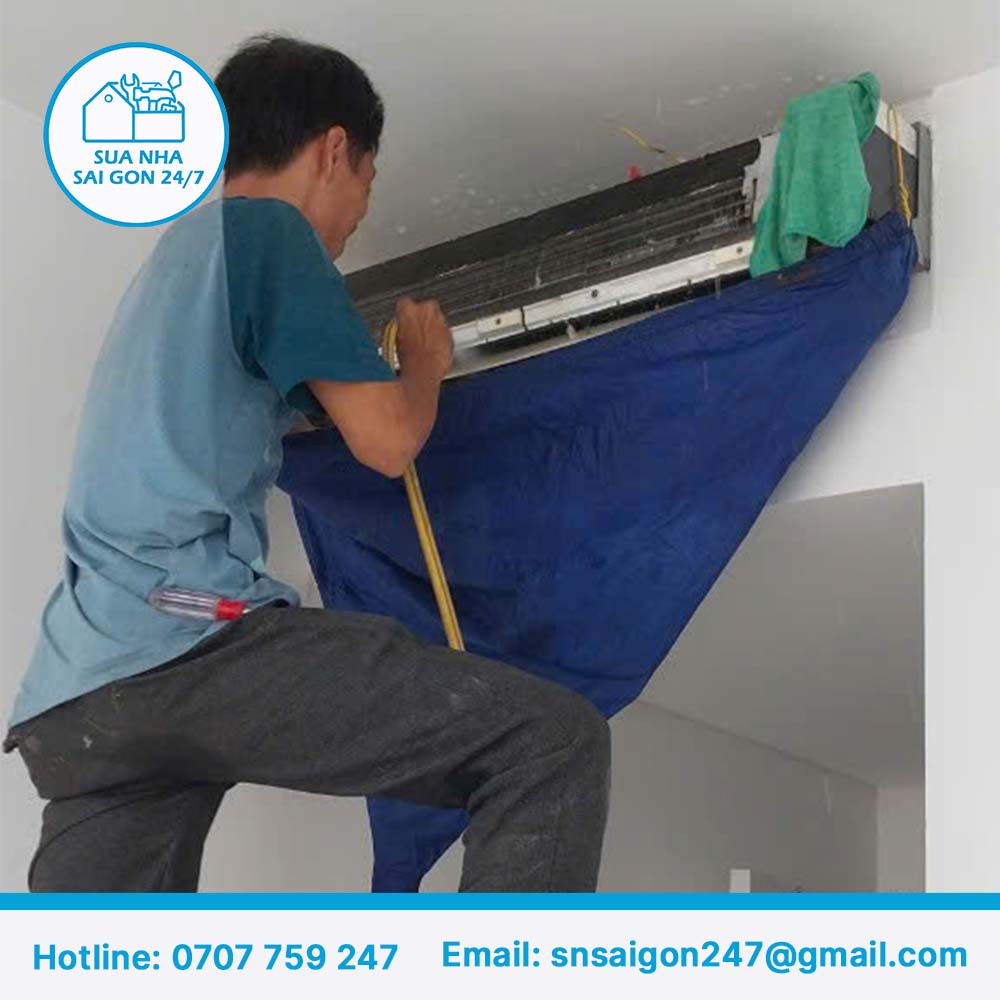
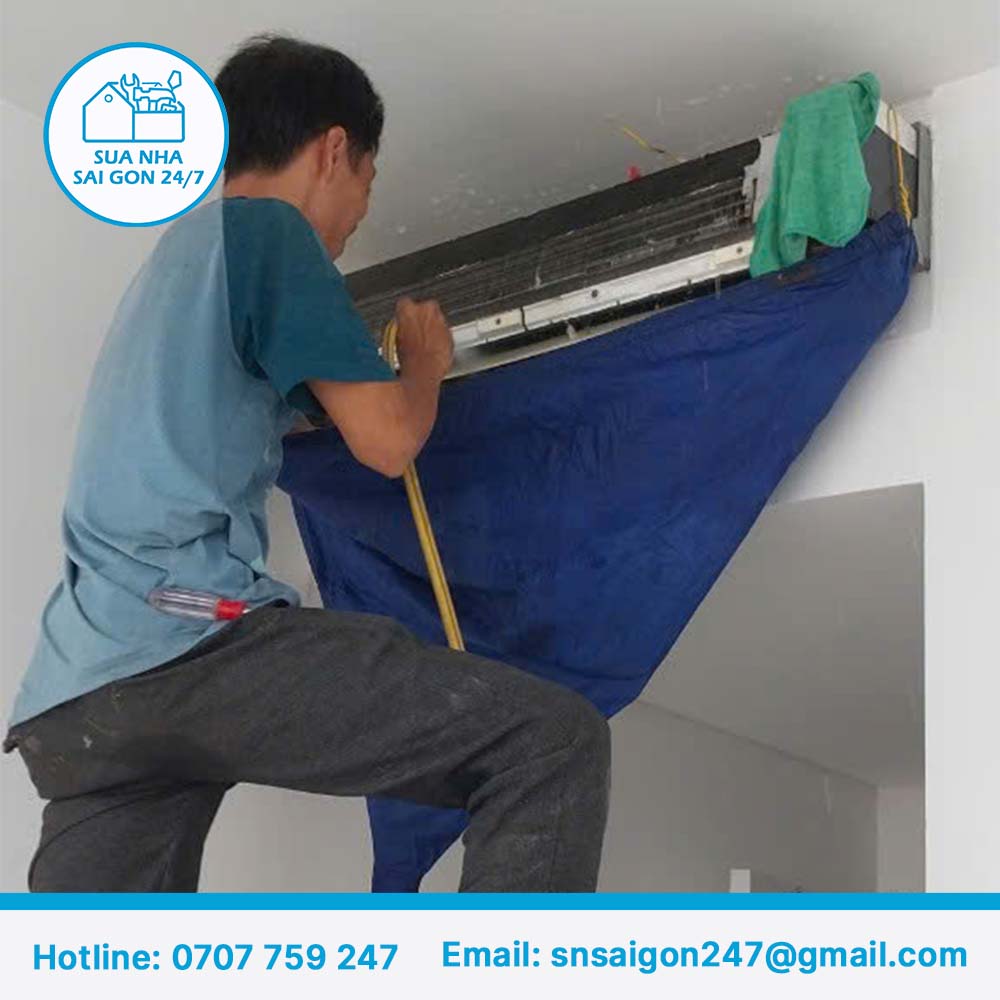
- Protection: wrap a water-catch bag around the indoor unit and shield the circuit board and surroundings.
- Remove the face panel and filter: take off removable parts to clean separately.
- Spray-clean the indoor coil: use a pressure pump and specialist solution to clean the fins without bending them.
- Clean the outdoor unit: spray-clean the outdoor unit, which collects a lot of dust and leaves.
- Check gas and drain: measure gas pressure, clear and check the tray and drain pipe.
- Reassemble and test: refit the filter and panel, run a test and measure cooling before handover.
The protection step and handling the circuit board matter most on wall-mounted units. Carelessly spraying water near the board can cause a short circuit and damage the board, so this part should never be rushed.
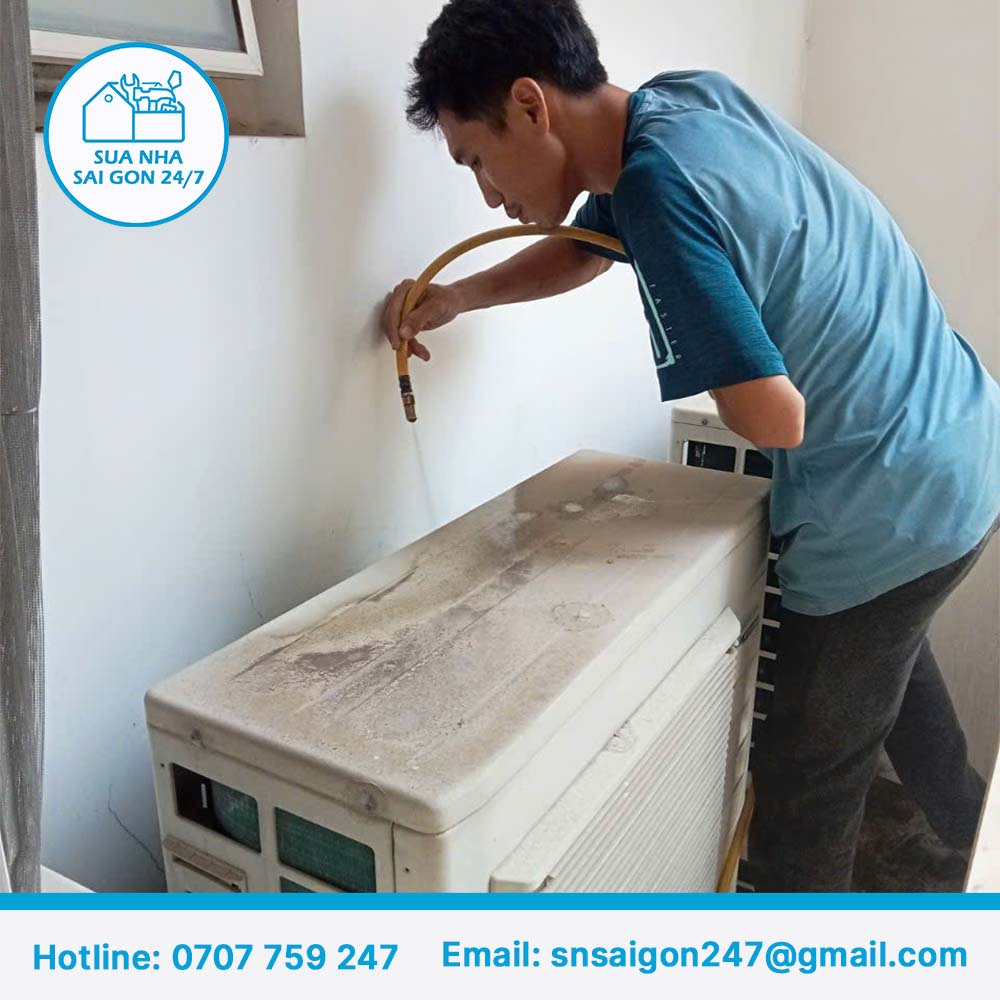
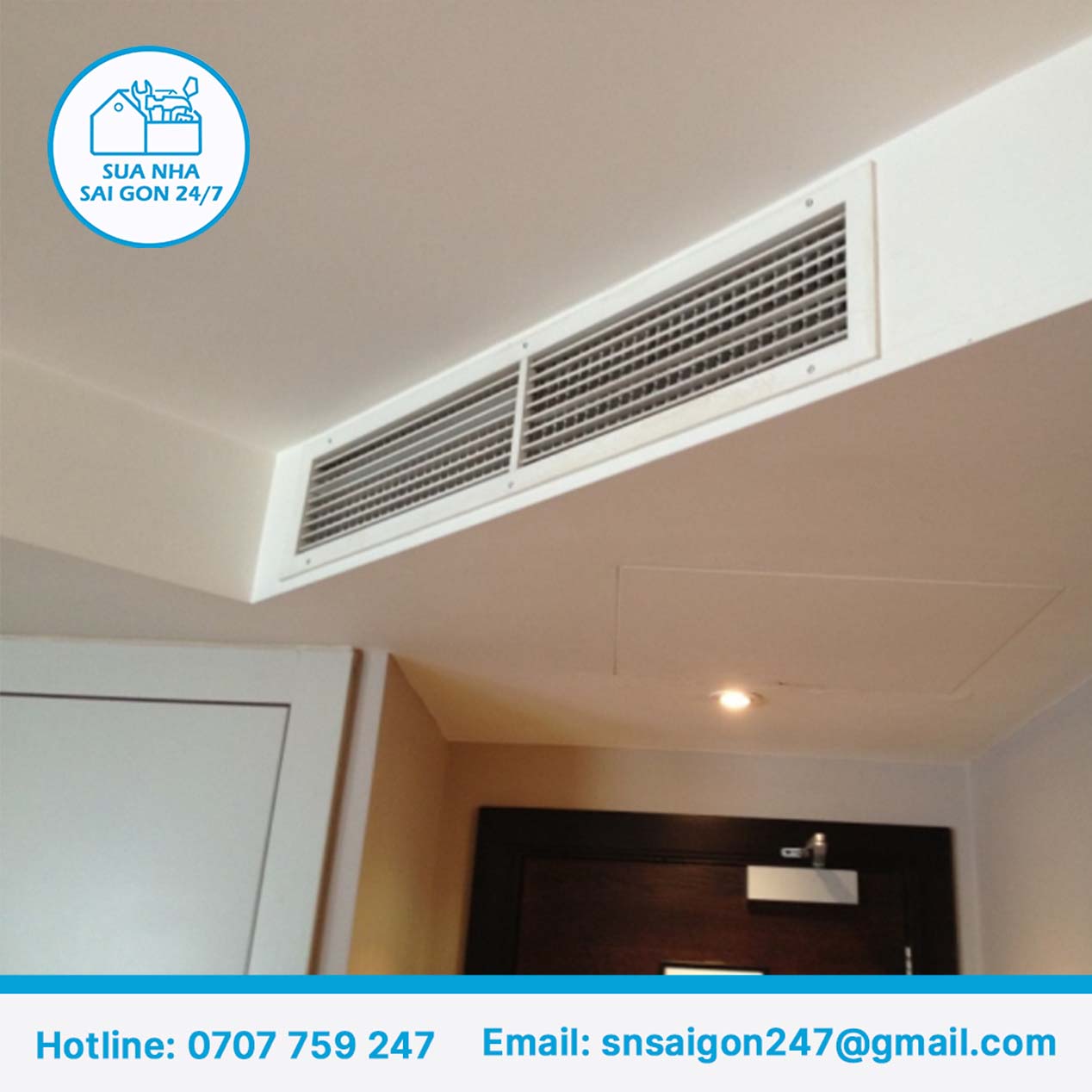
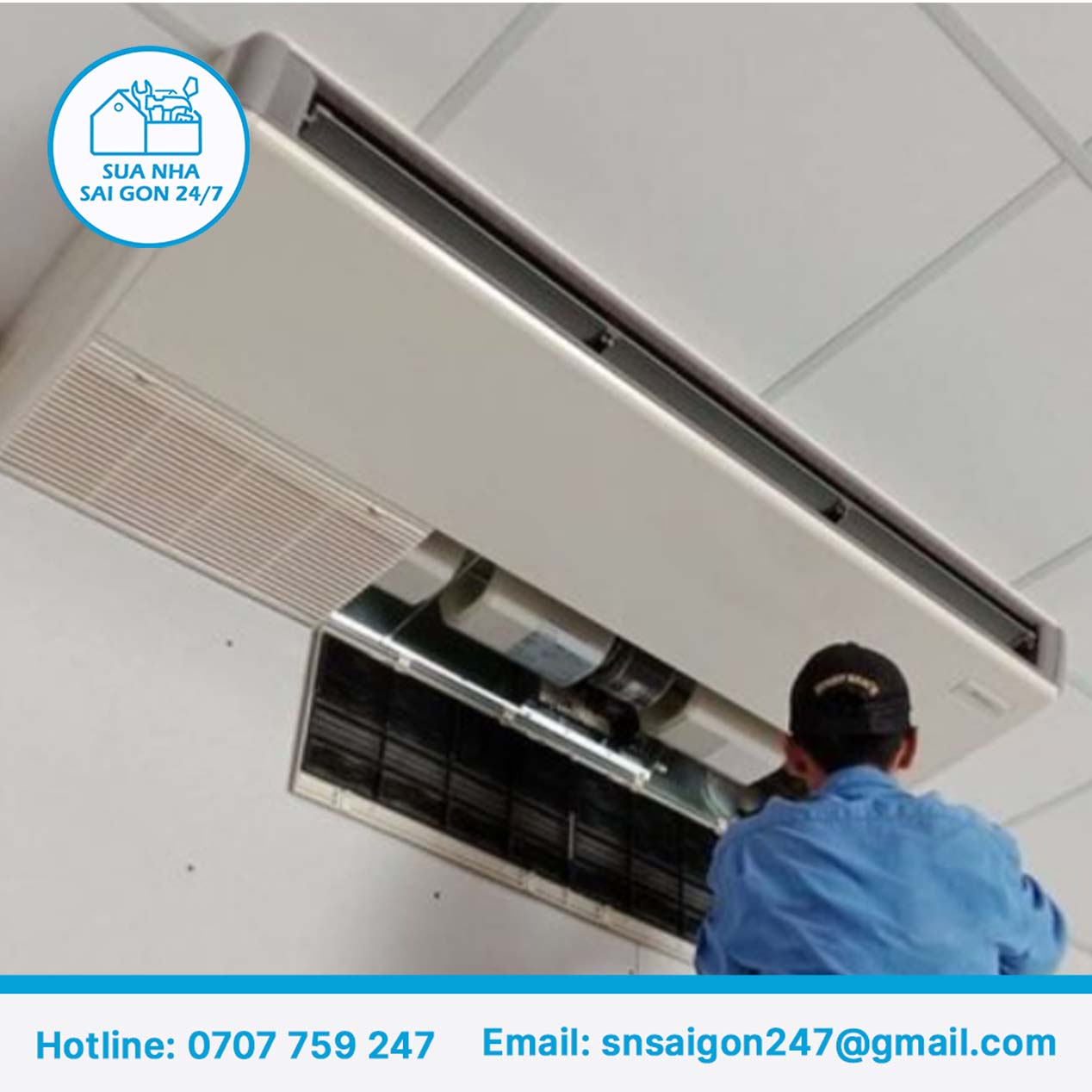
How is a wall-mounted unit different from cassette or floor-standing units?
A wall-mounted air conditioner is easier to clean than higher-capacity units thanks to its position and compact build. The main differences:
- Mounting position: a wall unit sits at mid height, easier to open and shield than a cassette unit fitted high on the ceiling.
- Time: a wall unit cleans fast, usually 30–45 minutes; cassette and concealed-ducted units take longer due to panels and ducting.
- Tools: a wall unit uses a basic pressure pump and catch bag; larger units need extra equipment and sometimes two people.
So the cost and time to clean a wall-mounted unit are usually lower than a cassette or floor-standing unit. Whatever the type, the principle of shielding the board and cleaning both indoor and outdoor coils is the same.
How often should you clean an air conditioner?
Cleaning frequency depends on usage and the installation environment. Common reference points:
- Households: about every 3–6 months, cleaning before the hot season when usage is heavy.
- Offices, shops: about every 2–3 months, as units run for many hours daily.
- Restaurants, greasy or dusty areas: more often, perhaps every 1–2 months, as the coil soils quickly.
Cleaning on the right cycle keeps the unit efficient and reduces minor faults. Leaving it too long lets dust harden, making it harder to clean and affecting durability.
When is the best time to clean an air conditioner?
The right timing keeps the unit working well exactly when you need it most. A few practical tips for Ho Chi Minh City:
- Before the hot season: clean at the start of the dry season so the unit runs at full capacity during heavy use.
- After a long idle period: if the unit sat unused, clean it before using again to remove dust and mould.
- When you notice something off: poor cooling, odour or water leaks mean clean now, without waiting for the full cycle.
- On a set schedule: a fixed booking helps you not forget and keeps the unit in good shape.
For offices and shops, a quarterly schedule is the most convenient way to avoid disruption and keep units durable and reliably cool for guests and staff.
Wall-mounted AC cleaning pricing 2026
Cleaning cost depends on unit capacity, mounting position and the number of units. Below are market reference ranges:
| Item | Reference price (VND/unit) |
|---|---|
| Wall-mounted AC cleaning (under 2 HP) | 150,000 – 230,000 |
| Higher-capacity unit cleaning (2 HP and up) | 230,000 – 300,000 |
| Multi-unit / periodic cleaning combo | discount by quantity |
| Gas top-up, parts replacement (if needed) | quoted separately after inspection |
These prices are for reference only. The actual cost depends on the unit’s condition and is agreed before work begins. Cleaning and gas top-up are two different jobs; gas is only added when the unit is genuinely low.
Has your air conditioner gone a long time without cleaning, cooling poorly or smelling musty? Contact Sai Gon Home Repair 247 — Hotline: 0707 759 247 for advice and to book an on-site cleaning.
Clean it yourself or hire a service?
You can do part of it yourself, but the most important part should go to a technician. Removing and washing the filter is fairly simple and should be done often. However, spray-cleaning the indoor coil requires shielding the circuit board, using a water-catch bag and a pressure pump correctly.
Spraying the coil without shielding the board can let water into the board and cause a short circuit; spraying too hard can bend the fins and reduce efficiency. So the coil-spraying part should go to a team with specialist tools for safety and thorough cleaning.
In other words: wash the filter yourself between visits; but full periodic coil cleaning should be hired out to ensure electrical safety and effectiveness.
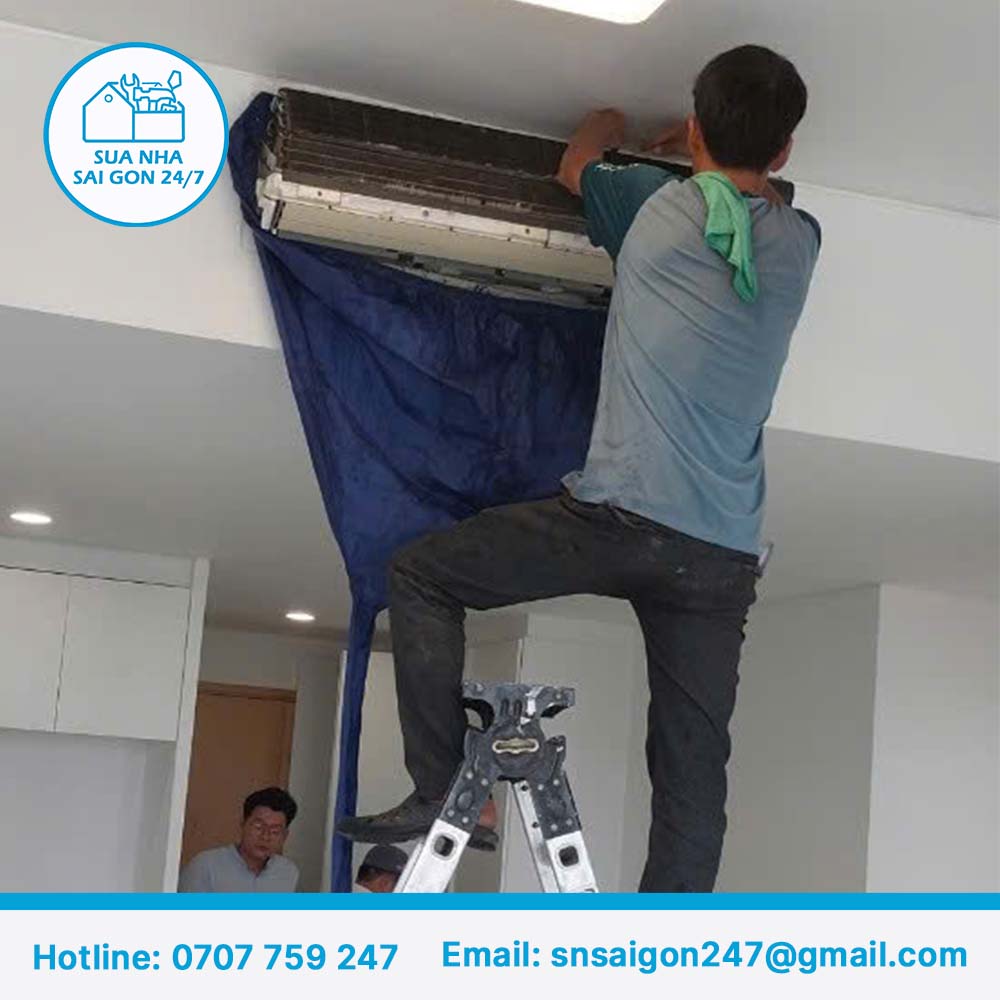
What to prepare before the technician arrives
A few small preparations make the cleaning faster and tidier. You should:
- Clear the area below and around the indoor unit so the technician can work easily.
- Cover or move electronics and water-sensitive items near the unit.
- Have a nearby water source ready if possible, convenient for spraying.
- Mention the unit’s condition in advance (poor cooling, odour, water leak) so the technician checks the right focus.
- For apartments, register the schedule with building management if the building requires it.
These preparations aren’t mandatory, but they help the technician work fast and clean, limit impact on the surrounding area, and shorten the working time for both sides.
Why choose Sai Gon Home Repair 247?
Whether an air conditioner is cleaned well depends on the process and safe shielding, not just on spraying water. A team working to correct technique cleans thoroughly while keeping the board and fins safe.
Sai Gon Home Repair 247 has more than 7 years of repair and maintenance experience in Ho Chi Minh City. We clean to a proper process, quote transparently before work, check gas and the drain during cleaning, and advise honestly when the unit needs further repair. For international clients, our team supports advice via Zalo, WeChat and KakaoTalk.
The team handles single units at home as well as multiple units for offices and shops, and can arrange periodic cleaning so you don’t have to remember each season.
If the unit has a technical fault beyond dust, see our wall-mounted AC repair in HCMC service.
Our service commitments
A trustworthy cleaning service shows in its commitments, not only during the work. Sai Gon Home Repair 247 works to clear commitments:
- Quote before work: pricing by capacity and number of units, with no surprise extras.
- Proper, safe process: shield the board, use specialist solution, clean both indoor and outdoor coils.
- Overall check: measure gas, check the drain and cooling, and advise if the unit needs repair.
- Tidy and clean: shield the area and clean up afterwards.
- Multi-channel support: advice via hotline, Zalo, WeChat and KakaoTalk for international clients.
These commitments let you plan your budget and feel assured about quality, even when booking periodic cleaning for multiple units.
Service area
Sai Gon Home Repair 247 cleans wall-mounted air conditioners across Ho Chi Minh City: Districts 1, 3, 4, 5, 6, 7, 8, 10, 11, 12, Binh Thanh, Go Vap, Tan Binh, Tan Phu, Phu Nhuan, Binh Tan, Thu Duc City (former Districts 2 and 9), and the outlying districts of Nha Be, Hoc Mon, Binh Chanh, Cu Chi and Can Gio. The team handles single units at home as well as multi-unit systems for offices, shops and restaurants.
Frequently asked questions
How much does wall-mounted AC cleaning cost?
Market reference 2026: about 150,000–300,000 VND/unit depending on capacity and mounting position. Gas top-up or parts replacement (if any) is quoted separately after inspection.
How often should I clean my air conditioner?
Clean every 3–6 months for households, and more often for offices and eateries in continuous use. Regular cleaning keeps the unit cooling deeply, running quietly and saving power.
What steps does wall-mounted AC cleaning include?
The standard process includes: survey, power off, protection, removing the panel and filter, spray-cleaning the indoor coil with specialist solution, cleaning the outdoor unit, checking gas and the drain, then testing cooling before handover.
How long does cleaning one unit take?
A wall-mounted unit is usually cleaned within 30–45 minutes. A very dirty unit or one in a hard-to-reach position may take a little longer.
Can I clean the air conditioner myself?
You can remove and wash the filter yourself, but spray-cleaning the indoor coil requires shielding the circuit board and using a water-catch bag correctly. Doing it wrong can wet the board or bend the fins, so this part should go to a technician with specialist tools.
Does cleaning save electricity?
Yes. A clean coil and filter let air flow well, so the unit cools faster and doesn’t overwork, reducing power use compared with a heavily soiled unit.
Does cleaning require a gas top-up?
Not necessarily. Cleaning and gas top-up are different jobs. The technician checks gas pressure during cleaning and only advises topping up when the unit is genuinely low.
How is wall-mounted AC cleaning done in HCMC?
The technician comes on site, shields the unit, removes and spray-cleans the indoor and outdoor coils with specialist solution, checks gas and tests cooling. Sai Gon Home Repair 247 cleans wall-mounted air conditioners at homes and offices in HCMC.
Sai Gon Home Repair 247 — more than 7 years of repair and maintenance experience in Ho Chi Minh City. We are ready to advise and schedule on-site air conditioner cleaning to your real needs.
- Hotline / Zalo: 0707 759 247
- English support: +84 33 939 0325 · English & Korean support: +84 76 806 7114
- Email: snsaigon247@gmail.com
- Address: 150 Tran Nao, An Khanh Ward, Ho Chi Minh City
- Working hours: Monday–Saturday, 08:00–17:30