
 Tiếng Việt
Common Electrical Issues in Thao Dien’s Villas and Apartments
As with plumbing, Thao Dien’s housing mix means the same symptom can point to a very different underlying cause depending on whether you’re in a villa or a tower apartment.
Older villas were often wired for a lower total electrical load than what’s now common — before central AC, multiple water heaters, and a full kitchen’s worth of appliances became standard. When more appliances get added over the years without a corresponding upgrade to the wiring or distribution board, the result is exactly the kind of recurring breaker trips or warm outlets that show up as a “small” issue but actually point to a capacity problem. High-rise apartments, by contrast, are usually on more modern wiring installed to current standards, so individual issues — a faulty switch, a dead outlet, a fixture that’s stopped working — are more often isolated to that one item rather than a sign of a building-wide capacity issue.
Warning Signs That Shouldn’t Wait
Most electrical issues are inconvenient rather than dangerous, but a handful of signs point to something that needs attention immediately rather than at the next convenient time.
- A burning smell, especially near an outlet, switch, or the distribution board: stop using that circuit and call an electrician right away.
- An outlet or switch that’s warm or hot to the touch: a sign of a loose connection or overloaded circuit, both of which are fire risks if ignored.
- Visible sparking when plugging in or unplugging a device: occasional minor sparking can be normal with some plugs, but frequent or pronounced sparking is not.
- A breaker that trips repeatedly under normal, everyday use: especially if it’s a specific circuit rather than a one-off overload from an unusual combination of appliances.
- Flickering lights across multiple rooms, not just one fixture: can point to a loose connection at the panel rather than a simple bulb or fixture issue.
None of these require you to diagnose the exact cause yourself — the point is recognizing that these particular signs warrant a same-day call rather than being added to a general to-do list.
What to Check Before Assuming It’s an Electrician’s Job
A few quick, safe checks can clarify whether an issue is minor and easily resolved, or something that genuinely needs a professional visit.
- Check if it’s one device or the whole outlet: plug a different, known-working device into the same outlet to rule out the appliance itself being faulty.
- Check the breaker panel for a tripped switch: a tripped breaker is a simple reset in many cases, though repeated tripping is itself a sign worth having checked.
- Note what was running at the time of the issue: if a breaker trips only when several high-draw appliances run together, this points toward a capacity issue rather than a wiring fault.
- Check if the issue is isolated to one room or affects the whole unit: a single dead outlet is usually local; multiple rooms losing power at once suggests a panel-level issue.
These checks help you describe the issue more precisely when you do call, which makes it easier for an electrician to bring the right tools and parts on the first visit.
Common Electrical Repairs and Reference Pricing (2026)
Electrical work in Ho Chi Minh City is generally priced per item or per point rather than a flat callout fee, so the scope of the job matters more than simply the type of property.
| Item | Reference Price (VND) | Unit |
|---|---|---|
| Outlet or switch installation | 80,000 – 150,000 | per piece |
| CB / MCB installation | 100,000 – 200,000 | per piece |
| Basic light fixture installation | 100,000 – 180,000 | per unit |
| Residential distribution board | 400,000 – 1,200,000 | per unit |
| Concealed in-wall wiring installation | 100,000 – 140,000 | VND/m² |
| Renovating/relocating an existing system | On-site survey & quote | per project |
These figures are reference pricing only, not a fixed quote — actual cost depends on wiring condition, the number of points involved, and whether wall-cutting or finishing work is needed. Contact us for an on-site inspection and a specific quote before any work begins.
Emergency Electrical Situations That Need Immediate Response
Most electrical issues can be scheduled for a routine visit, but a few situations justify calling immediately rather than waiting.
- Any burning smell or visible smoke from an outlet, switch, or the distribution board — turn off power to that circuit at the breaker if it’s safe to do so, then call immediately.
- Complete loss of power to the unit when neighbors or the rest of the building still have power, which often points to an issue at your own panel rather than a wider outage.
- Exposed or damaged wiring, particularly anywhere accessible to children or pets.
- A breaker that won’t reset, or trips again immediately after resetting — a sign of an active fault on that circuit rather than a simple overload.
For anything short of these — a single dead outlet, a fixture that needs replacing, a switch that feels loose — a scheduled visit is entirely reasonable.
Coordinating an Electrician Visit With Building Management or a Villa Landlord
As with plumbing, what needs coordinating in advance differs depending on whether you’re in a tower or a villa.
In apartment towers, work confined to your own unit’s outlets, switches, and fixtures usually doesn’t require building management involvement, but anything touching the building’s shared distribution system, or requiring the service elevator for larger equipment, typically needs advance notice. In villas, the main consideration is usually confirming where the main distribution board is located and whether the landlord needs to be informed before any panel-level work, particularly if an upgrade to the board itself is being considered rather than just a repair.
Villa vs. Apartment: Quick Comparison
| Factor | Villa | Apartment / High-Rise |
|---|---|---|
| Typical wiring age | Often older, sometimes pre-dating current appliance loads | Usually newer, built to current standards |
| Distribution board | Owned and managed by the household | Unit panel is yours; building-level distribution is shared |
| Most common issue | Recurring breaker trips tied to total load | Isolated outlet, switch, or fixture faults |
| Upgrade decision | Made independently by the homeowner or landlord | Unit-level upgrades are independent; building-level issues go through management |
| Access coordination | Usually just scheduling with the household | May need advance notice for shared systems or elevator use |
Villa Panel Upgrades: When It’s Worth Considering
For villas dealing with recurring breaker trips tied to normal daily use, the underlying question is often whether the distribution board itself needs upgrading rather than repeatedly fixing symptoms.
A panel that was adequate for a villa’s original appliance load can become a bottleneck once air conditioning units, water heaters, and kitchen appliances are added over the years — each addition increases the total draw on a system that wasn’t necessarily designed to expand. If breaker trips are becoming more frequent rather than staying occasional, it’s worth having an electrician assess total load against the panel’s rated capacity, rather than continuing to just reset the breaker each time it happens. This is also a natural point to check the age and condition of the wiring itself, since an older villa’s wiring and its panel are often replaced together during the same visit rather than as two separate projects.
Questions to Ask an Electrician Before Work Starts
A short set of questions upfront helps set expectations, particularly for anything beyond a simple outlet or switch replacement.
- “Is this priced per item, or will there be a separate callout charge?”
- “If you find the issue is bigger than expected — for example, a panel upgrade is actually needed — will I get a new quote before you continue?”
- “Is there a warranty on the work, and for how long?”
- “Will power need to be cut to the whole unit, or just the circuit being worked on?”
- “Do I need to arrange anything with building management or the landlord beforehand?”
Preventing Common Electrical Problems Between Visits
A few habits reduce how often electrical issues come up, particularly the capacity-related problems more common in older villas.
- Avoid running multiple high-draw appliances on the same circuit (AC, water heater, and a kitchen appliance simultaneously, for instance) if breaker trips have happened before under similar combinations.
- Don’t ignore a breaker that trips “just once in a while” — occasional trips are often the earliest sign of a capacity issue that will become more frequent over time.
- Have older villas assessed periodically, particularly if the wiring or panel predates recent renovations or added appliances.
- Unplug rarely-used high-draw devices rather than leaving them connected to outlets that see heavy daily use for other things.
- Keep a simple record of any electrical work done, including what was replaced and when — useful both for warranty purposes and for giving the next electrician context if a related issue comes up later.
None of these habits require special expertise — they mainly come down to not treating an occasional, easily-dismissed symptom as unrelated to a bigger pattern building up over time.
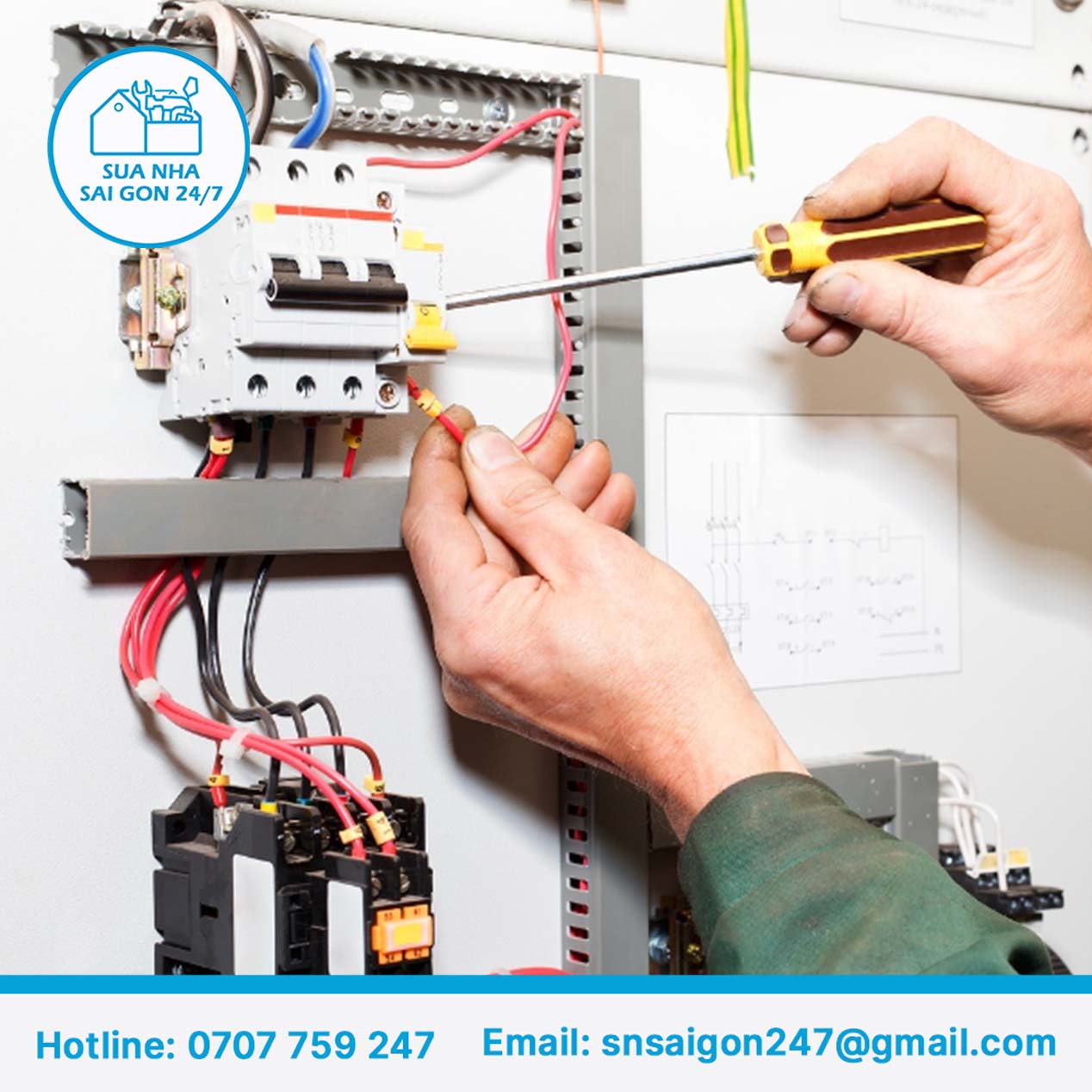
Electrical Work During a Villa Renovation
Renovating an older Thao Dien villa is one of the most common points where an electrical issue that’s been “manageable” for years finally gets addressed properly, since walls are already open and wiring is already exposed.
A few things are worth deciding upfront rather than partway through the renovation. First, whether the renovation is a good moment to replace the entire distribution board rather than just adding a few new circuits — if the existing panel is already near its rated capacity, adding more circuits to it without upgrading the board itself just delays the same problem. Second, whether wiring in older, non-renovated sections of the house should be inspected at the same time, since it’s far cheaper to address while walls are already open than to reopen finished walls later. Third, coordinating the electrical timeline with other trades — wiring generally needs to be roughed in before wall finishing (plastering, painting) and before flooring goes down in areas with floor-level outlets, so an electrician’s schedule should be set relative to the rest of the renovation crew’s, not independently. Renovation-related electrical work is always quoted after an on-site assessment rather than by any fixed price list, since the scope depends heavily on how much of the existing system is being kept versus replaced.
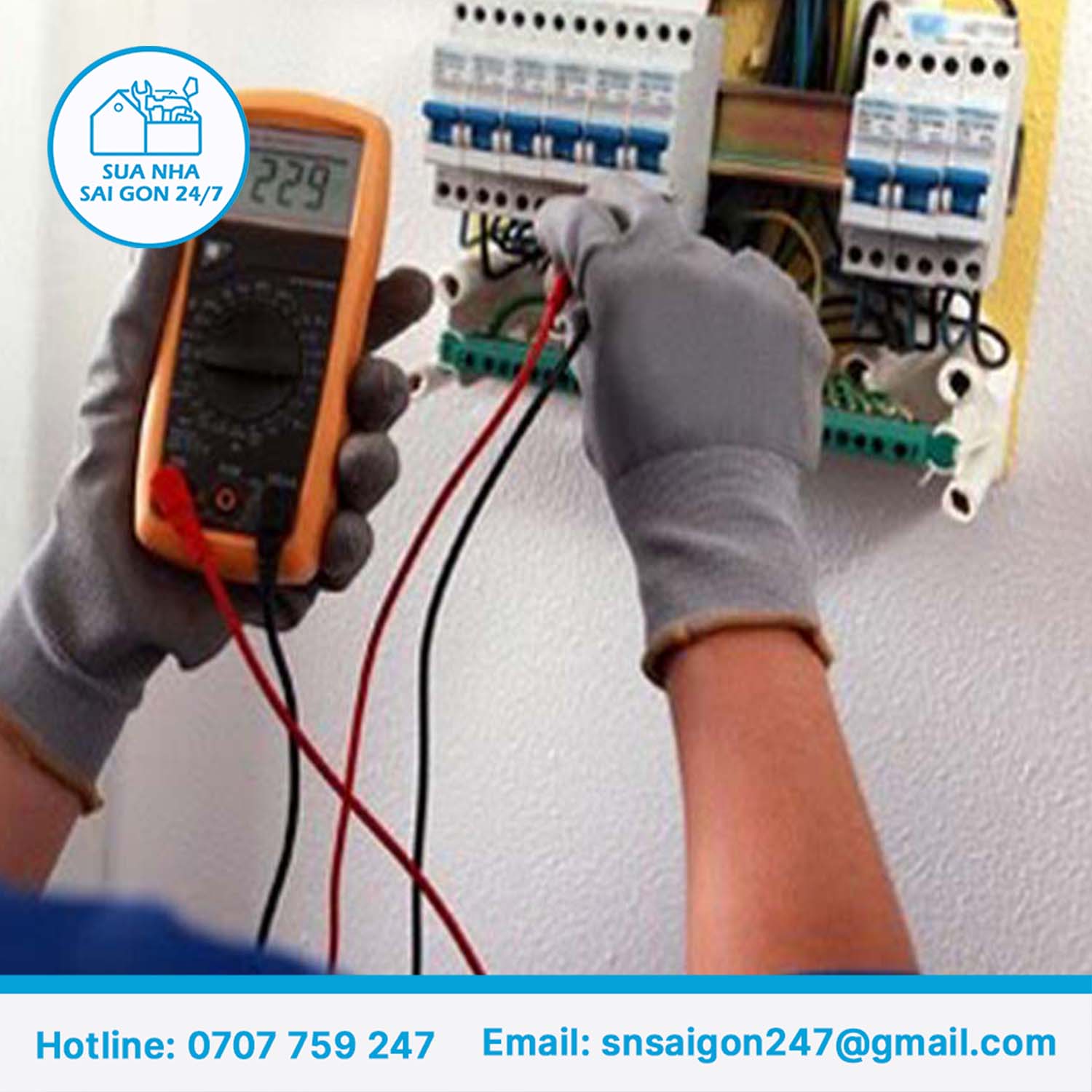
Language and Booking Tips for Foreign Residents
A few practical habits make it easier to get accurate help quickly, particularly if there’s a language gap with the electrician on-site.
- Take a photo or short video of the issue — a flickering light, a warm outlet, a tripped breaker — since a visual often communicates the problem faster than a description, especially across a language barrier.
- Note down when the issue happens, such as “trips when the AC and water heater run together” or “only happens in the evening,” since this detail speeds up diagnosis regardless of language.
- Have your address ready in Vietnamese or ask your landlord/building management to confirm it, since exact addresses in Thao Dien can be easy to mix up between similarly named streets.
- Use Zalo for photos and scheduling — it’s the most common channel for coordinating exact arrival times and sharing photos or videos of the issue beforehand.
Sai Gon Home Repair 247 offers English and Korean-language support specifically so these details can be communicated clearly before a technician arrives, reducing the chance of a mismatched first visit.
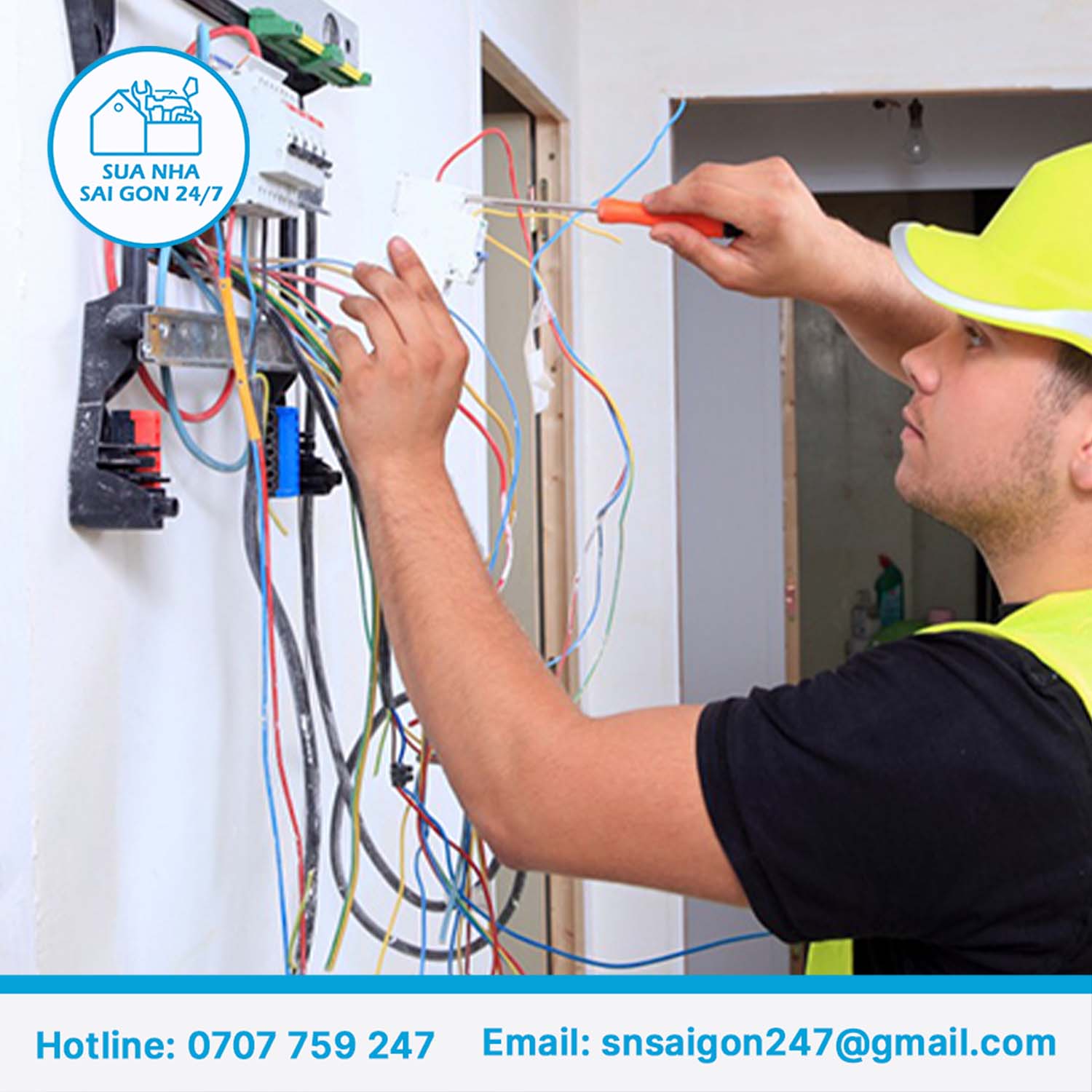
How Sai Gon Home Repair 247 Supports Electrical Needs in Thao Dien
Electrical issues in Thao Dien often come down to correctly identifying whether a problem is isolated to one fixture or points to a broader capacity issue with the panel — misdiagnosing this is a common reason a “repair” doesn’t fully resolve the underlying complaint.
Sai Gon Home Repair 247 has more than 7 years of experience with electrical and general home repair in Ho Chi Minh City, handling everything from a single outlet replacement to villa panel upgrades, with an on-site inspection and an itemized quote before work begins. See our electrical installation services and electrical repair services pages for the full range of work we handle.
Contact us for an on-site survey and consultation for your electrical issue in Thao Dien.
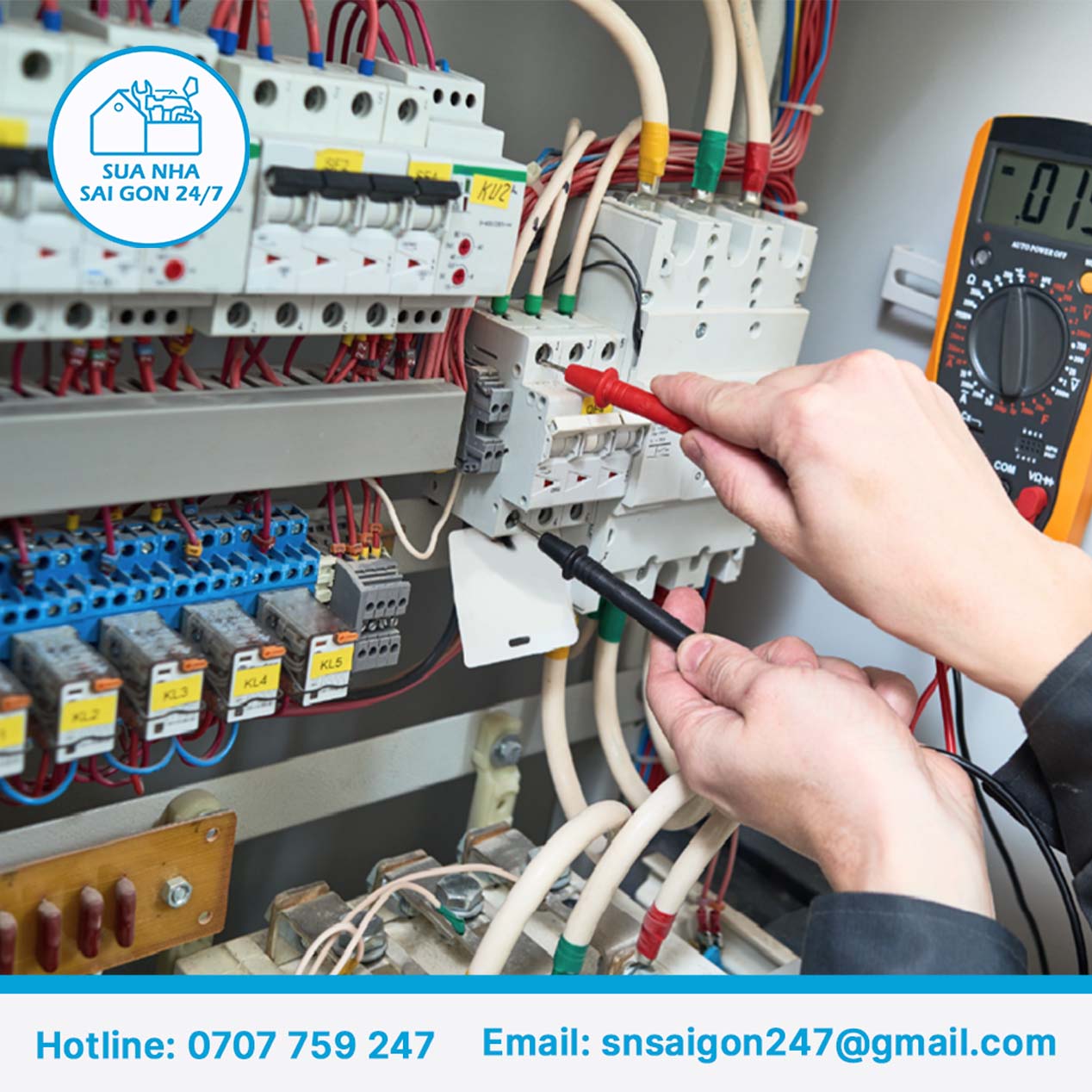
Frequently Asked Questions
What electrical issues are most common in Thao Dien?
Older villas more often have aging wiring, undersized distribution boards, or panels that weren’t designed for today’s number of appliances. High-rise apartments are more likely to have issues with individual outlets, light fixtures, or a breaker that trips under a specific load.
What electrical warning signs should never wait?
A burning smell, an outlet or switch that’s warm to the touch, visible sparking, or a breaker that trips repeatedly under normal use are all signs to stop using that circuit and call an electrician right away rather than waiting for a scheduled visit.
How much does common electrical work cost in Ho Chi Minh City?
Reference pricing for 2026: outlet or switch installation is around 80,000–150,000 VND per piece, a CB/MCB installation around 100,000–200,000 VND, and a residential distribution board around 400,000–1,200,000 VND. Renovation or rewiring work is quoted after an on-site survey.
Are older Thao Dien villas more likely to need electrical upgrades?
Often yes. A villa built years ago may have a distribution board and wiring sized for the appliance load common at the time, which can struggle once air conditioning, water heaters, and other higher-draw appliances are added later without upgrading the panel.
Do I need building management’s approval before electrical work in a Thao Dien apartment?
For work confined to your own unit’s wiring and fixtures, usually not. But if the work involves the building’s shared distribution system or requires the service elevator, most towers require advance notice to building management.
Does Sai Gon Home Repair 247 provide electrical services in Thao Dien?
Yes. Sai Gon Home Repair 247 handles electrical repairs, installation, and panel upgrades for villas and apartments in Thao Dien, with an on-site inspection and a quote before any work begins.
Sai Gon Home Repair 247 — 7+ years of repair and renovation experience in Ho Chi Minh City.
- Vietnamese hotline/ Zalo: 0707 759 247
- English & Korean support/ Zalo: 076 806 7114
- English support/ Zalo: 033 939 0325
- Email: snsaigon247@gmail.com
- Address: 150 Tran Nao Street, An Khanh Ward, Ho Chi Minh City
Contact us for an on-site survey and consultation.



