
 Tiếng Việt



What’s Included in Rooftop Waterproofing Service
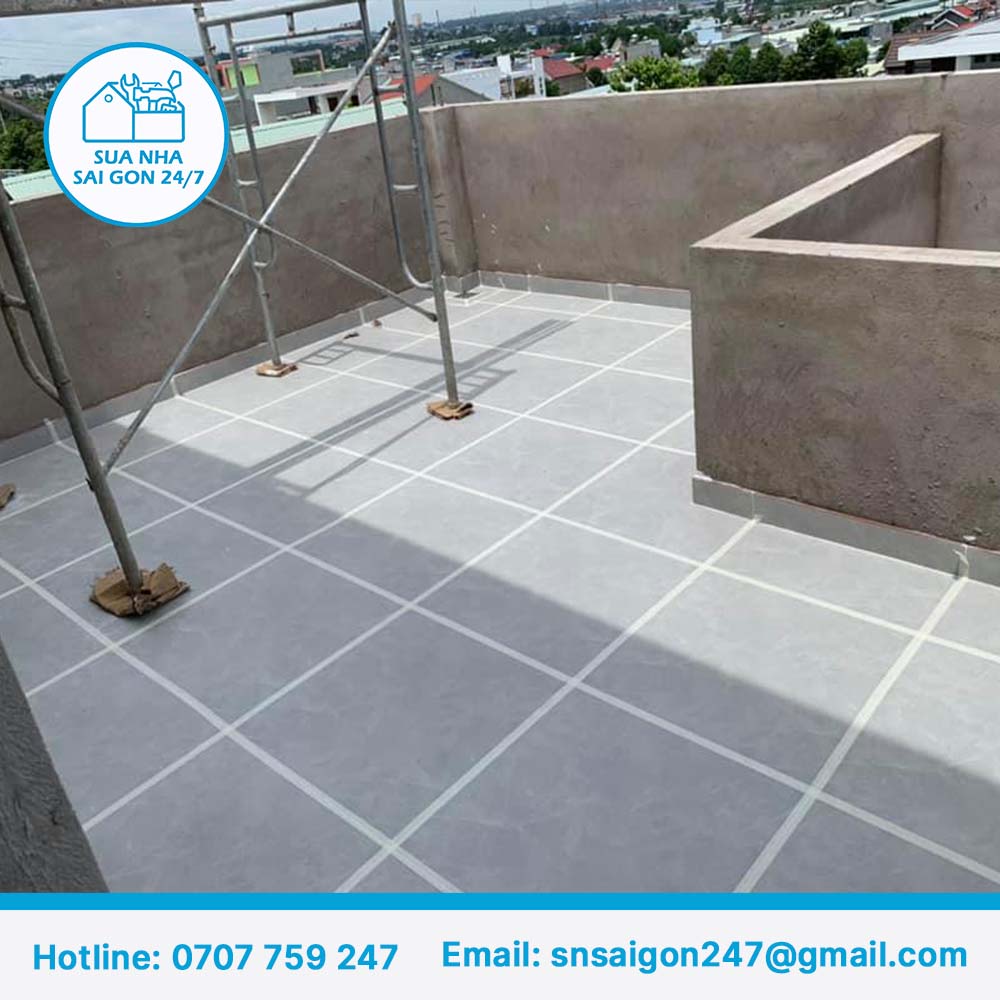
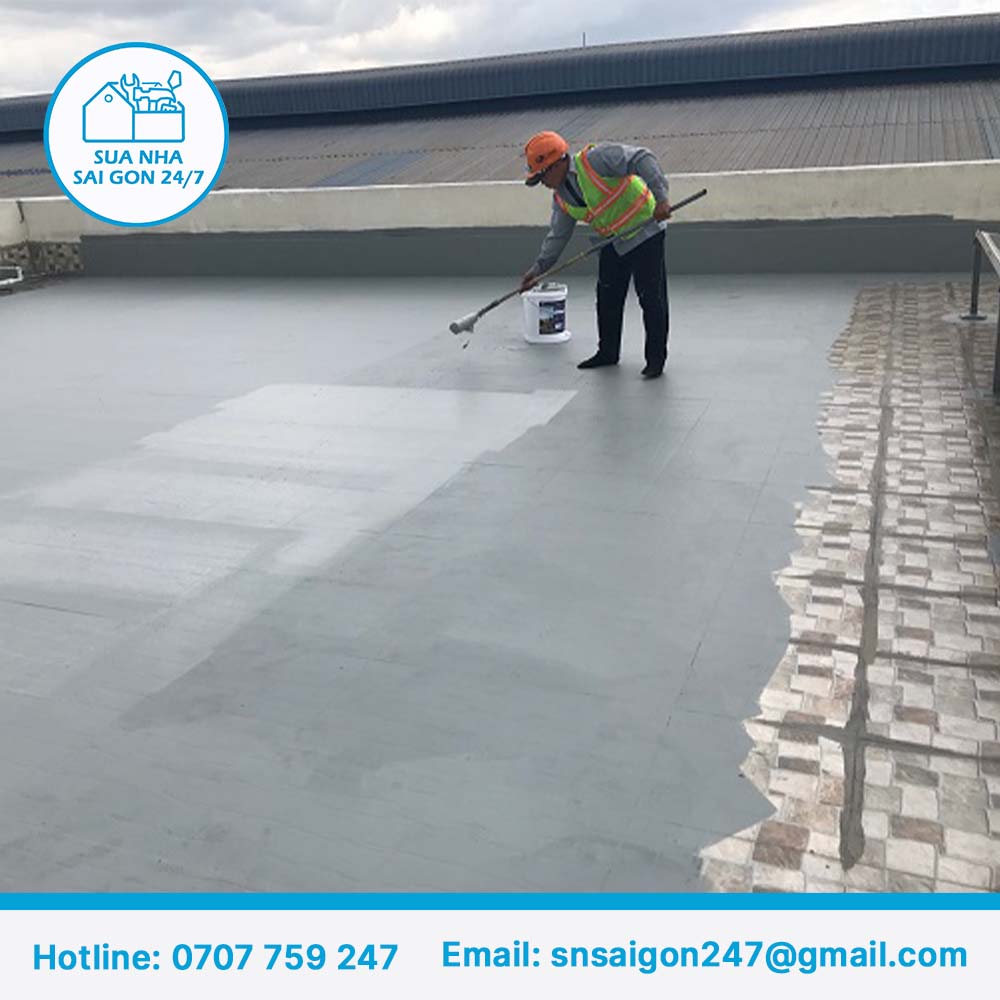
A proper rooftop waterproofing service needs to address both the surface and the drainage system. Sai Gon Home Repair 247 carries out the full process:
- Site survey: checking the roof deck surface, cracks, drainage slope, and the condition of the floor drain.
- Treating cracks and surface defects in the concrete before applying the waterproofing layer.
- Adjusting or adding drainage slope if the rooftop has localized standing water.
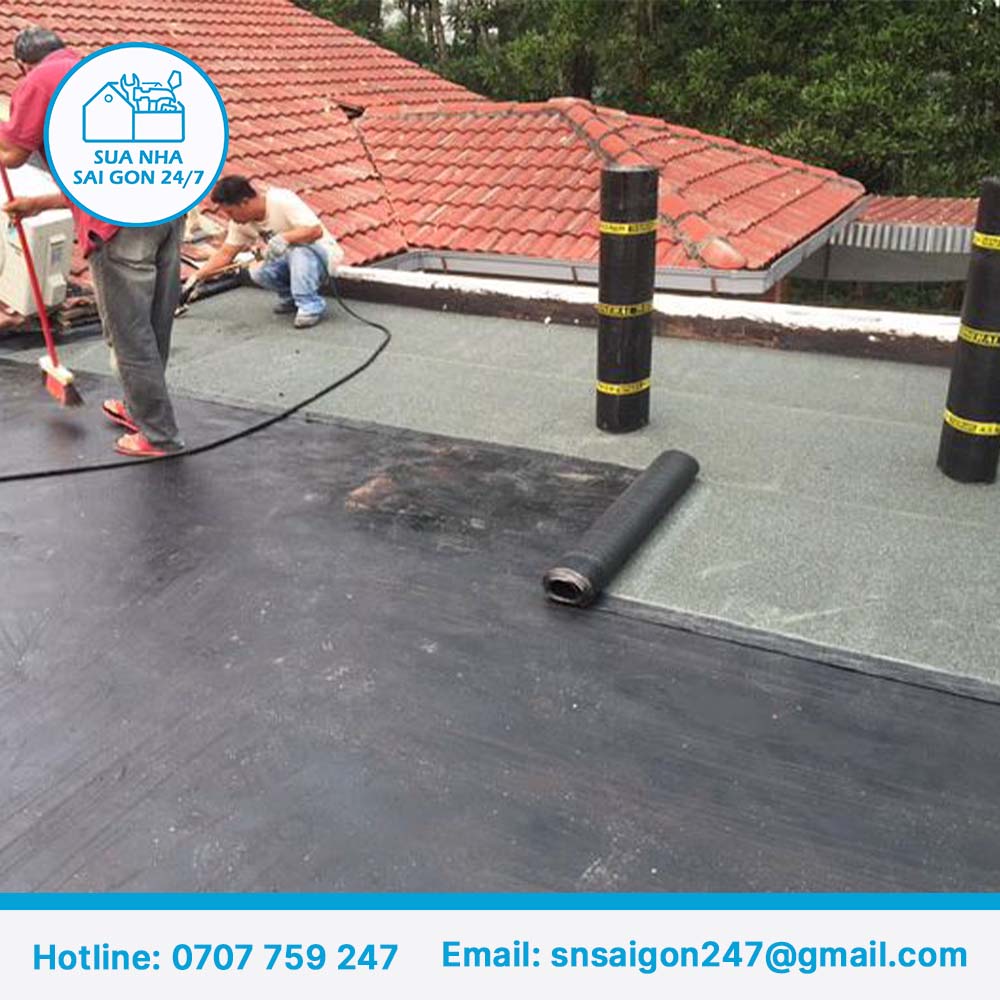
- Applying the appropriate waterproofing layer: torch-on membrane, PU coating, cement-polymer mortar, or crystalline technology depending on the actual condition.
- Treating thermal expansion joints and the points where the deck meets walls or railings.
- Finishing the surface (tiling, heat-reflective coating) according to the customer’s intended use.
- Acceptance testing with a water-soak test before handover.
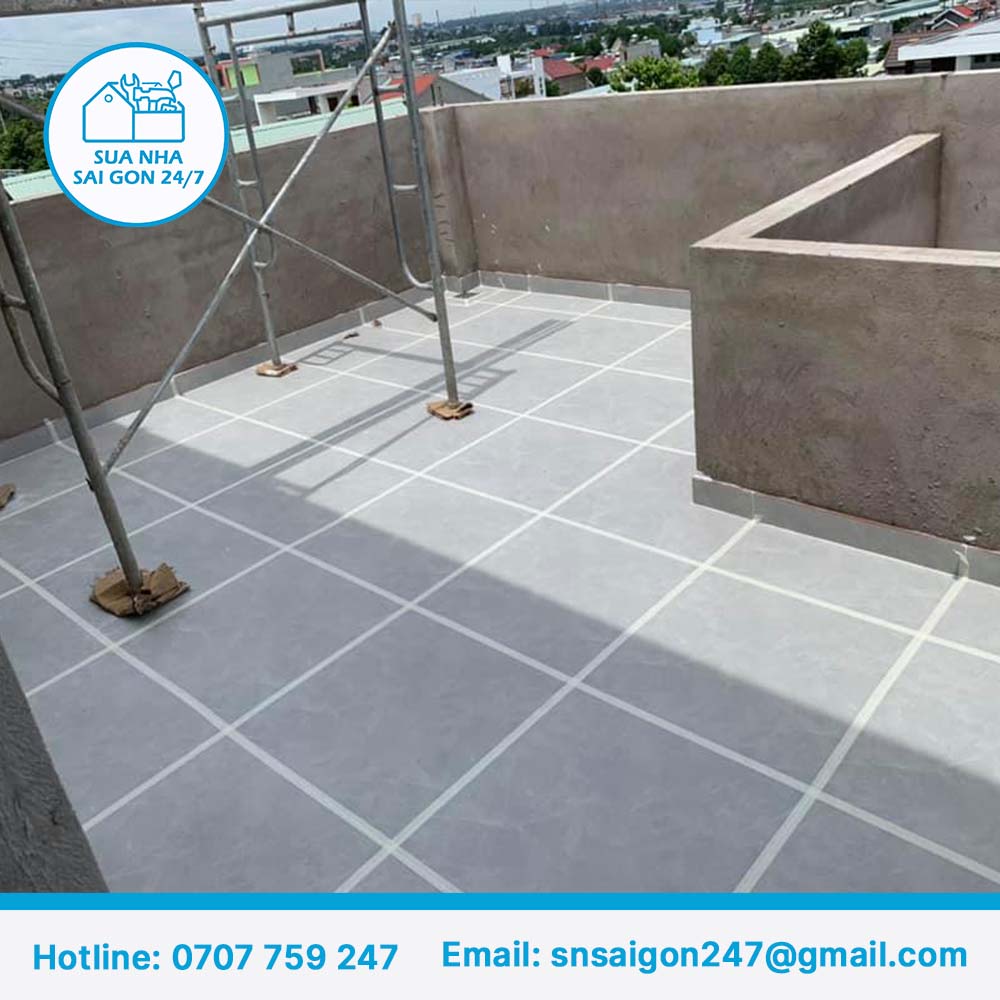
Signs Your Rooftop Has a Leak
Catching unusual signs early helps address the issue before it affects the structure and the floors below:
| Sign | Severity | Notes |
|---|---|---|
| Water pools for a long time after rain, doesn’t fully drain | Mild to moderate | Usually caused by an insufficient drainage slope |
| Hairline cracks on the deck surface | Moderate | A sign the waterproofing layer or concrete is starting to degrade |
| Yellow stains on the ceiling of the floor below | Moderate to severe | Water has already seeped through the deck into the floor below |
| Rooftop tiles peeling or bubbling | Severe | The waterproofing layer beneath the tiles has failed |
| Mold appearing around the floor drain | Moderate | Usually related to a clogged drain or an incorrectly sloped installation |
Common Causes of Rooftop Leaks
Identifying the correct cause helps you choose the right treatment instead of just a temporary surface fix:
- Insufficient drainage slope: causes water to sit on the surface for extended periods, creating continuous pressure that seeps into the structure.
- A clogged or incorrectly positioned floor drain: water can’t drain fast enough during heavy rain, causing localized pooling.
- An old waterproofing layer degraded by UV exposure and thermal expansion: direct exposure to sun and rain causes waterproofing materials to age faster than in indoor areas.
- Concrete cracks from thermal expansion over time: especially common on rooftops without expansion joints, or where the joints weren’t installed correctly.
- The original waterproofing work wasn’t done to correct technique: a missing primer layer, insufficient material coverage, or skipping the expansion joint treatment.
Why Rooftops Leak More Easily Than Other Areas of a Home
Unlike indoor areas, a rooftop endures harsh weather conditions year-round — this is why its waterproofing layer degrades significantly faster:
- Direct exposure to UV rays from sunlight causes many waterproofing materials to become brittle and crack over time.
- Large temperature swings between day and night cause continuous expansion and contraction of the concrete surface.
- Direct exposure to heavy rain, with water accumulating if the slope isn’t up to standard.
- Some rooftops carry additional load from plants, water tanks, or drying laundry, adding extra pressure on the waterproofing layer.
Common Rooftop Waterproofing Methods
Depending on the actual condition, Sai Gon Home Repair 247 applies one or a combination of the following methods:
| Method | Advantages | Notes |
|---|---|---|
| Torch-on membrane (bitumen) | High durability, excellent waterproofing on a stable substrate | Joints and expansion gaps need careful sealing |
| PU waterproof coating | Highly elastic, handles thermal expansion well | Needs enough coats and UV protection if left exposed long-term |
| Cement-polymer mortar | Bonds well to concrete, relatively simple to apply | Needs proper moist curing after application |
| Crystalline waterproofing technology | Forms crystals that seal the concrete’s capillaries, long-lasting | Suited to concrete that’s still structurally sound with few large cracks |
Common waterproofing material brands on the market include Sika, Kova, Mapei, Dulux, and Jotun — each brand offers products suited to different surface conditions and levels of weather exposure.
Rooftop Waterproofing Process at Sai Gon Home Repair 247
To ensure lasting effectiveness rather than a temporary fix, our technicians follow this 5-step process:
- Site survey: checking the surface, drainage slope, floor drain, and any existing cracks.
- Surface and slope treatment: patching cracks, correcting the slope, or replacing the floor drain if needed.
- Solution advice and quote: proposing a suitable waterproofing method along with a reference cost before starting work.
- Waterproofing work: applying the agreed waterproofing method, with careful treatment of expansion joints and adjoining points.
- Acceptance testing: checking with a 24–48 hour water-soak test before finishing the surface and handing over.
What Affects the Cost of Rooftop Waterproofing
The cost of rooftop waterproofing in Ho Chi Minh City is not fixed — it depends on several practical factors:
- The rooftop area that needs treatment.
- The waterproofing method used (torch-on membrane, PU coating, cement-polymer mortar, crystalline technology).
- The current extent of damage (small cracks or a long-standing severe leak).
- Whether the drainage slope needs correcting or the floor drain needs replacing.
- Whether the surface needs re-tiling or finishing after waterproofing.
- Site access conditions (a high-rise rooftop, difficulty transporting materials).
The prices above are for reference only. Actual cost depends on the site’s condition and will be finalized after an on-site survey.
On the Ho Chi Minh City market, reference pricing for rooftop waterproofing labor is typically calculated per square meter and varies quite a bit depending on the method and materials used. For an accurate quote for your specific project, we recommend booking an on-site survey.
Rooftop Waterproofing vs. Ceiling and Bathroom Waterproofing
These are the three most common waterproofing jobs in a home, but the location and approach differ significantly:
| Criteria | Rooftop Waterproofing | Ceiling Waterproofing | Bathroom Waterproofing |
|---|---|---|---|
| Work location | Top surface of the roof deck, directly exposed to sun and rain | Underside of the floor/roof above (concrete or gypsum) | Floor and lower wall of the bathroom area |
| Main leak source | Directly from rainwater, UV exposure, thermal expansion | Usually originates from the rooftop, roof, or piping above | Water supply/drain pipes, insufficient floor slope |
| Approach specifics | Needs weather-resistant materials and a correct drainage slope | Must identify and fix the leak source before treating the ceiling surface | Focus on pipe collars, wall base, and drainage slope |
In many cases, a leak in the ceiling of the floor below is actually the result of the rooftop above leaking — so if your home shows signs of a ceiling leak, it’s worth checking the rooftop above as well.
Notes for Rooftops with Plants or Tiling
A rooftop used as a garden or drying area has a few additional technical requirements for waterproofing:
- A planted rooftop: needs a waterproofing layer that can withstand constant moisture and root penetration, usually combined with an extra protective layer before laying the planting bed.
- A tiled rooftop: the waterproofing layer needs to be applied and acceptance-tested (water-soak test) before tiling, to avoid having to remove tiles later if a leak is found.
- A rooftop with a water tank or large planters: requires attention to concentrated point loads, and may need extra reinforcement where heavy items are placed.
Should You Waterproof a Rooftop Yourself
DIY rooftop waterproofing carries risk if the specific technical factors of an outdoor area aren’t properly addressed:
- Not correcting the drainage slope means water still pools after applying waterproof coating, shortening its lifespan.
- Skipping thermal expansion joints causes cracks to reappear after a short period of use.
- Choosing the wrong material for constant UV exposure and rain/sun cycles.
- Insufficient material coverage or incorrect technique means the waterproofing only holds up for a short time.
For this reason, it’s best to have a technician survey the site and advise on a method suited to your rooftop’s actual conditions.
Maintaining Your Rooftop After Waterproofing
After waterproofing, a few simple maintenance habits help maintain the effectiveness long-term:
- Check and clean the floor drain periodically, especially before the rainy season.
- Monitor the surface after heavy rain to catch any unusual standing water early.
- Avoid placing heavy items in one concentrated spot, or dragging sharp objects across the waterproofed surface.
- Inspect annually, especially for rooftops with plants or tiling.
Preparing Before the Technician Arrives for the Survey
To help the survey go quickly and accurately, customers can prepare the following information in advance:
- Note when signs of leaking or standing water first appeared, especially in relation to heavy rain events.
- Let us know what the rooftop is currently used for (drying laundry, gardening, or left empty), if applicable.
- Make sure the rooftop area is easily accessible for the technician to inspect and measure.
- Let the technician know if the rooftop has been waterproofed or repaired before.
Why Choose Sai Gon Home Repair 247
Many customers find that rooftop waterproofing only holds up for a short time because the contractor skipped correcting the drainage slope or treating the thermal expansion joints. Sai Gon Home Repair 247 solves this with a clear process: survey → treat the surface and slope → advise on a solution → apply correct technique → acceptance test with a water-soak test → warranty by item, carried out by a fixed technical team with no middleman.
We also support foreign customers, particularly the Korean community living in Ho Chi Minh City, through Zalo, WeChat, and KakaoTalk.
Contact Sai Gon Home Repair 247 at hotline 0707 759 247 for an on-site survey and advice on the right rooftop waterproofing solution.
Our Service Commitment
- Survey and correctly identify the cause before quoting.
- Correct treatment of drainage slope and thermal expansion joints, not just the surface.
- Transparent, itemized quote agreed before work begins.
- Acceptance testing with a water-soak test before handover.
- Warranty by item of work completed.
- Support for both Vietnamese and foreign customers (English, Korean).
Service Area
Sai Gon Home Repair 247 provides rooftop waterproofing across: Thu Duc City, Binh Thanh, District 7, District 1, District 3, Go Vap, Phu Nhuan, Tan Binh, and surrounding areas of Ho Chi Minh City.
Frequently Asked Questions
What’s included in rooftop waterproofing service?
The service includes a survey of the roof deck, checking the slope and floor drain, treating cracks, applying a suitable waterproofing layer (torch-on membrane, PU coating, cement-polymer mortar, or crystalline technology), and acceptance testing with a water-soak test.
Why do rooftops leak more easily than other areas of a home?
Because a rooftop is directly exposed to sun and rain, enduring constant UV exposure and thermal expansion day and night, which causes its waterproofing layer to degrade faster than indoor areas not exposed to the weather.
Which rooftop waterproofing method should I choose?
It depends on the condition: torch-on membrane suits a stable deck needing high durability, PU coating suits areas needing elasticity, cement-polymer mortar suits a still-damp substrate, and crystalline technology suits concrete that’s still structurally sound. A technician will advise after an on-site survey.
How long does rooftop waterproofing take?
Depending on the area and method, work typically takes 1–3 days, and can take longer if the drainage slope needs correcting or the floor drain needs replacing.
What determines the cost of rooftop waterproofing?
Cost depends on the area, the waterproofing method used, the current extent of damage, whether the drainage slope or floor drain needs work, and the site’s access conditions.
Should I waterproof my rooftop myself?
Applying waterproof coating without correcting the drainage slope or addressing thermal expansion joints usually only works temporarily. It’s best to have a technician survey the site and apply the correct technique to ensure long-term durability.
Is waterproofing different for a rooftop with plants?
Yes. A planted rooftop needs a waterproofing layer that can withstand constant moisture and root growth, usually combined with an extra protective layer before laying the planting bed.
How often should a rooftop be re-waterproofed?
Depending on the method and weather conditions, a rooftop waterproofing layer typically lasts 3–10 years. It’s best to inspect annually before the rainy season to catch early signs of wear.
Sai Gon Home Repair 247 — over 7 years of repair & renovation experience in Ho Chi Minh City.
Hotline: 0707 759 247 · Email: snsaigon247@gmail.com · Zalo: 0707759247
English support: 033 939 0325 · English & Korean support: 076 806 7114
Address: No. 150 Tran Nao Street, An Khanh Ward, Ho Chi Minh City
Contact us for an on-site survey and advice on the right solution for your space.
Find Rooftop Waterproofing Near You
rooftop waterproofing District 1
rooftop waterproofing District 3
rooftop waterproofing District 4
rooftop waterproofing District 5
rooftop waterproofing District 6
rooftop waterproofing District 7
rooftop waterproofing District 8
rooftop waterproofing District 10
rooftop waterproofing District 11
rooftop waterproofing Binh Thanh
rooftop waterproofing Phu Nhuan
rooftop waterproofing District 2
rooftop waterproofing District 9
rooftop waterproofing Thu Duc City
rooftop waterproofing District 12
rooftop waterproofing Go Vap
rooftop waterproofing Tan Binh
rooftop waterproofing Tan Phu
rooftop waterproofing Binh Tan
rooftop waterproofing Cu Chi
rooftop waterproofing Hoc Mon
rooftop waterproofing Binh Chanh
rooftop waterproofing Nha Be
rooftop waterproofing Can Gio





