
 Tiếng Việt


Wall waterproofing is the process of treating what’s letting water into the wall structure — cracks, substandard materials, or capillary moisture from the ground — then applying the right water-blocking material on top. Sai Gon Home Repair 247 handles waterproofing for interior walls, exterior walls, and wall bases across Ho Chi Minh City in 2026.
Signs Your Wall Has a Seepage Problem
Wall seepage usually starts with small signs before spreading into a larger patch that’s harder to fix.
- Patchy yellow or brown stains on the wall surface, usually getting darker over time.
- Peeling or bubbling paint in patches, even after a recent repaint.
- Mold or mildew growing in a corner, at the base of the wall, or in a poorly lit area.
- A wall that feels damp or soft to the touch.
- A musty smell in the room despite normal ventilation.
These signs are often mistaken for ordinary humidity and ignored early on — which is actually the easiest and cheapest stage to fix the problem.
What Causes Wall Seepage
Most wall seepage comes down to one of three groups of causes: structural, material and workmanship, or prolonged environmental exposure.
- Cracks in the wall: every building experiences natural shrinkage over time, creating hairline cracks or larger structural cracks — these become the pathway for rainwater to seep deep into the wall.
- Substandard materials: plaster mixed with the wrong cement-to-sand ratio creates a porous surface that absorbs more water than it should.
- Poor workmanship: skipping the primer coat or not curing the plaster with enough moisture during the original construction.
- Prolonged rain exposure: continuous rain hitting the exterior wall, combined with Ho Chi Minh City’s high humidity, gradually saturates the wall over time.
- A nearby plumbing leak: a leaking supply or drain pipe inside a wall near the kitchen or bathroom produces signs that look just like ordinary wall seepage.
Identifying the right cause before starting work matters a great deal — treating the wrong one (for example, waterproofing the surface when the real cause is a plumbing leak) means the seepage comes back despite the time and money spent.
Interior Wall Seepage vs. Exterior Wall Seepage
An exterior wall takes the full, direct impact of rain, sun, and UV exposure, so its waterproofing material needs better weather resistance and flexibility to avoid cracking over time.
An interior wall usually isn’t under direct weather pressure, so the focus is on finding the root cause (a crack, a plumbing leak) before finishing the surface, rather than simply needing a weatherproof coating.
Wall Base Seepage: A Cause Worth Understanding Separately
The base of a wall is the most exposed spot, sitting in direct contact with the ground or pooling rainwater, and typically has three main sources of seepage.
- Rainwater running down the exterior wall and pooling at the base.
- Ground moisture rising by capillary action through the tile grout, dampening the wall base without any direct water spill.
- A leaking water supply or drain line near the kitchen, bathroom, or another frequently used area nearby.
If the wall base is seeping because it borders the neighboring house or a basement that can’t be treated from the outside, this calls for reverse waterproofing instead of a standard wall treatment.
On the other hand, if the wall base borders an accessible garden or open ground, standard (“forward”) waterproofing from the outside — combined with improving drainage around the foundation — remains the simpler and more cost-effective option.
Common Wall Waterproofing Methods
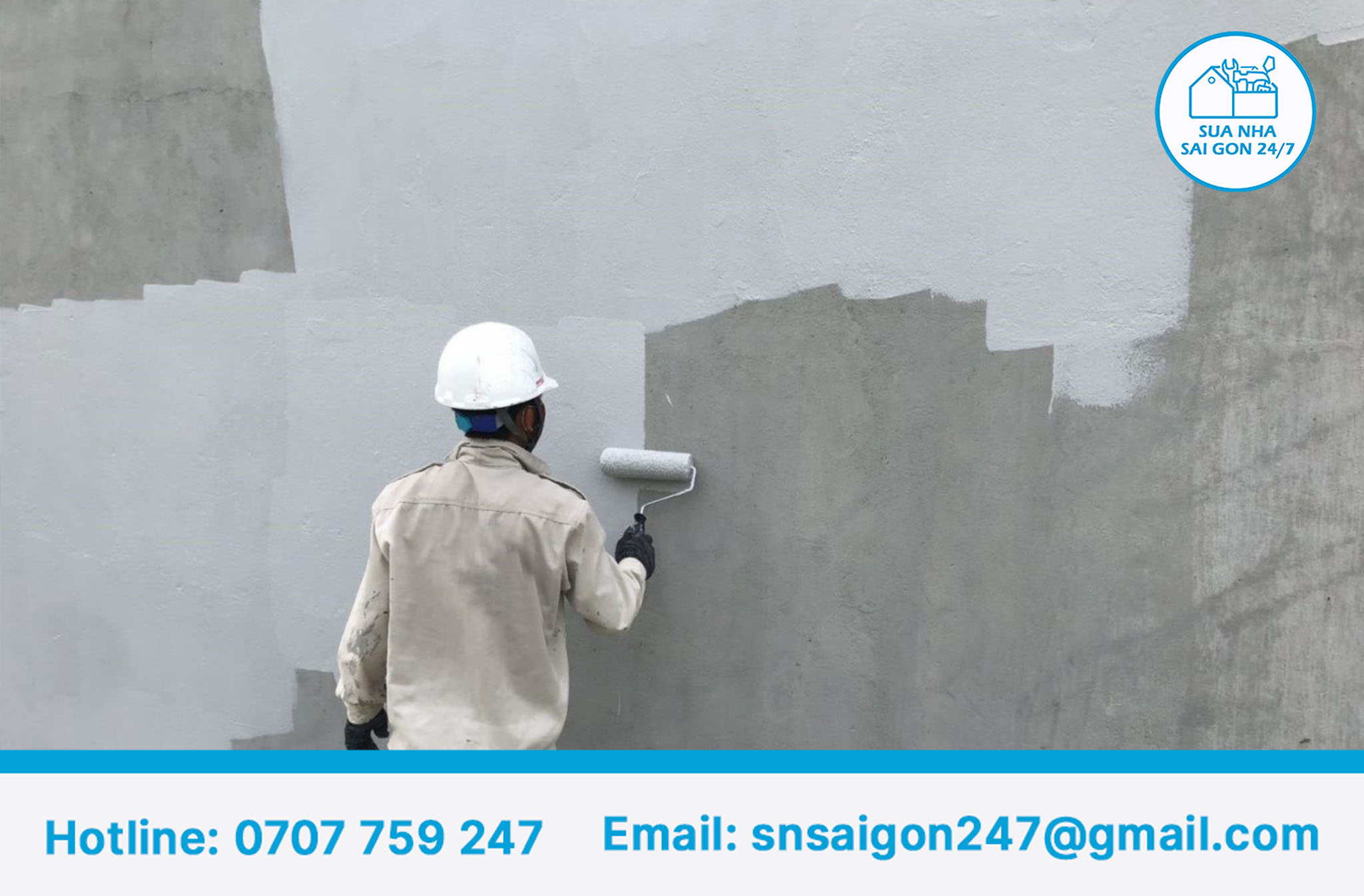
Each waterproofing method suits a specific situation, so it’s worth choosing the right one rather than applying the same approach to every case.
| Method | Characteristics | Best Suited For |
|---|---|---|
| PU waterproof sealant | Seals cracks, joints, window frames, and pipe penetrations | Treating cracks or localized leaks before applying the main coating |
| Cement-based waterproof paint | Covers a wide area, forming a water-blocking film on the surface | Walls where cracks/leaks are already fixed and need an overall finish |
| Waterproof mortar | Mixed into the plaster itself, adding waterproofing right from the base layer | New construction or a full re-plastering job |
| Waterproofing additive | Mixed directly into mortar or concrete during construction | New builds where waterproofing is planned in from the start |
Popular waterproofing material brands used across Ho Chi Minh City include Sika, Kova, and Mapei, each offering a dedicated product line ranging from small cracks to large wall surfaces.
In practice, many projects need two or more methods combined — for example, injecting PU sealant into cracks first, then finishing with a cement-based waterproof coating — rather than relying on a single method for the whole problem.
The Professional Wall Waterproofing Process
A complete wall waterproofing job needs to follow the right order, from fixing the root cause through to the finishing coat, so no step gets skipped and the seepage doesn’t return.
- Survey and diagnosis: checking for cracks, plumbing leaks, or capillary moisture to confirm the actual source of seepage.
- Surface preparation: removing peeling plaster, and cleaning off mold and dirt before starting work.
- Sealing cracks and joints: injecting PU waterproof sealant into cracks and around pipe penetrations.
- Applying the main waterproofing layer: brushing on waterproof paint or troweling on waterproof mortar, following the manufacturer’s specification.
- Finishing and inspection: monitoring the surface until fully dry before repainting or re-tiling.
Contact Sai Gon Home Repair 247 for an on-site survey and advice on the right solution for wall seepage at your property.
When You Need Reverse Waterproofing Instead of a Standard Wall Treatment
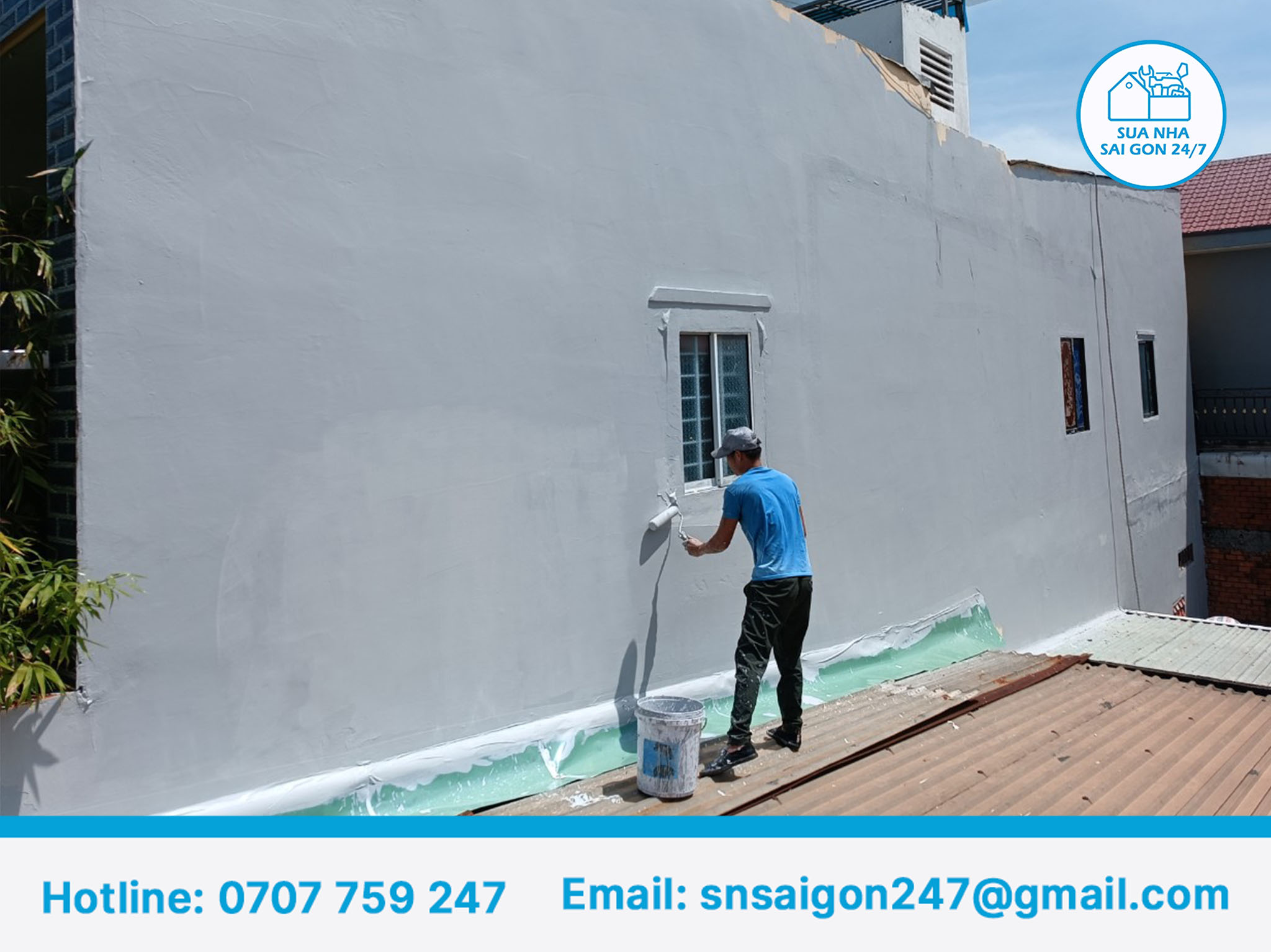
Standard (“forward”) wall treatment only works when you can directly access the surface facing the water source.
When a wall is shared with the neighboring house, a basement borders the ground, or a finished building’s exterior shouldn’t be torn out, the job calls for reverse waterproofing — a technique applied from the opposite side of the water source, using specialized materials rated for reverse water pressure.
What to Watch For During the Rainy Season
Ho Chi Minh City’s rainy season is when cracks and weak spots in old waterproofing show their clearest signs, as walls take on continuous rainfall over an extended period.
If you spot signs of seepage right at the start of the rainy season, it’s worth treating early rather than waiting it out — prolonged rain gives small cracks more time to absorb water, letting the seepage penetrate the structure faster than expected.
For exterior walls, waterproofing work should also be scheduled during a stretch of several consecutive dry days, giving the material enough time to dry and bond before the next rain.
Common Mistakes When Waterproofing a Wall Yourself
Many homeowners try to fix wall seepage by repainting over it repeatedly without addressing the root cause, leading to the seepage returning again and again.
- Repainting without fixing the crack or leak underneath: the new paint only masks the problem temporarily while water keeps seeping in from inside.
- Misidentifying the source: confusing ground-related wall-base seepage with a plumbing leak, leading to the wrong fix.
- Applying waterproofing while the wall is still deeply damp: the new layer doesn’t bond properly and tends to peel within a short time.
- Using the wrong material for the location: for example, using interior waterproof paint on an exterior area exposed to constant rain and sun.
Another common mistake is delaying treatment while the seepage is still minor — many households wait until the damage has spread before looking for a solution, by which point the repair cost is significantly higher than it would have been with early treatment.
Maintenance After Wall Waterproofing to Keep It Working
After the work is done, it’s worth checking the treated area again after the first rainy season to catch any sign of moisture returning early, especially around cracks or joints that were previously sealed.
For exterior walls, cleaning the surface periodically (removing built-up mold and dirt) helps the waterproof coating keep doing its job, rather than relying on the material alone.
How Sai Gon Home Repair 247 Handles Wall Waterproofing
Treating the wrong cause is the most common reason many households waterproof a wall repeatedly without ever fully resolving the mold and peeling paint.
Sai Gon Home Repair 247 has more than 7 years of experience in repair and renovation work across Ho Chi Minh City, surveying the site directly to confirm the actual cause before advising on a solution, with a transparent quote provided before work begins. The service covers interior walls, exterior walls, and wall bases at apartments, townhouses, and villas.
If your property needs other waterproofing work as well, see our ceiling waterproofing service, rooftop terrace waterproofing service, or reverse waterproofing service.
We’re glad to help with a survey and quote based on the actual condition of your property.
Wall Waterproofing Cost: What Affects the Price
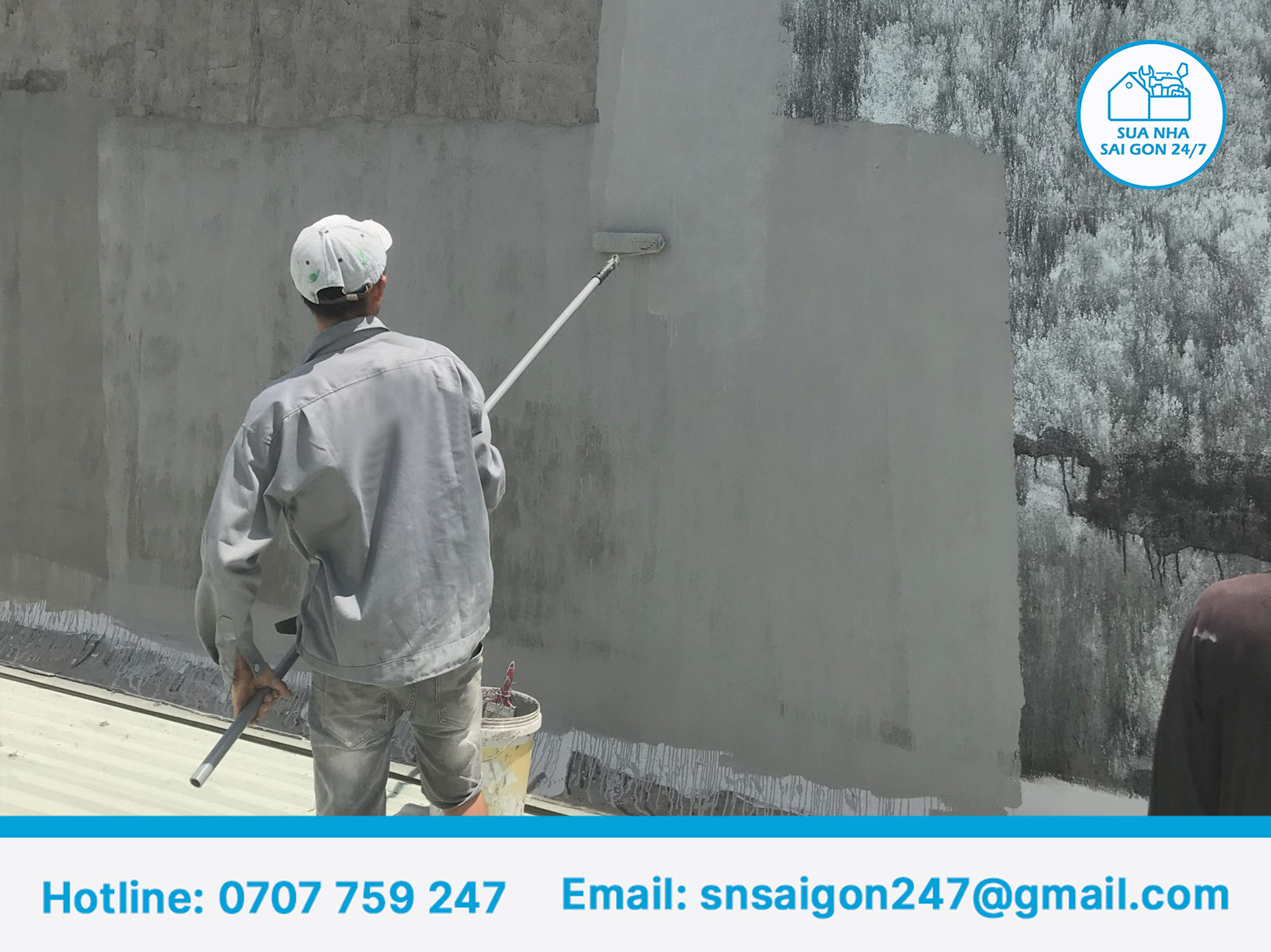
Based on Sai Gon Home Repair 247’s current reference price list, interior wall waterproofing runs about 120,000–250,000 VND/m², exterior walls about 150,000–300,000 VND/m², and wall-base treatment specifically about 150,000–300,000 VND/m², depending on the cause and severity.
- The location of the wall (interior, exterior, or wall base).
- The current extent of seepage — newly appeared or already deep in the structure.
- The method and material used (sealant, paint, mortar, or a combination).
- How difficult the work location is to access (a tall wall needs scaffolding).
For properties where waterproofing was attempted before and failed, redoing the work usually costs more, since the old, substandard material has to be removed before the new layer can be applied correctly.
The figures above are for reference only. Actual cost depends on the site condition and is confirmed after an on-site survey.
Frequently Asked Questions
Why is my wall seeping even outside the rainy season?
What’s the difference between interior and exterior wall waterproofing?
How should I treat a seeping wall base?
What’s the difference between waterproof sealant and waterproof paint?
When do I need reverse waterproofing instead of a standard wall treatment?
Does repainting a wall fix the seepage?
How much does wall waterproofing cost?
Can I waterproof a wall myself?
For advice on wall seepage at your property, please contact the technical team at Sai Gon Home Repair 247.
- Main hotline/ Zalo: 0707 759 247
- English & Korean support/ Zalo: 076 806 7114
- English support/ Zalo: 033 939 0325
- Email: snsaigon247@gmail.com
- Address: 150 Tran Nao Street, An Khanh Ward, Ho Chi Minh City




