
 Tiếng Việt


What Is Reverse Waterproofing?
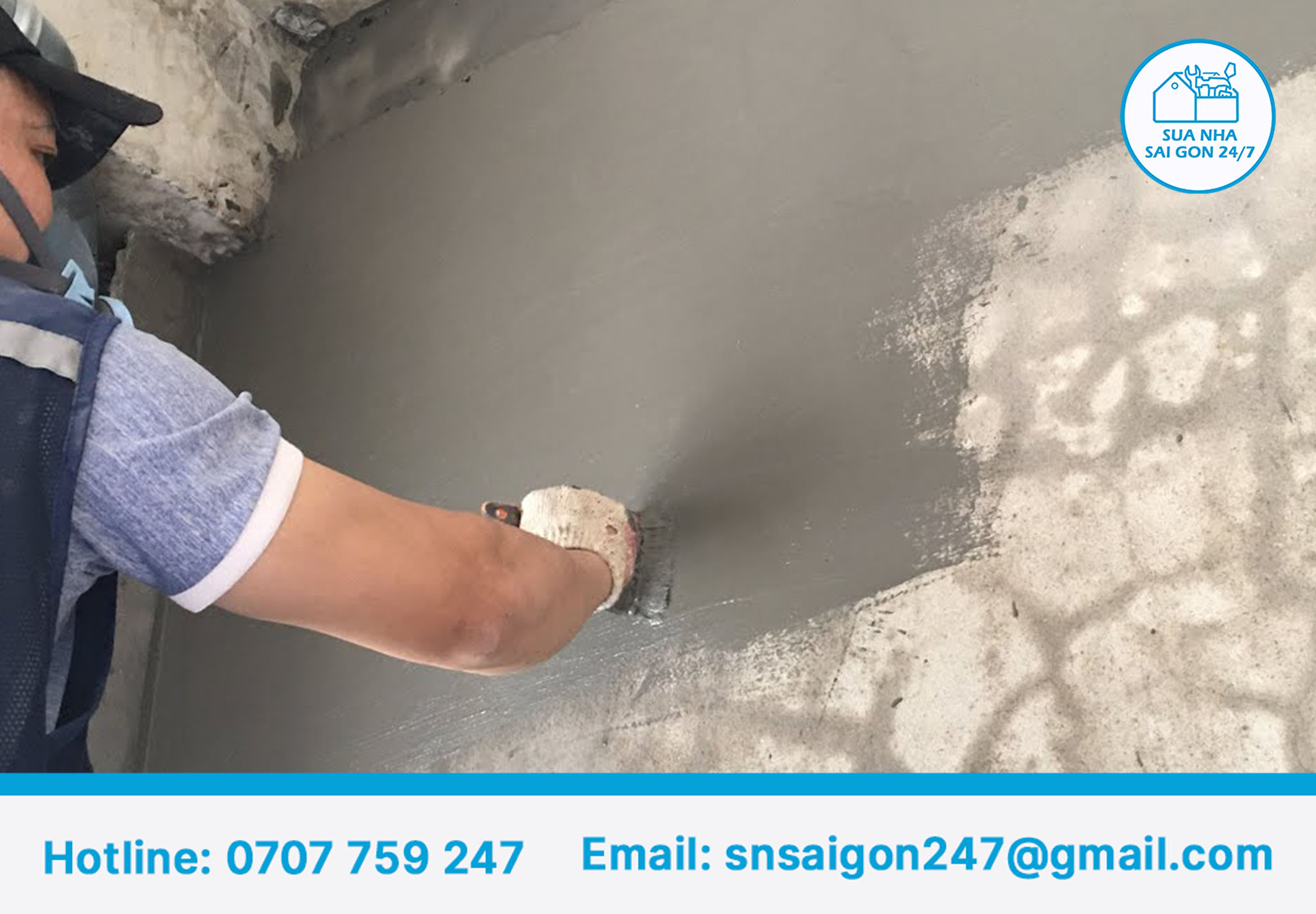
Reverse waterproofing creates a water-blocking layer on the side opposite the water source, rather than treating the surface that’s in direct contact with water as standard waterproofing does.
Standard (“forward”) waterproofing is applied directly to the surface facing the water source (the outside of a wall, the surface of a rooftop terrace). Reverse waterproofing is applied to the inner or opposite face of the structure — the only side that can actually be accessed.
Materials used for reverse waterproofing need to withstand pressure pushing from the opposite direction, unlike standard waterproofing materials, which only need to block water moving in from one side.
This is also why not every waterproof paint or waterproof cement works for this job — you need a product line the manufacturer specifically rates for reverse water pressure resistance (usually stated on the packaging or in the product’s technical data sheet).
When You Need Reverse Waterproofing Instead of Standard Waterproofing
Reverse waterproofing is chosen when reaching the original water-facing surface is impossible or far more costly than treating it from the inside.
- A wall shared with the neighboring house: can’t be worked on from the neighbor’s side since it belongs to their property.
- A basement bordering the ground: the earth can’t be dug up to treat the outer face of the finished concrete structure.
- A finished building: you don’t want to tear out tiling or finished paintwork on the outside just to fix a seepage issue.
- A wall base seeping from the ground: groundwater or capillary moisture pushing up through the base of the wall.
In these situations, trying to treat the outer surface isn’t just more expensive (requiring the neighbor’s permission, digging, tearing out finished work) — it’s often impossible for legal or practical reasons, making reverse waterproofing the only workable solution.
Signs Your Property Has Reverse Seepage
Reverse seepage is usually harder to catch early than standard seepage, since there’s no direct water source visible from outside — the signs tend to build up gradually over time.
- Patchy damp marks on an interior wall with no nearby plumbing or wet area to explain it.
- Paint peeling or bubbling in patches even though the wall has no direct exposure to rain.
- Mold appearing at the base of a wall or in a corner shared with the neighboring house.
- A musty smell in the room despite normal air circulation.
Because these signs closely resemble those of a hidden in-wall plumbing leak, an on-site survey to confirm the actual cause before starting work is an important step — it avoids treating the wrong spot, which wastes money without solving the problem.
Materials Used in Reverse Waterproofing
Reverse waterproofing materials need to withstand reverse water pressure and bond well to a damp surface, unlike standard waterproofing materials.
| Material | Characteristics | Best Suited For |
|---|---|---|
| Two-component waterproof cement | Cement powder plus additives (Part A) combined with a liquid polymer solution (Part B) — strong adhesion, good flexibility, resists water pressure from both directions | Party walls, basements, underground water tanks |
| One-component waterproof cement | Pre-bagged powder mixed directly with water, simpler to apply than the two-component type | Small areas, wall bases, quick repair jobs |
| PU foam sealant | Expands on contact with water, sealing cracks and localized leak points in concrete | Treating small leak points, cracks in the concrete structure |
Popular waterproofing material brands used across Ho Chi Minh City include Sika, Kova, and Mapei, each with a dedicated product line for reverse waterproofing on concrete or brick surfaces.
What to Know About Reverse Waterproofing a Basement
A basement carries the highest risk of reverse seepage, since the entire structure sits directly against the ground and faces constant groundwater pressure, especially during the rainy season.
Unlike a party wall, which only deals with localized dampness, a basement needs a waterproofing layer that can withstand continuous water pressure across both the floor slab and the walls, which usually calls for more coats than a standard wall.
For a basement already in use where seepage is discovered, resolving it fully is far harder than addressing it during construction, since there’s no way to reach the outer face of the concrete structure against the ground.
During Ho Chi Minh City’s rainy season, a rising water table can increase the pressure acting on basement walls and floors, making any weak spots in existing waterproofing show signs of seepage more readily than in the dry season.
Should You Do Reverse Waterproofing Yourself?
For a small area with a leak that’s just appeared, some homeowners with basic experience can handle it themselves using pre-bagged one-component waterproof cement, simply mixed with water as directed.
However, misdiagnosing the cause — mistaking reverse seepage for a plumbing leak or a cracked floor — is the biggest risk of doing it yourself, since treating the wrong spot won’t fix the root cause even after spending the time and materials. For a basement or a larger area, it’s best to have an experienced technician survey the site before any work begins.
The Professional Reverse Waterproofing Process
A complete reverse waterproofing job follows five steps, ensuring the waterproof layer bonds well and holds up against reverse water pressure long-term.
- Survey and identify the water source: checking the location and extent of moisture, and confirming whether this is genuinely reverse seepage or caused by something else (a plumbing leak, a cracked floor).
- Preparing the surface: removing old plaster and peeling paint, and cleaning off dirt and mold from the surface to be waterproofed.
- Treating cracks and localized leak points: injecting PU foam sealant into cracks before applying the main waterproofing layer.
- Applying the reverse-pressure-resistant waterproofing layer: brushing or troweling on specialized waterproof cement in multiple coats, following the manufacturer’s specifications.
- Inspection and finishing: monitoring the surface until it’s fully dry before applying paint or tiling on top.
Contact Sai Gon Home Repair 247 for an on-site survey and advice on the right solution for reverse seepage at your property.
Common Mistakes That Cause Reverse Waterproofing to Fail
Reverse waterproofing has a higher failure rate than standard waterproofing when not done correctly, given the added demand of resisting pressure from the opposite direction.
- Using standard waterproofing material instead of a type specifically rated for reverse water pressure, causing the layer to peel away within a short time.
- Not fully preparing the surface beforehand: leftover old plaster or mold reduces how well the new material bonds.
- Skipping the step of treating localized cracks: applying the outer waterproofing layer without first injecting sealant into cracks in the structure underneath.
- Applying too few coats relative to spec: thinning the waterproofing layer to save material, reducing its long-term ability to withstand water pressure.
A less obvious mistake is applying reverse waterproofing while the wall is still deeply damp inside, which keeps the new material from bonding properly. The surface should be checked for moisture and allowed to dry out reasonably before the main waterproofing coats begin.
Maintenance After Reverse Waterproofing to Keep It Working
After the work is done, it’s worth checking the treated area periodically for the first few months — especially through the first rainy season — to catch any sign of moisture returning early.
For a party wall or wall base, checking the surrounding drainage system (gutters, rainwater channels) also helps reduce the water pressure acting on the waterproofed area, extending the life of the work done.
How Sai Gon Home Repair 247 Handles Reverse Waterproofing
Reverse waterproofing calls for an experienced technician to correctly identify the cause before work begins, since treating the wrong spot or using the wrong material won’t resolve the underlying seepage issue.
Sai Gon Home Repair 247 has more than 7 years of experience in repair and renovation work across Ho Chi Minh City, surveying the site directly to confirm whether it’s reverse seepage or something else, advising on the right material, and providing a transparent quote before work begins. The service covers row houses sharing party walls, villas with basements, and commercial properties.
If your property needs other waterproofing work done as well, see our ceiling waterproofing service or rooftop terrace waterproofing service.
We’re glad to help with a survey and quote based on the actual condition of your property.
Reverse Waterproofing Cost: What Affects the Price
Reverse waterproofing typically costs more than standard waterproofing for the same area, due to the specialized materials and more demanding technique involved.
- The area and location to be treated (wall, wall base, basement).
- The current extent of seepage — newly appeared or already deep in the structure.
- The material used (one-component, two-component, or combined with PU foam sealant).
- The number of coats required per the manufacturer’s specification.
Cost is also affected by how difficult the work location is to access — for example, a party wall on an upper floor adds scaffolding costs, while a ground-floor wall base is easier to reach and faster to complete.
For properties where waterproofing was attempted before and failed, redoing the work usually costs more, since the old, substandard material has to be removed before the new layer can be applied correctly.
The figures above are for reference only. Actual cost depends on the site condition and is confirmed after an on-site survey.
Areas We Serve
Sai Gon Home Repair 247 handles reverse waterproofing across Ho Chi Minh City districts including District 1, District 3, District 7, Binh Thanh, Phu Nhuan, Go Vap, Tan Binh, and Thu Duc City, serving row houses with shared walls, villas with basements, and commercial properties.
Frequently Asked Questions
What is reverse waterproofing?
What’s the difference between reverse and standard waterproofing?
When is reverse waterproofing the only option?
What signs indicate a wall has reverse seepage?
What materials are commonly used for reverse waterproofing?
Does reverse waterproofing last as long as standard waterproofing?
How much does reverse waterproofing cost?
How long does reverse waterproofing take?
For advice on reverse seepage at your property, please contact the technical team at Sai Gon Home Repair 247.
- Main hotline/ Zalo: 0707 759 247
- English & Korean support/ Zalo: 076 806 7114
- English support/ Zalo: 033 939 0325
- Email: snsaigon247@gmail.com
- Address: 150 Tran Nao Street, An Khanh Ward, Ho Chi Minh City





