
 Tiếng Việt
What Counts as an “Office Repair” vs. a Fit-Out Project
It’s worth being clear about this distinction upfront, since the two call for different kinds of help entirely.
A repair call is a specific, usually isolated issue in a space that’s already built out and functioning day to day — a dead outlet, a light fixture that’s stopped working, a network point with no signal, a door that won’t latch properly. A fit-out project, by contrast, is a full renovation or build-out involving partitions, ceilings, and multiple coordinated trades on a single project timeline, typically triggered by a new lease or a major office redesign. If your office is already running and something specific has broken or stopped working, that’s a repair call; if you’re planning a larger renovation with new partitions or a full electrical rework, that’s a fit-out project — see our guide on office electrical installation for that kind of larger-scope work.
Common Office Repair Issues in District 1
District 1 has one of the highest concentrations of office towers in Ho Chi Minh City, and most repair calls fall into a handful of recurring categories.
- Electrical faults: a dead outlet, a switch that’s stopped working, a breaker that trips repeatedly, or a distribution board issue affecting part of the office.
- Lighting failures: a recessed LED fixture, a pendant light in reception or a meeting room, or a full row of ceiling lights that’s gone out.
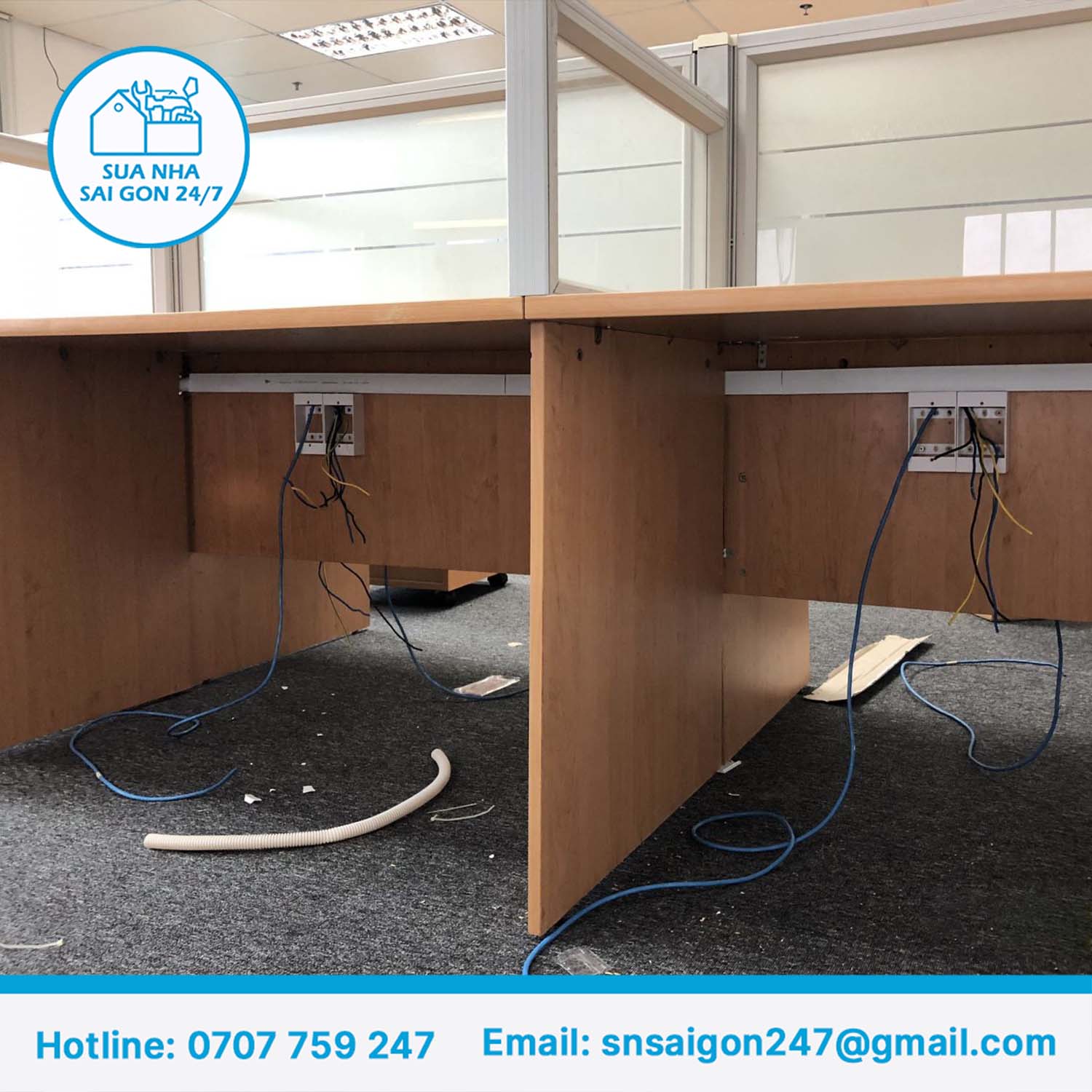
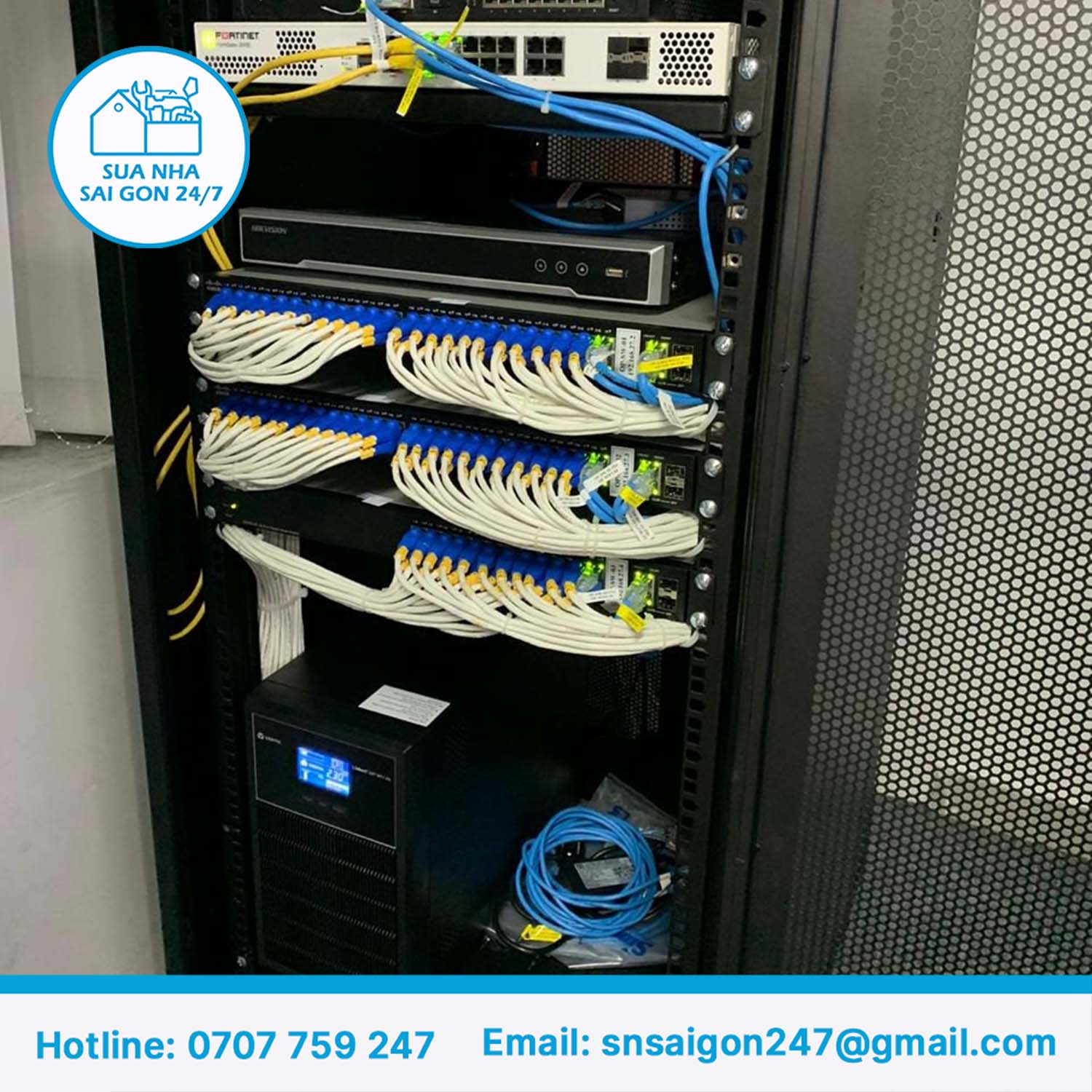
- LAN/network issues: a dead network point, a faulty patch cable, a network rack or switch that needs reseating or replacing.
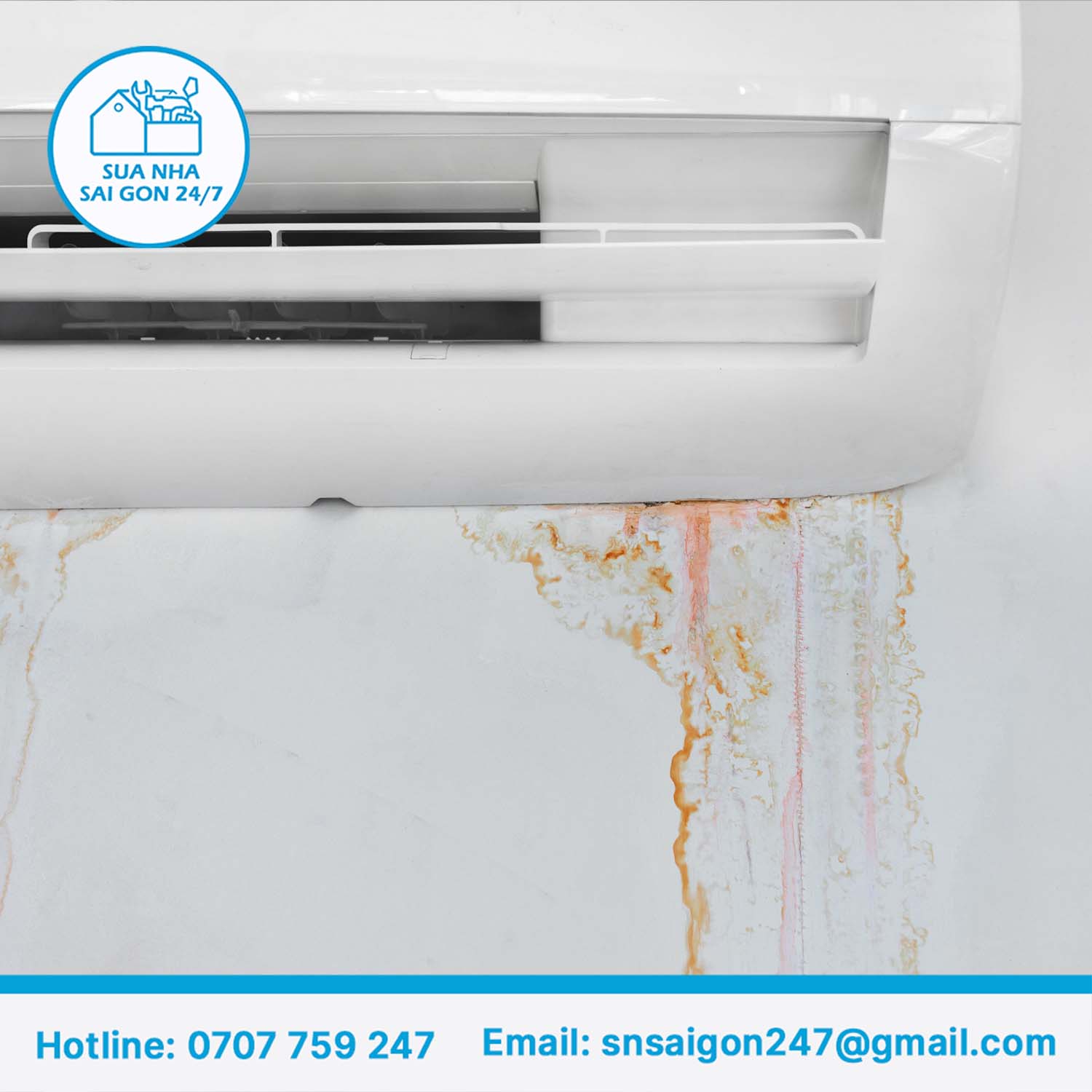
- AC problems: a unit that’s stopped cooling, is leaking, or is making unusual noise — especially relevant in older buildings with aging multi-split systems.
- General fixes: door hardware, locks, pantry sink leaks, or small fixture repairs that don’t fall under a specific trade.
Most of these are single-item fixes rather than projects, which is exactly why they’re usually handled faster and at lower cost than a renovation-scale job — but the building access side of things can still take longer than the repair itself in a District 1 tower.
Why District 1 Office Buildings Have Specific Access Requirements
District 1 is Ho Chi Minh City’s central business district, and its office towers — from Grade A high-rises to smaller Grade B and C buildings — generally have more structured access procedures than a standalone shophouse or villa office elsewhere in the city.
Most towers require visitor registration at a ground-floor security desk, sometimes with ID checks, before a technician can go up to your floor. Buildings with a dedicated service elevator often require advance booking for anyone carrying tools, equipment, or replacement parts, particularly for anything beyond a small toolbox repair. Some buildings also restrict repair work involving noise, drilling, or ceiling access to specific hours — often evenings or weekends — to avoid disturbing neighboring tenants on the same floor or building-wide. None of this is unique to any one tower, but it does mean a same-day repair in District 1 often needs a short lead time purely for access coordination, even when the fix itself takes only a few minutes once the technician is on-site.
Reference Pricing for Common Office Repairs (2026)
Office repair work in Ho Chi Minh City is generally priced per item or per point, since the scope of a repair call is usually much narrower than a full installation project.
| Item | Reference Price (VND) | Unit |
|---|---|---|
| Concealed wall power outlet (repair/replace) | 150,000 – 250,000 | per point |
| Light switch installation/repair | 100,000 – 180,000 | per point |
| CB / MCB replacement | 150,000 – 300,000 | per unit |
| Recessed LED ceiling light (repair/replace) | 80,000 – 150,000 | per unit |
| Office LED pendant light (repair/replace) | 150,000 – 300,000 | per unit |
| LAN cabling point (no conduit) | 80,000 – 120,000 | per point |
| LAN cabling point (through conduit/wall) | 150,000 – 250,000 | per point |
| Network switch or rack issue | 150,000 – 800,000 | per unit |
| General handyman fixes (door, lock, minor plumbing) | On-site survey & quote | per item |
These figures are reference pricing only, not a fixed quote — actual cost depends on the specific issue, the office’s existing wiring or cabling condition, and building access requirements. Contact us for an on-site inspection and a specific quote before any work begins.
Routine vs. Urgent Repairs: What Response Time to Expect
Not every office repair carries the same urgency, and it helps to sort issues into these two categories before calling.
Routine issues — a light fixture that’s flickering rather than fully out, a single dead outlet that isn’t in daily use, a minor door adjustment — can usually be scheduled a day or two out, giving enough time to coordinate building access properly. Urgent issues — a full loss of power to part of the office, a network outage affecting the whole team’s ability to work, an AC failure during hot weather, or a water leak near electrical equipment — justify requesting the fastest available slot and flagging the urgency clearly when you call, since these directly affect the ability to keep working that day.
Coordinating a Repair Visit With Building Management
Getting a technician into a District 1 office tower usually involves a short coordination step before the actual repair, and doing this in advance saves time on the day.
- Confirm your building’s visitor registration process — some towers allow phone pre-registration, others require the visitor to be called down from your floor.
- Check if a service elevator booking is needed, particularly if the repair involves carrying a ladder, network equipment, or replacement fixtures.
- Ask if there are restricted hours for noisier repair work (drilling, ceiling access) — many buildings push this to evenings or weekends.
- Have your floor and suite number ready, along with a contact person who can meet the technician if security requires an escort.
Sharing these details when you book the repair — rather than leaving them for the technician to figure out on arrival — is the single biggest factor in whether a same-day repair actually happens same-day.
Questions to Ask Before Booking an Office Repair
A short set of questions upfront sets expectations, particularly for anything more involved than a single obvious fix.
- “Is this priced per item, or is there a separate callout charge?”
- “Will you need building management’s approval or a service elevator booking on my end, or can that be arranged directly?”
- “If the issue turns out to be bigger than expected, will I get a new quote before you continue?”
- “Is there a warranty on the repair, and for how long?”
- “Can this be scheduled outside business hours if my building restricts working hours?”
When a “Repair” Turns Out to Be a Bigger Issue
Occasionally what looks like a single-item repair points to something larger — a recurring breaker trip that’s actually a capacity issue with the office’s distribution board, or a single dead network point that turns out to be a failing switch affecting several desks.
In these cases, the practical approach is to have the technician complete an on-site assessment first, rather than assuming the smaller fix will hold. If the underlying cause is broader — for example, the office’s electrical system needs a larger review rather than a single outlet swap — that’s a good moment to reference a fuller office electrical installation assessment rather than repeating a symptom-only fix that’s likely to recur.
Repairs Involving Lighting and Network Systems Specifically
Lighting and LAN/network issues deserve a specific mention, since they’re two of the most common repair categories in District 1 offices and each has its own troubleshooting logic.
For lighting, the first question is whether the issue is the fixture itself or the wiring behind it — a fixture that flickers intermittently across multiple lights on the same circuit often points to a wiring or switch issue rather than several coincidentally failing bulbs, while a single dead fixture with others nearby working normally is usually just that one unit. For network points, checking whether the issue is isolated to one desk or affects a whole area helps distinguish a single bad cable or jack from a rack- or switch-level problem — the latter needs a technician familiar with the office’s overall network layout rather than just the affected point. See our office decorative lighting installation service and office LAN installation service for the fuller scope of work in each category.
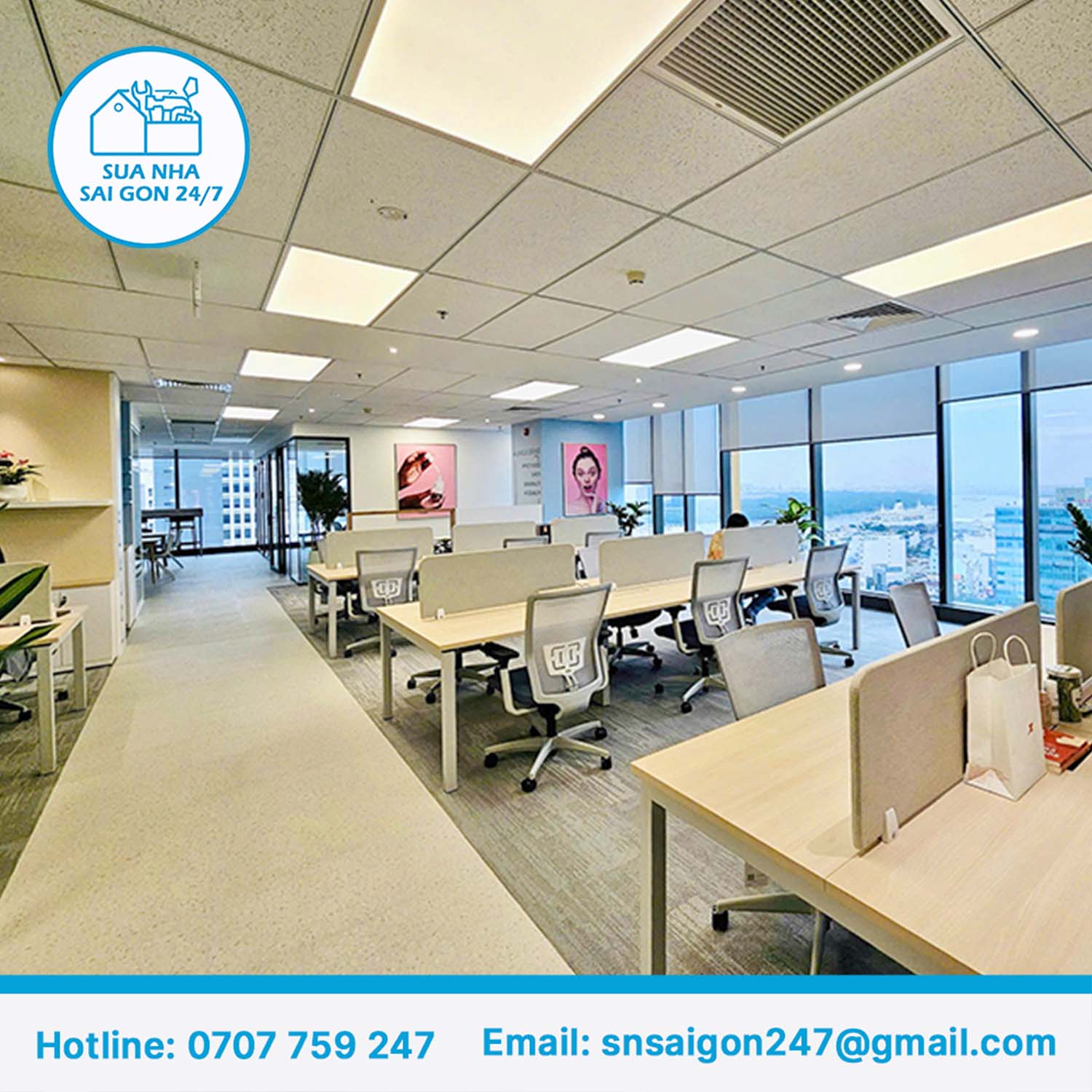
Repairs During Business Hours vs. After Hours
Deciding whether to schedule a repair during business hours or after hours usually comes down to how disruptive the work is and how tolerant the office is of noise or access disruption during the day.
A quiet fix — replacing a switch, checking a network point, adjusting a door — can usually happen during business hours with minimal disturbance. Anything involving drilling, ceiling access, or extended power shutdown to part of the office is generally better scheduled after hours or over a weekend, both to avoid disrupting staff and because many buildings specifically restrict this kind of work to those windows. Confirming which category a given repair falls into when you book it avoids a wasted trip if the building’s rules turn out to require a different time slot than originally planned.
Repeat Repair Issues: When to Consider a Broader Maintenance Approach
If the same category of issue keeps coming up — recurring electrical faults, network points that keep failing, lighting that needs frequent attention — it’s worth stepping back from a one-off repair mindset.
A pattern of repeat issues in the same category often points to an underlying condition (aging wiring, an overloaded circuit, network cabling nearing the end of its usable life) that a series of individual repairs won’t fully resolve. In these cases, a broader assessment of that specific system — rather than continuing to book single-item repairs as they come up — is usually the more cost-effective path over time, since it addresses the root cause instead of the recurring symptom.
Repairs for Small Offices, Shared Spaces, and Serviced Offices
Not every business in District 1 leases directly from a building owner — a growing number operate from a serviced office, a shared workspace, or a small suite within a larger managed floor, and each of these changes who’s responsible for arranging a repair.
In a serviced office or coworking space, some repairs — general building systems, shared restrooms, common-area lighting — are the provider’s responsibility and should be reported to their front desk rather than booked independently. Repairs specific to your own leased area or equipment, such as a dedicated network point or a fixture inside your private suite, are usually still yours to arrange. If you’re unsure which category an issue falls into, it’s worth checking your lease or service agreement first, since booking an independent repair for something the provider is contractually responsible for can create confusion over cost and access rights later. For a small office or a single suite, repairs also tend to be quicker to diagnose than in a larger open-plan floor, simply because there’s less wiring and fewer points to check.
Keeping a Simple Record of Office Repairs
Offices that book repairs occasionally rarely think to track them, but a simple record becomes useful surprisingly fast — particularly for a business managing multiple issues over the course of a year.
A basic log noting the date, the issue, what was done, and any warranty period gives you something concrete to reference if a similar issue reappears, and it also helps a technician on a future visit understand what’s already been tried. This matters more in a District 1 office tower than it might elsewhere, since access coordination adds time to each visit — having a clear repair history reduces the chance of re-diagnosing the same issue from scratch on a second call. It’s also useful if your office changes facilities staff or property management over time, since institutional knowledge about past repairs otherwise tends to disappear along with whoever originally handled it.
How Sai Gon Home Repair 247 Supports Office Repairs in District 1
Office repair calls in District 1 usually come down to two things: fixing the actual issue correctly, and getting a technician into the building efficiently despite the tower’s access requirements.
Sai Gon Home Repair 247 has more than 7 years of experience with electrical, lighting, network, and general office repair work in Ho Chi Minh City, with an on-site inspection and an itemized quote before work begins. See our office electrical installation services, office decorative lighting installation services, and office LAN installation services pages for the full range of work we handle.
Contact us for an on-site survey and consultation for your office repair needs in District 1.
Frequently Asked Questions
What kinds of office repair issues are most common in District 1?
The most common calls are electrical faults (outlets, switches, breakers), AC issues, lighting fixture failures, LAN/network point problems, and general fixes like doors, locks, and pantry plumbing — all within an office that’s already built out and operating.
Why do District 1 office buildings have stricter access rules for repair work?
District 1 is Ho Chi Minh City’s central business district, home to many Grade A and Grade B high-rise towers with security desks, visitor registration, and service elevator booking requirements — all of which need to be arranged before a technician can access the building, unlike a standalone shophouse or villa.
How much does office repair work cost in Ho Chi Minh City?
Reference pricing for 2026: a concealed wall power outlet repair or replacement is around 150,000–250,000 VND per point, an LED lighting fixture installation or repair is around 80,000–300,000 VND per unit depending on type, and a LAN cabling point is around 80,000–250,000 VND per point depending on routing. On-site survey is needed for anything beyond a single-item fix.
What’s the difference between an office repair call and an office fit-out project?
A repair call addresses a specific issue in an office that’s already fitted out and in use — a broken outlet, a failed light fixture, a dead network point. A fit-out project is a full renovation or build-out of a new or previously-occupied space, involving partitions, ceilings, and multiple trades under one coordinated timeline.
Can repair work be done outside business hours in a District 1 office tower?
Often yes, and sometimes it’s required — many CBD towers restrict noisier or more disruptive repair work to evenings or weekends to avoid disturbing other tenants, which needs to be arranged with building management in advance.
Does Sai Gon Home Repair 247 handle office repairs in District 1?
Yes. Sai Gon Home Repair 247 handles electrical, lighting, LAN, and general office repair calls in District 1, with an on-site inspection and a quote before any work begins.
Sai Gon Home Repair 247 — 7+ years of repair and renovation experience in Ho Chi Minh City.
- Vietnamese hotline/ Zalo: 0707 759 247
- English & Korean support/ Zalo: 076 806 7114
- English support/ Zalo: 033 939 0325
- Email: snsaigon247@gmail.com
- Address: 150 Tran Nao Street, An Khanh Ward, Ho Chi Minh City
Contact us for an on-site survey and consultation.



